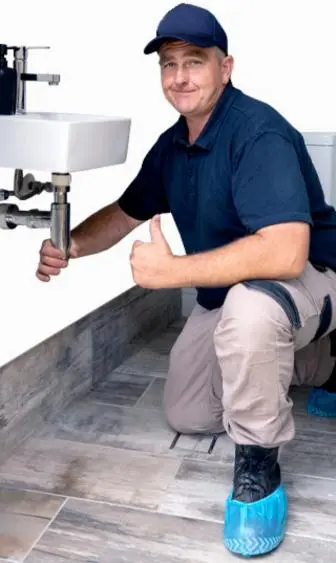
Plumber in Montville, Sunshine Coast
Big Blue Plumbing services Montville from our Sunshine Coast dispatch points, covering the 4560 area with licensed plumbing and gas work. We're based locally, so jobs are allocated from nearby hubs, which helps with booking times and arrival communication. Montville sits in the hinterland, where property access and parking can vary by address, steep driveways, narrow lanes, and mature landscaping are common, so we confirm access details when you book to avoid delays onsite. We hold Public Liability and Workers Compensation insurance, which protects you if accidental property damage occurs during work or if a workplace injury happens on the job. Our team has 40+ years of combined plumbing experience across thousands of Sunshine Coast jobs, so the usual fault patterns in established hinterland homes are familiar territory.
Our work covers general plumbing (taps, toilets, sinks, pipe repairs), drainage (blocked drains, CCTV inspections, clearing), hot water (electric, gas, solar, instantaneous, installation, replacement, and fault diagnosis), gas fitting (leak detection, appliance installation, compliance), and 24/7 emergency plumbing. All jobs are priced by the job, not by the hour, with a fixed quote provided once scope is agreed onsite. There are no hidden fees. If you're dealing with an urgent issue or scheduling routine work, the approach is the same: assess the fault or requirement, explain what's involved, confirm the fixed price, then complete and verify the work before leaving.
When Plumbing Faults Show Up in Montville Homes
In established hinterland properties, plumbing faults often result from age, tree root intrusion near external lines, or sediment buildup in older hot water service tanks. Montville's mix of building eras means you could be dealing with original galvanised steel pipe in a 1960s home or modern PVC in a recent build. Roots chasing moisture can enter microscopic cracks in clay or concrete drains, gradually trapping debris until flow slows or stops completely. Inside, a dripping tap might seem minor, but it signals worn washers or valve seats, and if left unchecked, the constant drip wastes water and can damage fixtures or cabinetry over time.
Hot water system failures often follow a pattern: the water runs lukewarm first thing in the morning, then improves once the system has cycled. That's usually sediment insulation at the base of a storage tank or a failing heating element. With gas continuous-flow units, fluctuating temperature during a shower can point to a blocked burner or a flow-rate issue. Blocked drains typically announce themselves with slow drainage at a single fixture first (kitchen sink, shower), then spread to multiple outlets if the restriction is further down the line.
If you're noticing any of these signs, the practical step is to book an assessment rather than wait for it to escalate. We isolate the affected area, identify the restriction or fault, then explain what's causing it and what needs to happen next. You get a flat-rate quote before any work starts, so you can decide with full information and no pressure.
How Plumbing Assessment and Quoting Works
When you book a plumber, the first visit involves an onsite assessment to confirm what's happening and what's required. For a blocked drain, we'll check the affected fixture, trace the line if needed using a CCTV drain camera (a flexible camera that travels through the pipe to show blockages, root intrusion, or structural damage on a monitor), and identify where the restriction sits. For a leaking tap, we'll inspect the tap body, test water pressure, and check whether it's a worn washer, a cartridge failure, or corrosion in the valve seat.
Once the scope is clear, we provide a fixed-price quote that covers the work required to resolve the fault. That price is by the job, not by the hour, so you know the total cost before we start. If the assessment reveals additional issues, say, a blocked drain inspection shows pipe damage that requires relining, we explain the options, provide a separate quote for that work, and you decide whether to proceed. Nothing happens without your go-ahead.
After you approve the quote, we complete the repair or installation, test the outcome (flow restored, leak stopped, system heating correctly), and verify it's working as expected before leaving. You'll receive an invoice suitable for records, insurance claims, or property management documentation. If a workmanship issue shows up later, it's covered by our workmanship warranty, and we'll address it under that coverage.
Pricing, Booking, and What to Expect
We price work by the job, not by the hour. Once the scope is verified during the initial assessment, you receive a flat-rate quote that covers labour, materials, and testing. That pricing model removes the uncertainty of watching the clock or worrying about surprise add-ons. There are no hidden fees. If additional work is identified during the job, we stop, explain what's been found, quote the extra work separately, and wait for your approval before continuing.
Call-out fees depend on the suburb and the type of job. For Montville, confirm the call-out fee status when you book, some scenarios include the call-out in the overall job price, while others charge it separately. Either way, it's disclosed upfront so there's no confusion later. We also offer a senior discount if you hold a valid senior card, and a 0% interest payment plan is available through Brighte, with approval typically completed in five to seven minutes.
For 24/7 emergency plumbing, immediate dispatch means urgent jobs are prioritised and the nearest available plumber is allocated from our local Sunshine Coast hubs. You'll receive an ETA when you book, and we provide updates if traffic or site conditions affect arrival timing. For scheduled work, we confirm the appointment window and arrival time in advance, and technicians arrive in uniform with identification ready. We respect your home, boot covers, drop sheets, and tidy work areas are standard, and rubbish generated during the job is removed prior to leaving.
Blocked Drains and What Causes Them
Blocked drains in Montville properties are often linked to tree root intrusion, fat and grease buildup in kitchen lines, or foreign objects lodged in toilet bends. Roots enter through microscopic cracks in aging clay, concrete, or cast-iron pipes, expanding over time and trapping debris until flow is restricted or stopped completely. In kitchens, fats, oils, and grease solidify as they cool, coating the pipe walls and narrowing the diameter until solid waste can no longer pass.
When a blockage occurs, the first symptom is usually slow drainage at one fixture, often the kitchen sink or shower. If ignored, water can back up into multiple outlets, or in severe cases, overflow onto floors or into garden beds. Foul odours from drains or gurgling sounds when water drains are additional warning signs that a restriction is building.
We clear blockages using high-pressure water jetting (hydro-jetting), which fires water at thousands of PSI through specialized nozzles to pulverize roots, scour grease from pipe walls, and restore the line to near-full capacity. For complex blockages or to confirm the line is clear, we use CCTV CCTV check to visually verify what's been removed and check for structural damage. If the camera shows cracks, collapsed sections, or significant root intrusion that will recur, drain relining (a trenchless repair that inserts a resin-lined sleeve into the existing pipe and hardens to create a new, seamless interior) may be the long-term solution. We explain the options and quote each approach separately, so you decide based on durability and budget.
Hot Water Systems: Installation, Replacement, and Repairs
Hot water system failures often start with temperature fluctuations or visible rust in the water. In storage systems (electric or gas), sediment accumulates at the base of the tank over time, insulating the heating element or burner and reducing efficiency. That sediment layer forces the system to work harder, which shortens its lifespan and can eventually cause tank corrosion or element failure. In continuous-flow gas units, a drop in temperature mid-shower usually points to a blocked burner, a faulty flow sensor, or insufficient gas pressure.
When you book a hot water assessment, we check the system type (storage or instantaneous, electric or gas), test the temperature output, inspect the tank or unit for leaks or corrosion, and confirm whether the issue is a component failure or a system that's reached the end of its service life. If it's repairable, say, a failed thermostat or a corroded anode rod, we quote the repair. If the tank is leaking or the unit is beyond economical repair, we explain replacement options: electric storage, gas continuous-flow, solar, or heat pump systems, each with different upfront costs, running costs, and space requirements.
All hot water installations in Queensland must meet Australian Standards (AS/NZS 3500) and include mandatory safety devices: a Tempering Valve (to limit tap temperature to 50°C and prevent scalding) and a Pressure Relief Valve (to prevent tank over-pressurization). Once the new system is installed, we test the output temperature, confirm the relief valve operates correctly, and verify there are no leaks before commissioning the unit. Compliance documentation is provided where required, and the installation is covered by our workmanship warranty.
Gas Fitting and Leak Detection
Gas work in Queensland must be performed by a licensed and insured gas fitter, and all installations and repairs are required to meet AS/NZS 5601.1 safety standards. We hold the necessary gas fitting licences and complete work ranging from new appliance installations (cooktops, ovens, hot water systems) to testing for leaks and emergency repairs.
Gas leaks are identified by the distinctive "rotten egg" odour (an added mercaptan safety signal), hissing sounds near appliances or pipes, or dying vegetation over underground gas lines. If you suspect a gas leakage, turn off the gas supply at the meter if it's safe to do so, open windows to ventilate the area, avoid using electrical switches or open flames, and book an emergency gas fitter immediately. We use combustible gas detectors and pressure-loss testing to locate leaks, then repair or replace the faulty section and re-test the system to confirm it's gas-tight.
For new gas appliance installations, we measure the required gas flow, install the appliance connection, pressure-test the line, then commission the appliance and verify it operates correctly. A compliance certificate is issued on completion to confirm the installation meets safety standards. If you're converting an electric cooktop to gas, adding a gas point for an outdoor heater, or installing a new gas hot water unit, the process is the same: confirm scope, quote the job, install and test, then document and verify before leaving.
Emergency Plumbing: What Immediate Dispatch Means
When you call for 24/7 emergency plumbing, immediate dispatch means urgent jobs, burst pipes, active gas leaks, sewage overflows, or total water loss, are prioritised first, and the nearest available plumber is allocated from our Sunshine Coast dispatch points. That doesn't guarantee a specific arrival time (traffic, current bookings, and site access all affect timing), but it does mean your job is treated as high-priority and handled ahead of routine maintenance or non-urgent repairs.
You'll receive an ETA when you book, and we provide updates if delays occur. While the plumber is on the way, we can offer brief safety guidance over the phone, such as turning off the water supply at the meter to limit flooding, or shutting off the gas supply if you smell gas, but we don't coach diagnosis or step-by-step troubleshooting. The goal is to make the situation safe and limit damage until the licensed plumbing professional arrives to assess and repair the fault.
For after-hours emergencies, the same fixed-price quoting process applies: we assess the fault onsite, explain what's involved, provide a fixed-price quote, and complete the work once you approve. If the full repair can't be completed immediately (due to parts availability or site access constraints), we take temporary measures to make the area safe, then return as soon as practical to finish the job. Emergency work is covered by the same workmanship warranty as scheduled jobs, and you'll receive a detailed invoice for insurance or property management records.
Leak Detection and Repairs
A dripping tap wastes water and can damage benchtops or cabinetry if left unchecked. In most cases, the cause is a worn washer, a failed cartridge, or corrosion in the valve seat. We disassemble the tap, inspect the internal components, and replace the faulty parts. If the tap body is corroded beyond repair, we explain replacement options and quote a new tap installation. After reassembly or replacement, we test the tap under normal pressure to confirm the leak is stopped and there are no drips or seepage.
Hidden leaks, inside walls, under floors, or in subfloor spaces, are harder to detect but often show up as unexplained increases in water bills, damp patches on walls or ceilings, or the sound of running water when all taps are off. We use moisture meters, thermal imaging, and pressure testing to locate hidden leaks without invasive demolition, then access the affected pipe, repair or replace the damaged section, and re-test to confirm the leak is resolved. You'll receive photos or documentation of the fault and the completed repair for your records.
Maintenance Plumbing and Preventive Inspections
Preventive plumbing maintenance reduces the risk of unexpected failures and can extend the service life of fixtures, pipework, and hot water systems. For residential properties, a routine inspection typically includes checking tap washers and valve seats, testing toilet cisterns for leaks, inspecting hot water relief valves, and clearing debris from gully traps and stormwater grates. We also check exposed pipework for corrosion, leaks, or poor mounting, and test water pressure at multiple outlets to identify pressure fluctuations or restrictions.
For hot water systems, annual maintenance involves draining sediment from storage tanks, testing the tempering valve output temperature, checking the anode rod (in electric storage systems), and inspecting gas burners or heating elements for corrosion or buildup. That maintenance can prevent premature tank failure and maintain heating efficiency. If the inspection identifies a component that's nearing the end of its service life, a corroded anode rod, a failing pressure relief valve—we explain the replacement options and quote the work separately.
Commercial and strata properties benefit from scheduled maintenance contracts, where we conduct regular inspections, clear drains and gully traps, test backflow prevention devices, and document all work for compliance and property management records. That documentation includes photos, test results, and any recommendations for repairs or replacements, so you can plan maintenance budgets and avoid emergency call-outs.