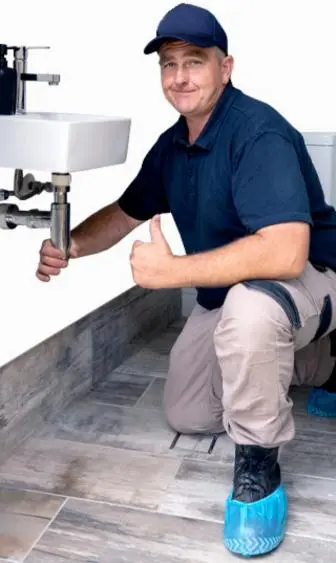
Licensed Plumber Covering Cotton Tree and the Sunshine Coast
Big Blue Plumbing covers Cotton Tree as part of our Sunshine Coast, Noosa, and Moreton Bay service area, with local dispatch points across the region. Urgent jobs are allocated to the nearest available technician and sent out first, while scheduled work is booked around your access time windows. With 40+ years of combined plumbing experience and over 3,000 jobs completed, we're a family-owned team that's been working across South East Queensland long enough to know how property conditions and site access vary by location.
We're licensed for plumbing, drainage, and gas work where required, and all technicians are police-checked and background-screened before attending your property. Our plumbers arrive in uniform, confirm identity at the door, and explain what's being assessed before starting. You receive a fixed-price quote once the scope is confirmed on site onsite, and the price is set by the job, not by the hour. That quote covers what's been agreed, with no hidden fees added later.
If a fault shows up during the work that changes the scope, we stop and explain the options so you can decide whether to proceed. All work is covered by our workmanship warranty, meaning if a workmanship issue appears after we leave, we address it under that warranty. You're not locked into anything until you've seen the quote and confirmed you want to go ahead.
What Plumbing Work Is Handled in Cotton Tree Properties
We handle general commercial and residential plumbing across Cotton Tree, including leak repairs, blocked drains, hot water faults, gas installations, and maintenance checks. The first visit involves assessing the impacted area, identifying the restriction or fault, and confirming what's needed to restore function. Once scope is verified, you receive an upfront flat-rate quote before any repair or replacement work proceeds.
Common plumbing issues in the area include ageing hot water systems that stop heating or leak from corroded fittings, blocked drains where tree roots or grease buildup restrict flow, and leaking taps or toilets that waste water and push up usage costs. If left unaddressed, a slow leak can saturate timber frames or flooring, while a blocked drain under pressure can eventually rupture and cause property damage.
Our work covers leak identification and repairs (taps, toilets, pipe joints, hot water relief valves), drainage clearing (kitchen sinks, bathroom drains, stormwater lines, and external gully traps), hot water system assessment and replacement (electric storage, gas continuous flow, and heat pump units), and gas fitting (leak detection, appliance connections, and compliance testing). For strata properties or rental inspections, we provide documentation suitable for agents and body corporate records.
If the fault involves restricted access, underground pipework, or structural work beyond plumbing scope, we explain what's required and provide options before quoting the full scope. You're told upfront if council approvals or additional trades are needed, so there are no surprises once work is underway.
How Emergency Plumbing Is Handled Across the Sunshine Coast
When an urgent plumbing fault occurs, the priority is making it safe and limiting damage while a licensed plumbing professional is dispatched. Emergency jobs are sent out immediately, with the nearest available technician allocated from our local coverage points across the Sunshine Coast, Noosa, and Moreton Bay. You're provided with an ETA when booking, and arrival timing is updated if traffic or current job delays affect that window.
If you can safely isolate the water supply at the meter or a local stop valve, that limits further water damage until the plumber arrives. If there's an active gas smell, treat it as urgent: open windows, avoid ignition sources, and leave the property if the odour is strong. Do not operate electrical switches near the suspected leak. For a ruptured pipe flooding the property, the water meter isolation is the safest first step if it's accessible and you know where it's located.
On arrival, the plumber assesses the fault, confirms what's causing it, and explains the immediate fix needed to restore safety or function. If a temporary repair is all that's possible after hours due to parts availability or access constraints, that's explained, and a return visit is scheduled to complete the permanent repair. You're quoted for the full scope once the fault is confirmed, and the quote is fixed by the job.
Our 24/7 emergency plumbing support covers ruptured pipes, gas leaks, severe blockages causing flooding, and hot water unit failures where scalding or no hot water affects safety or daily function. For non-urgent faults that can wait until standard hours, booking a scheduled visit often avoids after-hours surcharges while still getting the issue resolved within a short timeframe.
What's Involved in a Standard Plumbing Assessment
The first visit for most plumbing jobs involves confirming what's affected, identifying the cause, and checking whether the fault is isolated or part of a larger issue. For a drain blockage, that means locating the restriction point, checking upstream and downstream flow, and determining whether it's a localised blockage or a line-wide problem caused by roots, collapsed pipe, or fat buildup.
We use high-pressure water jetting to clear obstructions in accessible drainlines, and a CCTV drain camera to inspect the inside of pipes where the blockage cause or pipe condition isn't obvious from the surface. The camera footage shows whether roots have entered through cracks, whether the pipe has sagged or collapsed, or whether the restriction is just debris that can be cleared and flushed.
For hot water faults, the assessment checks whether the unit is heating, whether there's visible rust or corrosion on fittings, whether the relief valve is dripping or discharging, and whether the system is maintaining consistent temperature. If the unit is older than 10-12 years and showing multiple fault signs, replacement is often more cost-effective than repeated repairs, and that's explained with options for electric, gas, or heat pump replacements.
Gas work involves checking for leaks using a combustible gas detector, inspecting visible pipework and appliance connections, and conducting a pressure test on any repaired or altered sections to confirm the system is gas-tight before it's turned back on. All gas installations require compliance with AS/NZS 5601.1, and a compliance certificate is issued where required once work is completed and verified.
Once the scope is verified, you receive a flat-rate quote. If you approve, the work proceeds and is tested prior to leaving to confirm flow, function, or leak-free operation. If additional faults are found during the work that weren't visible during the assessment, we stop and explain what's been found before continuing.
Fixed Pricing and What Affects the Final Quote
We price plumbing work by the job, not by the hour, so you know the cost before any work starts. The fixed quote is based on the confirmed scope: what needs to be repaired or replaced, how accessible it is, whether parts need to be sourced, and how long the work is expected to take onsite.
Several factors affect pricing. Accessibility matters: a leaking pipe under a concrete slab or inside a wall cavity takes longer to reach and repair than an exposed pipe in a cupboard. Parts availability can delay same-day completion if a specific valve, fitting, or hot water element isn't in stock and needs to be ordered. After-hours or weekend work may attract a surcharge compared to standard weekday rates, and that's disclosed when booking.
For drainage blockages, the quote depends on whether it's a simple obstruction that can be cleared with a drain snake or high-pressure jetting, or whether the pipe is damaged and needs relining or excavation. If a CCTV inspection is required to locate the fault or assess pipe condition, that's quoted separately and confirmed before the camera is deployed.
Hot water system replacement pricing varies by unit type: a basic electric storage system is less expensive upfront than a gas continuous flow or heat pump unit, but running costs differ over the system's lifespan. We explain the differences and provide options so you can choose what suits your household's hot water supply usage and budget.
Our fee structure includes no hidden costs. If something changes during the work and affects the quote, we stop and discuss it before continuing. You're not charged for work you didn't approve. For call-out fees, the policy depends on the job type and location, so confirm that when booking to avoid surprises.
Why Licensing, Insurance, and Background Checks Matter
All plumbing, drainage, and gas work in Queensland must be performed by a licensed tradesperson. That licence confirms the technician has completed the required training, passed competency assessments, and is registered to perform that type of work legally. It also means the work is covered by statutory warranties under Queensland building and plumbing legislation.
We carry Public Liability Insurance and Workers Compensation. Public Liability protects you if accidental property damage occurs during the work, such as a fitting that breaks during removal or water damage caused by an unexpected pipe failure during the repair. Workers Compensation covers workplace injuries sustained by our team while working on your property. These protections reduce your risk if something goes wrong during the job.
All Big Blue Plumbing technicians are police-checked and background-screened before being sent to customer properties. That vetting process is part of our duty of care, particularly for residential work where technicians enter occupied homes. If you have specific safety or access requirements, let us know when booking, and we'll accommodate them where practical.
When the plumber arrives, they'll confirm their identity, explain what's being assessed, and ask for access to the affected area. We use protective boot covers or drop sheets to protect floors and finished surfaces during the work, and clean up the work area before leaving. Rubbish and old fittings are removed unless you ask us to leave them onsite.
Blocked Drains and How Flow Is Restored
A blocked drain typically shows up as slow-draining water in sinks, showers, or floor grates, or as a gurgling sound when water is flowing. If multiple fixtures are affected at once, the blockage is usually in a shared drainline further downstream rather than at the individual fixture trap.
The most common causes are tree roots that enter through microscopic cracks in older clay or concrete pipes, fat and grease buildup in kitchen lines that solidifies as it cools, or foreign objects flushed into the system that lodge at bends or junctions. In coastal and low-lying areas, sand infiltration or tidal backflow can also contribute to blockages in stormwater lines.
We clear most blockages using high-pressure water jetting, which uses specialised nozzles to break up obstructions and scour the pipe walls. For tougher blockages or to confirm the pipe condition, a CCTV camera is fed into the line to show what's causing the restriction and whether the pipe has structural damage.
If the inspection shows that the pipe has collapsed, is severely root-affected, or has separated at joints, clearing the blockage is only a temporary fix. In those cases, we explain the options: pipe lining, which inserts a resin-coated liner to create a new pipe inside the damaged one, or excavation and replacement if the damage is too extensive for relining to be effective.
Once flow is restored, we test the line to confirm drainage is back to normal and advise on maintenance practices to reduce the chance of the blockage recurring. For properties with recurring root problems, regular maintenance clearing can extend the time between major blockages.
Hot Water Systems and What Happens When They Fail
Hot water system faults usually present as no hot water, inconsistent temperature, visible rust in the water, or a dripping relief valve. If the unit is electric and there's no hot water at all, the heating element or thermostat has likely failed. If it's gas and the burner isn't igniting, the pilot light, gas valve, or ignition system may be faulty.
For older storage systems, rust-coloured water first thing in the morning often indicates a corroded sacrificial anode rod or internal tank corrosion. The anode rod is designed to corrode instead of the tank itself, but once it's fully corroded, the tank starts to rust. If caught early, replacing the anode can extend the tank's life. If the tank is already leaking, replacement is the only option.
Continuous flow gas systems can develop scale buildup in the heat exchanger, which reduces efficiency and causes fluctuating water temperature. Descaling or replacing the heat exchanger usually restores consistent performance. Heat pump systems can fail if the compressor or refrigerant system develops a fault, and those repairs are typically more complex than standard electric or gas systems.
When assessing a faulty hot water service, we check the age of the unit, the type of fault, and whether repair or replacement is more cost-effective. A unit that's 10+ years old with multiple issues is often better replaced than repeatedly repaired, since component failures tend to cluster as the system ages.
We install electric storage, gas continuous flow, and heat pump hot water systems, and explain the differences in upfront cost, running costs, and space requirements so you can choose what suits your property and household needs. All installations include a pressure relief valve and tempering valve to meet safety and compliance standards.
Gas Fitting and Why Leaks Are Treated as Urgent
Gas leaks are treated as urgent because gas is combustible, and even a small leak in an enclosed space can create a serious safety risk. The distinctive "rotten egg" smell added to natural gas is designed to make leaks detectable. If you smell gas, open windows, avoid ignition sources and electrical switches, and leave the property if the odour is strong.
Gas leak testing uses a combustible gas detector to locate the source, often in buried pipes, wall cavities, or behind appliances where visual inspection isn't possible. Once the leak is found, the affected section is isolated, repaired or replaced, and pressure-tested to confirm the system is gas-tight before it's recommissioned.
All gas work must comply with AS/NZS 5601.1, which sets out the safety and installation standards for gas fitting in Australia. After any gas installation or repair, a pressure test is required to confirm there are no leaks, and a compliance certificate is issued where required to verify the work meets the standard.
We also install gas appliances, including cooktops, hot water systems, and heating units, and connect new gas points where additional appliances are being added. If the existing gas meter or pipework isn't sized to handle the additional load, that's identified during the assessment and quoted as part of the installation scope.
For properties converting from electric to gas, or adding gas for the first time, the work involves running new pipework from the meter to the appliance location, installing isolation valves, and testing the system before the appliance is connected. That's coordinated with the gas retailer if meter upgrades or new connections are required.
What's Covered in a Plumbing Maintenance Check
Regular plumbing maintenance catches small faults before they become expensive repairs. A maintenance check typically includes inspecting visible pipework for leaks or corrosion, checking tap washers and valve seals, testing water heater operation and relief valve function, and clearing debris from gully traps and external drains.
For hot water systems, maintenance includes checking the anode rod condition (if accessible), flushing sediment from the tank base, inspecting the relief valve for correct operation, and confirming the system is heating to the correct temperature without fluctuating. Catching anode corrosion or sediment buildup early can extend the system's lifespan by several years.
For drainage, maintenance includes clearing external gully traps, checking that stormwater drains are flowing freely, and removing debris from downpipes and roof gutters that can wash into the stormwater system during heavy rain. Properties with known root intrusion issues benefit from periodic CCTV inspections and preventative clearing before blockages develop.
Strata properties and rental inspections often require documented maintenance records, and we provide invoices and job summaries suitable for body corporate or property management files. If the inspection identifies faults that need attention, those are quoted separately and explained in the report.
Commercial and Strata Plumbing Across Cotton Tree
Commercial plumbing covers office fit-outs, retail premises, hospitality venues, and light industrial sites where plumbing faults affect business operations. Downtime matters in commercial environments, so the focus is on rapid assessment, clear communication, and minimal disruption to trading hours.
We handle grease trap servicing and compliance testing, backflow prevention device testing, Thermostatic Mixing Valve (TMV) testing for childcare and aged care facilities, and staff amenity installations including kitchens, bathrooms, and disabled access facilities. All work is documented for compliance records and body corporate or council requirements.
For strata properties, we coordinate access with building managers or owners' corporations, work within approved time windows, and provide job documentation suitable for maintenance logs and AGM reports. We're familiar with common property vs lot owner responsibility boundaries, and explain where that line sits if there's any uncertainty about who's responsible for a fault.
Rental property work is scheduled around tenant access and property management requirements, with invoicing and receipts provided in a format suitable for landlord records or insurance claims. If urgent repairs are needed to maintain habitability, we can attend quickly and document the fault and repair for the managing agent.