24/7 Emergency Plumber Covering Twin Waters
Big Blue Plumbing handles emergency plumbing across Twin Waters and the Sunshine Coast, responding to urgent situations like burst pipes, major leaks, gas faults, blocked drains, and hot water unit failures. Urgent work is dispatched immediately, with the nearest available plumber allocated from local bases across the Sunshine Coast, Noosa, and Moreton Bay regions. Because Twin Waters properties include modern canal-estate homes and some older builds, the fault type and access conditions vary. An initial assessment confirms what's failed, what caused it, and what's needed to restore safety and function, and a fixed upfront price is provided before repair work starts.
Emergency plumbing covers situations where there's an active safety risk (gas leak, major water escape), property damage is occurring, or essential services (water, hot water, toilet, drainage) have stopped working. If the line between urgent and scheduled isn't clear, a short call can confirm priority and expected arrival timing. All attending technicians are licensed for the plumbing, drainage, and gas work they perform, and public liability insurance covers accidental property damage during the job.
Work completed under urgency is held to the same standard as scheduled jobs. Once the fault is isolated and repaired, flow or function is verified before leaving. If diagnostics show a temporary fix is needed to restore safety while parts are sourced, the options are explained and the return visit is scheduled. You receive an invoice suitable for insurance claims or landlord records where needed.
What Counts as an Emergency and What Happens Next
An emergency is any plumbing or gas fault that poses an immediate safety risk, causes active property damage, or stops an essential service from working. For gas, that means a suspected leak (smell, hissing sound near appliances or lines), a damaged gas line, or an appliance fault that could present a hazard. For water and drainage, it's a burst pipe flooding the property, a major leak causing structural water damage, a completely blocked sewer line backing up inside, or total loss of hot water in winter when it's needed for hygiene or vulnerable occupants.
If you're not sure whether your situation qualifies as urgent, a quick call helps. We ask about what's happened, what's affected, and whether there's an immediate safety concern. That determines whether the job is sent out as an emergency dispatch or scheduled as a priority booking within the next available window.
On an emergency callout, priority one is making it safe. That might mean isolating a water supply to stop flooding, shutting off gas at the meter if there's a suspected leak, or clearing a blockage to prevent sewage backup. Once the immediate risk is managed, the plumber assesses the full scope: what failed, why it failed, and what's required to fix it properly. You're given a fixed price for the repair work before it proceeds, and that price is by the job, not by the hour.
Common Emergency Scenarios in Twin Waters Properties
Across Twin Waters and similar Sunshine Coast canal estates, burst flexi hoses under sinks and behind toilets are a frequent urgent callout. These braided connector hoses have a limited lifespan, and when they fail, water escapes under mains pressure until the isolation valve or main supply is shut off. Older flexi hoses installed during the 1990s and early 2000s construction phase are particularly prone to splitting or detaching at the crimp connection.
Gas leaks are treated as urgent regardless of scale. Even a small leak near an appliance or along a copper gas line presents an ignition risk and requires immediate assessment. If you can smell gas (that distinctive rotten-egg odour from the added mercaptan), the standard safety step is to avoid ignition sources, ventilate the area, and contact a licensed gas fitter. We can provide brief safety guidance over the phone while the plumber is dispatched.
Hot water system failures become urgent when there's an active leak from the tank or pipework, or when the loss of hot water affects vulnerable household members (elderly occupants, young children, or anyone with health needs). A system that's simply running cold may not be urgent in summer, but in winter it often justifies a same-day callout. The diagnosis typically involves checking the power supply (electric systems), gas flow and pilot light (gas systems), or thermostat and element condition, and the outcome determines whether it's a component replacement or a full unit change.
What Affects Emergency Arrival Timing
Immediate dispatch doesn't mean an instant arrival, and it's important to set realistic expectations. Urgent jobs are prioritised and sent to the nearest available plumber, but arrival timing still depends on the current job queue, traffic conditions, and travel distance from the dispatch base to Twin Waters. When you book, you're given an estimated arrival window, and the plumber provides an ETA update once they're on the way.
For Twin Waters, access is generally straightforward via Sunshine Motorway and David Low Way, but peak-hour traffic through Maroochydore or around the airport precinct can add time. Properties within the canal estate often have clear street access, though gated entries or specific parking arrangements should be mentioned at booking so the plumber knows what to expect on arrival.
If the emergency is a gas leak or major flooding where safety is at immediate risk, that takes absolute priority over other jobs in the queue. For less critical situations (a blocked toilet with a second toilet available, or a leaking tap that's been isolated), arrival may fall within a slightly longer window, but you're kept informed throughout.
Fixed Pricing and What You Pay for Emergency Work
Emergency callouts are priced the same way as scheduled work: by the job, not by the hour. You're quoted a fixed price once the scope is defined onsite, and that price covers the labour, parts, and any additional access or complexity factors identified during assessment. There are no hidden hourly rates or surprise add-ons at the end.
The call-out fee (if applicable) and quoting approach should be confirmed when you book. Some emergency situations are quoted on arrival after the fault is assessed; others can be scoped over the phone if the problem is straightforward and commonly seen. Either way, the price is locked in before repair work begins, and you can decide whether to proceed once you know the cost.
After-hours work (nights, weekends, public holidays) may attract a different rate compared to business hours, and that's explained upfront when booking. The reason is operational: after-hours callouts require a plumber to be available outside their standard roster, and that availability has a cost. But the pricing model remains the same, you're told the fixed price before the work starts, and there are no hourly rate surprises.
For seniors, a discount applies when you show a valid seniors card. If you're arranging payment over several visits or the job cost is significant, a 0% interest payment plan is available through Brighte, with approval typically completed in 5 to 7 minutes. That option is explained during quoting if it's relevant to your situation.
How Big Blue Plumbing Handles Emergency Callouts
When you contact us for an emergency, the process is designed to get a licensed plumbing professional to you quickly while confirming enough detail to allocate the right technician and equipment. You're asked what's happened, where the fault is located, whether there's an active leak or safety risk, and what access arrangements apply (unit number, gate code, or parking constraints). That information determines dispatch priority and helps the attending plumber prepare appropriately.
Once dispatched, the plumber contacts you with an arrival ETA and confirms any last-minute access details. On arrival, they'll identify themselves, assess the situation, and explain what they've found in plain English. If the fault is straightforward and commonly seen (a burst flexi hose, a clogged drain, a tripped safety valve on a hot water unit), the quote is provided quickly and work proceeds once you approve the price.
If the assessment reveals something more complex, structural pipe damage requiring excavation, a gas line fault needing pressure testing and compliance certification, or a hot water unit that's beyond economical repair, the plumber explains the options, provides a fixed quote for each option, and lets you decide how to proceed. You're never pressured into a decision, and if you need time to consider or arrange finance, that's fine. The plumber will make the system safe and usable in the interim where possible.
Work is completed to Australian Standards, and for regulated tasks (gas fitting, backflow prevention, compliance plumbing), the required documentation and certificates are provided. Once the repair is finished, the plumber tests the outcome, checking for leaks, verifying flow and pressure, confirming the appliance operates correctly, before leaving. You're given an invoice with a clear breakdown, suitable for insurance claims, landlord reimbursement, or your own records.
Protecting Your Property During Emergency Work
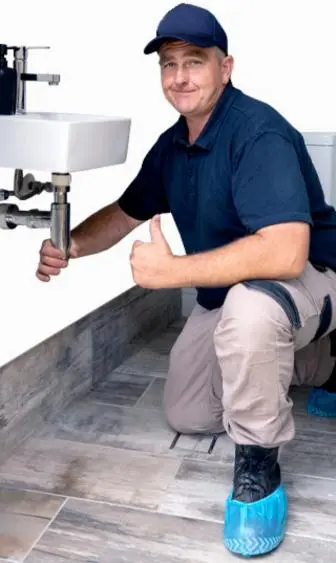
Even under urgency, care is taken to protect floors, benchtops, and finished surfaces. Drop sheets or protective coverings are used in the work area, and the plumber wears boot covers or removes shoes when working inside. If the job involves cutting into walls, accessing ceiling cavities, or working near tiled bathrooms and stone benchtops, the area is isolated as much as practical to contain dust and debris.
At the end of the job, the work area is cleaned, and any rubbish generated (old flexi hoses, failed components, packaging) is removed. The aim is to leave the property as tidy as it was found, or as close as possible given the nature of the emergency. If access required moving furniture or household items, they're returned to position before the plumber leaves.
If the Job Can't Be Finished Immediately
Some emergency situations can't be fully resolved in one visit. A water heater may need a replacement unit that's not in stock and requires ordering. A broken pipe may need a section of slab to be excavated, and that work is better done in daylight with proper equipment. A gas line fault may require a compliance inspection and certified pressure test that takes additional time.
In those cases, the plumber completes enough work to restore safety and basic function: isolating the leak and capping the line, providing a temporary hot water solution, or clearing the blockage enough to restore partial drainage. The return visit is scheduled, and you're kept updated on parts availability or timing. The original fixed quote still applies, and the return visit is treated as a continuation of the same job, not a new callout.
Licencing, Insurance, and What That Means for You
All plumbers attending emergency callouts hold the appropriate Queensland licences for the work they perform. For general plumbing and drainage, that's a plumbing licence issued under the QBCC. For gas fitting, it's a separate gas fitting licence. If you're ever unsure, you can ask to see the licence card on arrival, and the plumber will show it without hesitation.
Public liability insurance covers accidental property damage that might occur during the work, if a tool slips and chips a tile, or if accessing a concealed pipe causes unintended damage to a wall lining. It doesn't cover pre-existing damage or deterioration, but it does provide protection if something goes wrong during the repair.
Workers compensation relates to workplace injuries sustained by the plumber while on site. It's a legal requirement, and it means you're not exposed to liability if a plumber is injured while working at your property.
Workmanship is covered by our workmanship warranty, explained in plain terms at the time of quoting. If a fault related to the quality of the repair work shows up after the job is finished, it's addressed under that warranty at no additional charge. Manufacturer warranties on installed products (hot water units, tapware, appliances) are separate and handled according to the manufacturer's terms.
Identity Checks and Arrival Protocol
Technicians arrive in uniform and can identify themselves before entering your property. Police checks and background screening are completed for all attending plumbers, and if you have specific safety or access requests (confirming identity at the door, working in view of a household member, or following particular entry instructions), those requests are accommodated where practical.
If you're not comfortable with a particular technician for any reason, you can request a different plumber attend, and that request is handled without question. The priority is ensuring you feel safe and confident with the person working in your home.
Avoiding Repeat Emergencies Through Preventative Maintenance
Emergency plumbing is stressful and disruptive. While some faults (a sudden pipe burst, a gas appliance failure) can't be predicted, many emergency callouts result from deferred maintenance or early warning signs that were ignored.
Flexi hoses should be inspected every few years and replaced proactively before they fail. They're inexpensive to replace during a scheduled maintenance visit, but when they burst, the resulting water damage and emergency callout cost far more. If your flexi hoses are over ten years old, consider replacing them before they become an emergency.
Hot water systems benefit from periodic checks: testing the pressure relief valve, flushing sediment from storage tanks, and inspecting the sacrificial anode (on electric and some gas storage systems). A failing anode leads to internal tank corrosion, which eventually causes leaks and premature system failure. Catching it early means a simple anode replacement instead of a full unit change.
Gas appliances should be serviced regularly to ensure burner efficiency, check for gas tightness at connections, and verify that safety controls (flame failure devices, thermocouples) are operating correctly. A small gas leak caught during a service visit is far less disruptive than an emergency callout for a suspected leak.
Drainage systems benefit from periodic CCTV inspections if you've had recurring blockages or your property is in an area with mature tree coverage. Identifying root intrusion or pipe damage early allows for planned pipe relining or repairs, avoiding the stress and cost of a sudden sewer backup.
When to Call for an Emergency vs Scheduling a Routine Visit
Not every plumbing problem requires an emergency callout. A dripping tap, a slow-draining sink, a toilet that refills slowly, or a water heater that's taking longer to heat—all of these are issues that should be addressed, but they're not emergencies. Booking a scheduled service call during business hours avoids after-hours rates and allows for a more comprehensive inspection and diagnosis.
Here's a practical guide:
- Call for an emergency if there's active flooding, a gas smell or suspected gas leak, a completely blocked sewer backing up inside the property, or total loss of hot water when it's essential for hygiene or vulnerable household members.
- Book a priority same-day visit if a toilet is blocked but a second toilet is available, a hot water system is cold but there's an alternative heating method, or a leaking tap or fixture has been isolated and isn't causing damage.
- Schedule a routine visit for slow drains, intermittent faults, maintenance checks, proactive component replacements, or non-urgent installations.
If you're unsure which category your situation falls into, a brief call can clarify. We'll ask about the fault, the impact on your household, and whether there's an immediate safety concern, and that determines the appropriate response.
Coverage Across Twin Waters and Surrounding Sunshine Coast Areas
Big Blue Plumbing operates across the Sunshine Coast, Noosa, and Moreton Bay regions, with Twin Waters sitting within the core service area. Emergency dispatch is allocated from the nearest available base, and surrounding suburbs including Parrearra, Mudjimba, Marcoola, Maroochydore, and Kawana Waters are all covered under the same 24/7 emergency service.
Because we handle jobs across the broader Sunshine Coast region daily, the plumbers are familiar with common property types, access constraints, and infrastructure patterns. That means less time spent working out local quirks and more time focused on diagnosing and resolving the fault.
Contact Big Blue Plumbing for Emergency Plumbing in Twin Waters
If you're dealing with a plumbing or gas emergency in Twin Waters, the clearest next step is a phone call. You'll speak with someone who can assess urgency, allocate a correctly licensed plumber, and provide an estimated arrival window. The number is (07) 5404 9354, and it's staffed 24/7 for emergency callouts.
For non-urgent enquiries or to request a free quote for scheduled work, you can submit a booking form via the website, and we'll confirm availability and pricing during business hours. Emergency callouts are handled by phone to ensure fast dispatch and clear communication around arrival timing and safety priorities.