24/7 Emergency Plumber Towen Mountain
Big Blue Plumbing handles emergency plumbing in Towen Mountain through immediate dispatch from local Sunshine Coast bases, covering broken pipes, blocked drains, gas leaks, and hot water system failures. Urgent jobs are sent out first, with the nearest available licensed plumber (NSW) allocated for rapid response. The initial visit confirms what's failed, what's needed to restore function, and provides a flat-rate quote before repair work proceeds. We're properly insured (Public Liability and Workers Compensation) and hold the required Queensland plumbing and gas licences for emergency work.
With 40+ years of combined experience and over 3,000 plumbing and gas jobs completed, we know how quickly plumbing faults escalate. Early morning hot water failures, burst flexi hoses under sinks, and sewage backups don't wait for business hours. That's why our 24/7 emergency service operates across the Sunshine Coast, Noosa, and Moreton Bay regions every day of the year, including public holidays and weekends.
On the first visit, the plumber isolates the fault (shutting off water or gas where needed), confirms the affected area, and explains what's required to fix it safely. If parts are in stock and access permits, many emergency repairs can be completed during that first visit. If additional work is needed beyond the immediate repair, we explain the options and confirm scope before proceeding. You decide once the fixed price is provided.
Common Emergency Plumbing Issues We Handle
Emergency plumbing covers situations where a fault creates an immediate safety risk, causes active property damage, or leaves essential services (water, hot water, gas, drainage) completely unavailable. These are the urgent plumbing faults we respond to in Towen Mountain and across the Sunshine Coast region:
- Burst pipes and flexi hoses: Internal bursts flood rooms fast. External mains bursts can undermine foundations or saturate ground around the home. Flexi hoses connecting taps, toilets, and appliances split without warning and release high-pressure water continuously until the supply is shut off.
- Blocked drains and sewage backups: When multiple fixtures back up at once or sewage rises through floor drains, it signals a main line blockage. Causes often include tree root intrusion in older clay or terracotta pipes, collapsed sections, or solidified grease buildup in kitchen lines.
- Gas leaks: The distinctive rotten-egg smell (added mercaptan) indicates escaping gas. Any suspected gas leak requires immediate isolation and professional assessment. We test the system under pressure after repairs to confirm it's gas-tight before reconnecting appliances.
- Hot water system failures: Complete loss of hot water, particularly with visible rust stains or pooling water under the unit, often points to a failing sacrificial anode, corroded tank, or faulty pressure relief valve. Electric, gas, and heat pump systems all require licensed repair and installation to meet Australian Standards.
- Flooding from failed fixtures: Cisterns that won't stop filling, leaking shower bases, and split washing machine hoses can flood bathrooms, laundries, and living areas rapidly if not isolated quickly.
If you're unsure whether your situation counts as urgent, a brief phone call clarifies whether immediate dispatch is needed or if the job can be scheduled within normal hours. We explain what to isolate (water supply, gas valve, circuit breaker where safe) to reduce harm while the plumber is on the way, without asking you to diagnose the fault yourself.
How Emergency Callouts Work
When an emergency plumbing call comes in, it's allocated to the nearest available licensed and insured plumber from our Sunshine Coast dispatch points. Response timing depends on current bookings, traffic conditions, and how far the job is from the closest base. We provide an ETA when booking where possible and update you if timing changes.
Once onsite, the plumber assesses the situation, isolates the fault (shutting off water, gas, or electrical supply where needed), and confirms what's required to restore function safely. The scope is explained in plain English, including what's covered, what conditions might change the approach (hidden damage, access constraints, parts availability), and the fixed price for the confirmed work. You're not committed until you've seen the quote and agreed to proceed.
Emergency pricing reflects after-hours availability and the priority given to urgent work. A call-out fee typically applies; confirm the fee structure when booking so there are no surprises. Once scope is clarified and the fixed price agreed, there are no hidden fees or hourly rate escalations during the job.
Where practical, emergency repairs are completed during the first visit. If inspection reveals that the fault requires relining, excavation, or parts not carried in stock, we explain the options and provide temporary measures to make the site safe until full repairs can be scheduled. The priority is stopping active damage and restoring basic function quickly, then addressing underlying causes under a clear scope.
Why Plumbing Emergencies Need Immediate Professional Help
Burst pipes release hundreds of litres per hour. That volume saturates carpet, timber floors, insulation, and wall cavities fast. What starts as a small leak can progress to ceiling collapse, electrical hazards, and mould growth within 24-48 hours if not isolated and dried promptly.
Sewage backups carry contamination risk. Raw sewage contains bacteria and pathogens that make affected areas unsafe until properly cleaned and disinfected. DIY clearing attempts often push blockages deeper or damage pipe joints, making the eventual repair more invasive and costly.
Gas leaks are a safety emergency. Natural gas and LPG are both highly flammable. Even a small leak in an enclosed space can reach explosive concentrations. Attempting to locate or repair gas faults without the correct tools (combustible gas detectors, pressure testing equipment) and licensing puts occupants at serious risk.
Hot water systems under pressure can fail catastrophically. A pressure relief valve exists to prevent tank over-pressurisation. If that valve is leaking or the tank itself is corroding, the system is operating outside safe limits. Continuing to use a failing unit increases the chance of sudden rupture, which releases scalding water and steam under high pressure.
The cost of emergency plumbing is almost always lower than the cost of delayed action. Water damage repair, mould remediation, temporary accommodation, and insurance excess typically exceed what an after-hours callout would have cost if attended immediately.
What Affects Emergency Plumbing Costs
Emergency plumbing is priced by the job, not by the hour, once scope is confirmed onsite. Several factors influence what that fixed price will be:
- Timing: After-hours, weekend, and public holiday callouts carry higher rates due to availability and priority allocation. Weekday business hours are the lowest rate bracket.
- Access and location: Jobs requiring confined space entry, working under homes, or accessing strata common property can take longer and require additional safety measures.
- Fault complexity: A split flexi hose is a straightforward replacement. A burst pipe inside a wall cavity requires opening the wall, repairing the pipe, pressure testing, then coordinating reinstatement.
- Parts and materials: Standard fittings, flexi hoses, and common valve sizes are typically carried in stock. Specialist fixtures, obsolete parts, or commercial-grade components may need ordering, which delays completion and adds to material costs.
- Scope escalation: If initial inspection reveals related faults (corrosion, failing joints, code compliance issues), the scope expands. Additional work is quoted separately and only proceeds with your approval.
The fixed-price model means you know the cost before work starts, and the price doesn't increase if the job takes longer than expected. That removes the financial uncertainty that comes with hourly billing, particularly for after-hours work where labour rates are higher.
Our Approach to Emergency Work
We treat every emergency callout as a two-stage process: immediate stabilisation and verified repair.
Immediate stabilisation means isolating the fault, stopping active damage (shutting off water or gas supply, containing spills, protecting electrical fixtures), and confirming what's failed. At that point, you know what's wrong, what's needed to fix it, and what it will cost. If the repair can proceed immediately and you approve the fixed price, we move to stage two.
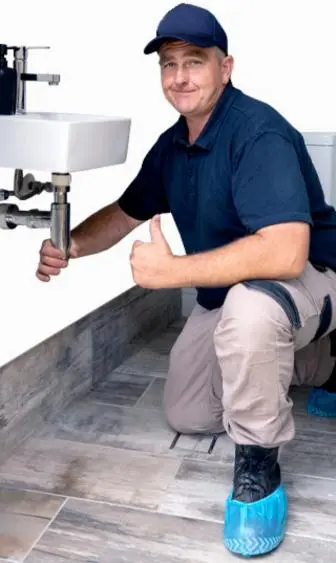
Verified repair means completing the work to meet Australian Standards, pressure testing where required (particularly for gas and water supply lines), confirming function is restored, and cleaning up the work area. We remove debris, wipe down surfaces, and leave the site tidy. Protective boot covers and drop sheets are used in occupied homes to keep mess contained.
Our plumbers arrive in uniform, with ID, and can verify identity before entry if requested. Police checks and background screening are completed for all technicians, which matters when you're letting someone into your home during a stressful situation, often outside business hours when you're alone or with family.
Workmanship is covered by our workmanship warranty. If a fault related to our work appears after completion, we address it under that warranty. Manufacturer warranties apply to parts and fixtures we install, and we provide documentation for those separately.
Why Local Dispatch Matters for Emergency Response
Big Blue Plumbing operates from Sunshine Coast bases, which means Towen Mountain jobs are allocated to plumbers already working in or near the region. That local footprint reduces travel time for urgent callouts, particularly when traffic is heavy or conditions make roads slower to navigate.
Being familiar with Sunshine Coast properties also changes how quickly faults are assessed. Older homes often have galvanised steel or copper pipework, while newer estates use PEX or modern PVC. Knowing what to expect by property age and type speeds up diagnosis and helps us carry the right parts in stock for common fault locations in the area.
Access and parking realities vary across the Sunshine Coast. Some streets are narrow, some properties sit on steep blocks, and some homes require long hose runs or confined space entry to reach pipework. We plan around those constraints when scheduling, which keeps arrival timing realistic and avoids delays caused by access surprises onsite.
If Towen Mountain jobs coincide with peak traffic periods or other emergency service calls, we communicate updated ETAs so you know what to expect. Emergency plumbing is time-sensitive, but transparency around arrival timing reduces stress and lets you make informed decisions about whether to wait or seek alternative help.
Licencing, Insurance, and Compliance
All plumbing and gas work in Queensland requires appropriate licensing. Our plumbers hold current Queensland plumbing licences and gas fitting licences where relevant to the work they perform. That ensures the work meets Australian Standards (AS/NZS 3500 for plumbing, AS/NZS 5601.1 for gas) and local authority requirements.
We carry Public Liability insurance and Workers Compensation insurance. Public Liability covers accidental property damage that occurs during our work. Workers Compensation relates to workplace injuries. Both protect you from liability if something goes wrong onsite.
Compliance certificates are issued for regulated work where required by Queensland legislation, including gas installations, alterations, and backflow prevention device installations. Those certificates provide proof that work meets the relevant codes and can be requested by councils, insurers, or during property transactions.
Emergency work still follows the same compliance standards as scheduled work. Cutting corners to save time isn't an option when safety and code compliance are involved. If an emergency repair requires a temporary fix to make the site safe, we explain what's temporary, what the full repair involves, and when it needs completing to meet standards.
Preventable Emergencies and Maintenance Signals
Many emergency plumbing callouts follow warning signs that were missed or ignored. Recognising those signals early doesn't eliminate the need for a properly licensed plumber, but it does let you book scheduled work at lower rates instead of paying for after-hours emergency response.
Hot water systems often give advance warning before complete failure. Rusty water first thing in the morning, fluctuating temperature, or pooling water under the unit all indicate the system is deteriorating. Sacrificial anode rods corrode over time to protect the tank; once they're consumed, the tank itself starts corroding. Replacing the anode during scheduled maintenance extends the system's life and avoids sudden failure.
Slow drains that take longer to clear each time suggest partial blockage building in the line. Tree roots grow slowly into cracks, trapping debris and forming obstructions over months. Addressing a slow drain before it blocks completely avoids the sewage backup scenario and usually costs less because the line can often be cleared with hydro-jetting instead of excavation or relining.
Dripping taps and weeping pressure relief valves waste water and signal worn washers, seals, or valve components. Left unattended, minor leaks worsen and lead to fixture failure or water damage. A leaking PRV on a hot water system indicates over-pressurisation, which is a safety issue requiring professional assessment.
We provide maintenance reminders, safety inspections, and CCTV drain inspections as part of our general plumbing services. If you'd prefer to reduce emergency callout risk through scheduled checks, that option is available. Maintenance work is priced at standard rates, not emergency rates, and can be booked during business hours at a time that suits you.
What to Expect When You Call
When you contact Big Blue Plumbing for emergency plumbing in Towen Mountain, we ask a few questions to confirm urgency, identify the fault, and allocate the right tradesperson. That conversation typically covers:
- What's failed or leaking (fixture type, location)
- Whether water or gas has been isolated (and where the shutoff points are if you're unsure)
- Any immediate safety concerns (gas smell, electrical contact with water, structural damage)
- Property access (locked gates, security systems, animals onsite)
- Your availability and preferred contact method for ETA updates
Based on that information, we confirm whether immediate dispatch is warranted or if the job can be scheduled within standard hours. If it's genuinely urgent, we allocate the nearest available plumber and provide an estimated arrival time. You'll also be advised of the call-out fee structure at that point so you can decide whether to proceed.
Once onsite, the process is straightforward: assess, explain, quote, repair, verify, clean up. You're kept informed at each stage, and no additional work proceeds without your explicit approval after seeing the price.
For questions about what's urgent, what can wait, or how much a specific repair typically costs, a quick phone call provides clarity without obligation. We'd rather answer questions upfront than leave you guessing about whether to book emergency service or wait until morning.