24/7 Emergency Plumber Nambour; Sunshine Coast Coverage
Big Blue Plumbing delivers emergency plumbing across Nambour and the Sunshine Coast region, handling urgent faults like burst pipes, gas leakages, blocked drains, and hot water failures that need attention outside of standard hours. We dispatch from local bases across the Sunshine Coast, Noosa, and Moreton Bay service area, so urgent jobs are allocated to the nearest available technician once the booking is confirmed. All attending plumbers are appropriately licensed and the business is fully insured, which covers public liability (accidental property damage during work) and workers compensation (workplace injuries on the job). If a fault shows up during business hours or after hours, the same 24/7 booking line is used and you're given an ETA once the job is allocated and the plumber is on the way.
Emergency plumbing usually involves immediate safety or property protection: active leaks that risk water damage, gas smell or appliance faults that need isolation and testing, complete loss of hot water in winter, or sewage backflow that makes a bathroom or laundry unusable. If the fault can be isolated safely (water off at the meter, gas off at the appliance or meter), the plumber assesses onsite, confirms scope and quotes the fixed price before starting the repair. Where a fault can't be isolated or involves a safety risk, we explain what needs to happen first and what follow-up work may apply once the property is secure.
Nambour sits within the Sunshine Coast region, and properties here range from older homes near the town centre through to newer estates on the outskirts. Onsite conditions vary by property type, age, and access, so the first visit confirms what's affected, how it's accessed, and what options apply. That assessment feeds into the flat-rate quote, and timing depends on parts availability and how much of the system needs isolating to complete the work safely.
What Counts as an Emergency and When to Call
An emergency plumbing fault is one where waiting increases the risk of property damage, safety hazards, or loss of essential services like water or heating. Burst pipes, active leaks under sinks or inside walls, gas smells near appliances or meters, complete hot water failure during cold weather, and sewage backing up into a home are typical examples. In these situations, isolating the water or gas supply reduces immediate risk, but a licensed, insured plumber still needs to assess the cause, confirm what failed, and restore safe operation.
From comparable jobs across the Sunshine Coast, the dividing line is usually whether the fault can wait until the next business day without worsening. A dripping tap or a slow drain can often be scheduled as a standard booking, while water spraying from a flexi hose under a sink or a hot water supply system leaking onto an electrical board needs urgent attention. If you're uncertain whether it qualifies as an emergency, a brief call clarifies priority and confirms whether immediate dispatch applies or a next-day booking is more appropriate.
If there's an active gas smell, treat it as urgent. Don't operate electrical switches or ignition sources, ventilate the area if safe to do so, turn off the gas at the meter if you can reach it safely, and book a licensed gas fitter to test the system and identify the source. Gas leaks don't always mean an appliance has failed; sometimes it's a damaged pipe, a loose connection after recent work, or a faulty regulator. The plumber uses gas detection equipment to trace the leak, isolates the affected section, and either repairs or replaces the faulty component once the system is confirmed gas-tight under a pressure test.
How Emergency Dispatch and Arrival Works
When an emergency booking comes through, it's sent out first and the nearest available plumber is allocated from our local dispatch points across the Sunshine Coast, Noosa, and Moreton Bay regions. You're provided an ETA once the technician is on the way, and arrival timing depends on current bookings, traffic, and how far the plumber needs to travel from the previous job. Immediate dispatch doesn't mean an exact arrival time, but it does mean urgent work is prioritised over scheduled maintenance jobs.
Technicians arrive in uniform, can identify themselves before entry, and carry the tools and diagnostic equipment needed for most common emergency faults. Police checks and background checks are completed for all technicians, and we follow entry instructions carefully when working in occupied homes. If access is restricted by strata rules, security gates, or limited parking, let us know when booking so the plumber can plan around those constraints.
At first check, the plumber confirms what's failed, what's affected, and what needs isolating to make the property safe. If the scope is straightforward (a burst flexi hose under a sink, a leaking tempering valve on a hot water unit, a blocked toilet), a fixed-price quote is provided onsite before work starts. If the fault involves hidden damage, requires access through walls or floors, or depends on parts that aren't carried on the van, we explain what's needed and provide the quote once scope is confirmed on site. You decide whether to proceed once the fixed price is clear and inclusions are explained.
Fixed Pricing and How Emergency Call-Outs Are Charged
Big Blue Plumbing prices work by the job, not by the hour, so the quote you're given covers the full repair and you're not watching a clock tick over while the plumber is working. Once scope is clarified onsite, the fixed price is provided before any work starts, and that price includes labour, standard parts, and testing to confirm the repair is complete and leak-free. There are no hidden fees added at the end, and if the job turns out to be simpler than expected, the quoted price stands.
For emergency call-outs, a call-out fee may apply depending on the time of day and the suburb. Nambour is within our standard Sunshine Coast service area, but after-hours or weekend emergency work is charged differently to a standard weekday booking. When you call to book, confirm the call-out fee status and whether it's absorbed into the total job price or charged separately. That way, you know the cost structure before the plumber arrives and there's no confusion when the invoice is provided.
If the fault can't be fully repaired during the emergency visit (parts need ordering, access requires strata approval, or structural damage needs assessing), we explain what's been done to secure the property, what follow-up work applies, and when that work can be scheduled. The emergency visit is invoiced separately from any follow-up work, and the scope of each is explained and quoted before proceeding. Payment options include card, bank transfer, or a 0% interest payment plan via Brighte with approval completed in around five to seven minutes.
Common Emergency Faults and What Causes Them
Burst pipes often result from corrosion in older galvanised or copper lines, or from water hammer (pressure surges when taps are turned off quickly). In winter, pipes in roof spaces or external walls can freeze overnight in colder Sunshine Coast hinterland areas, and the expansion cracks the pipe wall. When the ice thaws, water starts leaking. Flexi hoses under sinks and behind toilets can fail suddenly when the braided outer layer corrodes or the inner rubber perishes, usually after several years of service. Once a flexi hose bursts, water sprays at mains pressure until the isolation valve or meter is turned off.
Hot water systems fail for different reasons depending on the type. Electric storage tanks develop leaks when the sacrificial anode rod corrodes through and the tank itself starts rusting from the inside. Gas continuous flow units can lose pressure or fail to ignite if the gas valve, ignition module, or heat exchanger develops a fault. Tempering valves (the safety device that limits water temperature at the tap) can weep or discharge when the internal diaphragm wears out, and that often looks like a leak from the side of the hot water unit.
Blocked drains and toilets are typically caused by a combination of solid waste, paper, or foreign objects in the line, or by tree roots entering cracks in older clay or terracotta pipes. A toilet that keeps refilling after a flush usually indicates a faulty flapper valve inside the cistern, which lets water leak from the cistern into the bowl continuously. That's not an emergency in the sense of active flooding, but it wastes water and can push your bill up quickly if left unattended.
What Happens During the Emergency Visit
The plumber's first priority is making the property safe and limiting any active damage. If there's water spraying from a burst pipe, the water is turned off at the meter or the nearest isolation valve. If there's a gas smell, the gas supply is isolated and the area is ventilated. Once the immediate risk is controlled, the plumber assesses what caused the fault, where it's located, and what's needed to restore normal operation.
For a burst flexi hose, that usually involves replacing the failed hose, checking that the isolation valves work properly, and testing the new connection under pressure to confirm it's leak-free. For a blocked toilet, it involves confirming whether the blockage is in the toilet trap, the branch line, or further down in the main sewer line. If the blockage is accessible, it's cleared using a hand auger or electric eel. If it's deeper in the line or caused by tree roots, a CCTV inspection may be needed to locate it precisely before clearing with high-pressure jetting.
On the job, we often see faults where the initial symptom is clear (water leaking, no hot water, drain not flowing) but the underlying cause isn't obvious until the system is opened up and inspected. A hot water unit that stops heating might have a failed element, a tripped safety switch, or a thermostat that's stuck in the off position. The diagnostic process involves testing each component in sequence to isolate the fault, and that's explained as it's happening so you understand what's being checked and why.
Once the repair is completed, the system is tested and verified before the plumber leaves. Water pressure is checked, taps are run to confirm flow and temperature, and any isolation valves that were turned off are reopened and checked for leaks. If there's any follow-up work needed (a section of damaged pipe that requires replacing, or a hot water unit that's beyond economical repair), we explain what's involved, provide a separate quote for that work, and schedule it once you've decided to proceed.
Why Delaying Emergency Repairs Increases Cost and Risk
An active water leak doesn't stay contained. Water travels along floors, seeps into subfloors, soaks into plasterboard, and eventually causes structural damage, mould growth, and electrical hazards if it reaches wiring or switchboards. What starts as a small leak under a sink can escalate into ceiling damage, carpet replacement, and remediation work that costs far more than the original repair would have.
Gas leaks are a safety risk, not just a maintenance issue. Gas is heavier than air and can pool in low areas like subfloors or basements, and it only takes a small ignition source (a pilot light, an electrical spark, even static discharge) to cause a fire or explosion. If you can smell gas or an appliance isn't operating correctly, don't wait to see if it resolves itself. Book a licensed gas fitter to test the system, trace the fault, and restore safe operation.
A hot water service that's leaking usually indicates internal corrosion or a failed pressure relief valve. If the leak is from the tank itself, the unit is typically beyond repair and needs replacing. Delaying that replacement means the leak continues, water damage spreads, and you're without reliable hot water while waiting for a new unit to be installed. The first visit identifies whether the fault can be repaired or whether replacement is the only viable option, and that assessment is explained in plain English so you can make an informed decision.
Licensed, Insured, and Locally Operated Across the Sunshine Coast
Big Blue Plumbing is a locally owned plumbing and gas business servicing the Sunshine Coast, Noosa, and Moreton Bay regions, with over 40 years of combined plumbing experience across the team. We've completed more than 3,000 plumbing and gas jobs, and we carry a 5-star rating on Google based on 15 customer reviews. All technicians are appropriately licensed for the plumbing, drainage, and gas work they perform, and licences are current and can be verified on request.
The business is adequately insured, which provides protection if accidental property damage occurs during work (public liability insurance) and protection related to workplace injuries on the job (workers compensation insurance). That insurance is in place whether the job is a simple tap washer replacement or a complex gas line repair, and it means you're covered if something unexpected happens while we're working on your property.
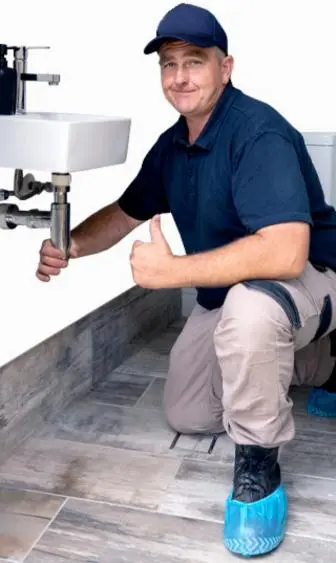
We treat your home with care: drop sheets or protective covers are used in work areas, boot covers are worn when requested or when conditions require them, and the work area is cleaned up before we leave. Rubbish generated by the job is removed, and any mess is tidied so the property is left in a clean, usable state. If the job involves cutting into walls or floors, the affected area is isolated where practical to reduce dust and debris spread, and any rough edges are tidied before we finish.
Emergency Plumbing, Drainage, and Gas Services We Handle
Our 24/7 emergency service covers the full range of urgent plumbing and gas faults. That includes broken pipes (mains pressure lines, hot water lines, external and internal), burst flexi hoses under sinks and behind toilets, corroded pipes that are actively leaking, and flooding caused by blocked drains or overflowing fixtures. We handle sewage leaks and backflow, which require immediate containment and safe disposal of contaminated water before the drain line can be cleared and tested.
For hot water emergencies, we assess and repair electric storage systems, gas continuous flow units, solar boosted systems, and heat pump units. If a hot water service has failed completely and replacement is needed, we can provide a quote for a new unit and schedule installation once you've confirmed the type and capacity that suits your household. If the fault is a leaking tempering valve, failed pressure relief valve, or faulty thermostat, those components can usually be replaced during the emergency visit and the system restored to safe operation.
Gas work includes tracing and repairing gas leakages in pipework or at appliance connections, testing systems after faults are reported, replacing faulty gas valves or regulators, and reconnecting appliances after they've been moved or replaced. All gas repairs are pressure tested before the system is recommissioned, and a compliance certificate is provided where required by regulations. If a gas hot water unit or cooktop isn't igniting correctly, we test the gas supply pressure, check the ignition system, and confirm that burners and jets are clear and operating within specification.
Contact Big Blue Plumbing for Emergency Service in Nambour
If you're dealing with an active leak, a gas smell, a complete loss of hot water, or a drain that's backing up into your home, don't wait for it to worsen. Big Blue Plumbing is available 24/7 for emergency plumbing across Nambour and the broader Sunshine Coast region. Call us on (07) 5404 9354 and we'll confirm priority, provide an ETA once the plumber is dispatched, and get the fault assessed and quoted so you can decide how to proceed. Fixed pricing, licensed plumbers, and a local team with 40+ years of combined experience across the Sunshine Coast, Noosa, and Moreton Bay areas.