24/7 Emergency Plumber in Mountain Creek
Big Blue Plumbing handles emergency plumbing in Mountain Creek around the clock, dispatching immediately for urgent work like burst pipes, blocked drains, gas leaks, and hot water system failures across the Sunshine Coast, Noosa, and Moreton Bay regions. All attending plumbers are licensed and insured, and work is priced by the job with a fixed upfront quote once the scope is confirmed onsite. If an issue requires parts or access that can't be resolved straight away, we make the plumbing safe and schedule the fix, explaining options before any additional work proceeds.
Urgent plumbing faults happen outside business hours. A burst flexi hose at 2am, a blocked toilet backing up before work, or the smell of gas when you walk in the door, these situations need immediate attention to limit damage and restore safety. Our 24/7 emergency service means urgent jobs are sent out first, with the nearest available plumber allocated from local dispatch points across the Sunshine Coast.
Mountain Creek sits within our full service coverage. Whether the problem is in a home, rental, or commercial property, the same process applies: assess the fault, explain what's needed, provide a fixed price before starting, then verify the outcome before leaving. You're not left guessing what went wrong or what happens next.
Common Emergency Plumbing Situations
Emergency plumbing covers faults that create immediate risk or disruption, situations where waiting until the next business day could cause property damage, safety concerns, or total loss of essential services. Burst pipes flood rooms and damage floors. Blocked drains back up into sinks, showers, or toilets, making the plumbing unusable. Gas leaks present a fire risk and require isolation. Hot water system failures in winter leave households without warm water for showers, dishes, or laundry.
On site, we often see burst flexible hoses under kitchen or bathroom vanities, these fail suddenly as the braided casing weakens over time, releasing water under mains pressure. Blocked drains in older properties are frequently linked to root intrusion or grease buildup in kitchen lines. Gas leaks show up as the characteristic rotten-egg odour (an added safety signal) or as a hissing sound near appliances or pipework.
What changes the approach: access to isolation points, whether the property is occupied, the location of the fault (internal vs external, above or below ground), and whether immediate parts are needed. If a replacement part isn't carried on the truck and it's outside supplier hours, we isolate the affected section, restore service to unaffected areas where possible, and return once the part is available.
If you're dealing with active water flow, the main priority is stopping further damage. Locate the water meter (usually near the front boundary or driveway) and turn the tap fully clockwise to shut off mains supply. That slows or stops internal flooding while the plumber is on the way. For gas, if the smell is strong or there's visible flame near a fitting, leave the property immediately and phone from outside, don't operate switches or try to isolate the gas yourself.
How Emergency Dispatch and Arrival Works
When an emergency booking comes through, urgent work is prioritised and the nearest available plumber is allocated from local coverage across the Sunshine Coast and surrounding hinterland areas. Immediate dispatch doesn't guarantee a specific arrival window, it means the job goes to the front of the queue and is assigned to whoever can reach the property soonest based on current location, traffic, and bookings already underway.
An ETA is provided when booking where possible, and arrival timing is updated if delays occur. For properties in Mountain Creek, typical access is straightforward via main arterial routes, though traffic conditions around school zones or peak commuter periods can affect timing. Parking at unit complexes or narrow streets may require coordination, so mentioning any access constraints when booking helps the plumber prepare.
On arrival, the plumber identifies themselves, confirms what's been reported, then assesses the fault. That first visit includes locating the source (not always where the symptom shows up), checking isolation points, confirming what's affected, and determining whether the fix can proceed immediately or requires parts, access, or follow-up work. You're walked through findings in plain English before any work starts, and the fixed price is confirmed before tools come out.
What the Fixed-Price Model Means for Emergency Work
Emergency plumbing is priced by the job, not by the hour. Once scope is clarified, what's being fixed, what it involves, what's needed to complete it, a fixed price is quoted upfront. That quote holds regardless of how long the work takes onsite, so there's no meter running or surprise add-ons if the job takes longer than expected.
What affects the price: the type of fault (a blockage clearance vs a pipe replacement), access difficulty (tight spaces, below-ground work, or height access), parts required, and whether it's standard hours or after-hours callout. If diagnostics show the fault is more complex than initially reported, that's explained and a revised quote provided before proceeding. You decide whether to go ahead once full scope and cost are clear.
No hidden fees are added after the quote. If the job requires a return visit because parts need ordering or access can't be completed in one trip, that's discussed upfront as part of the quoted scope. Call-out fees apply to emergency work depending on timing and location, confirm the call-out fee status when booking so there are no surprises at invoicing.
What Happens After the Fault Is Fixed
Once the repair or replacement is finished, the plumber tests and verifies the outcome. For leaks, that means checking the repaired section is watertight under pressure. For blockages, it means confirming flow is restored and the line drains freely. For gas work, it means leak-testing the repaired or replaced section to meet Australian Standards before reconnecting supply.
The work area is cleaned up, drop sheets removed, debris taken away, and surfaces wiped down where practical. If protective covers were used on floors or benchtops, they're removed and the space left tidy. You're given a receipt and invoice suitable for insurance claims, landlord records, or strata documentation.
Workmanship is covered by our workmanship warranty, explained in plain terms at the end of the job. If a workmanship issue shows up after completion, it's addressed under that warranty. Manufacturer warranties apply separately to any products installed (hot water units, taps, fixtures). If follow-up is needed, retesting, compliance documentation, or a scheduled return visit, that's confirmed before the plumber leaves.
Licensing, Insurance, and Professional Standards
All attending plumbers hold current Queensland licensing for the plumbing, drainage, and gas work they perform. Licensing requirements are strict in Queensland, covering both technical competency and ongoing compliance with Australian Standards. That ensures work is completed to safety standards, particularly for gas fitting and pressure testing, where non-compliant work creates serious risk.
We're comprehensively insured, covering both Public Liability (protection if accidental property damage occurs during work) and Workers Compensation (protection related to workplace injuries on the job). If something does go wrong, you're not left dealing with uninsured losses or liability disputes.
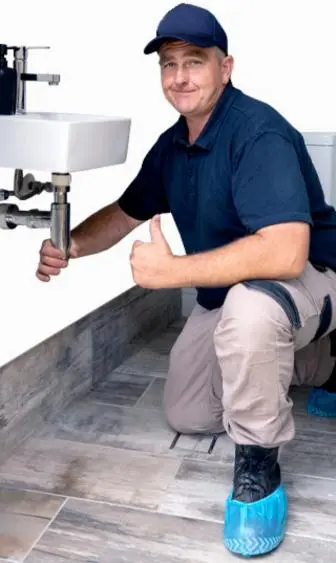
Professional conduct in occupied homes includes respectful behaviour, clear communication, and care around finished surfaces. Technicians arrive in uniform, confirm identity on arrival, and explain what's being done before starting. Protective boot covers or drop sheets are used where requested or where conditions require it. If the property has security-sensitive access or specific entry instructions, those are followed as communicated at booking.
When to Call for Emergency Plumbing vs Booked Work
Not every plumbing fault is an emergency. A dripping tap is annoying but doesn't cause immediate damage. A slow-draining sink is inconvenient but not urgent. These can wait for a booked appointment during standard hours, often at lower cost than after-hours callout.
Situations that justify emergency callout:
- Active water leak flooding a room or damaging walls, floors, or belongings
- Complete loss of hot water supply in winter with no alternative heating source
- Blocked toilet or drain causing sewage backup into the property
- Gas leak (smell or visible flame) posing fire or health risk
- Burst pipe or flexi hose releasing water under pressure
- Total loss of water supply affecting the whole property
If you're unsure whether the situation is urgent or can wait, a quick call clarifies priority. We can assess risk over the phone and recommend immediate dispatch or a next-available booked slot depending on what's described. You don't need to diagnose the cause yourself, explaining the symptom and impact is enough to determine the right response.
Coverage Across Mountain Creek and Surrounding Suburbs
Big Blue Plumbing services Mountain Creek as part of broader coverage across the Sunshine Coast, Noosa, and Moreton Bay regions in South East Queensland. That footprint includes surrounding areas like Flaxton, Kiels Mountain, Currimundi, Rosemount, and Cotton Tree, with local dispatch points positioned to handle urgent and booked work across the region.
For emergency work, proximity matters. The plumber allocated to your job is the nearest available at the time of booking, reducing travel time and improving response. Mountain Creek properties are typically reached via main Sunshine Coast arterials, so access is generally straightforward, though local traffic conditions and booking density on the day affect exact arrival timing.
Whether the property is residential, strata, commercial, or industrial, the same emergency response applies: immediate dispatch for urgent work, licensed tradespeople, fixed upfront pricing, and verification before leaving. If the fault requires specialist equipment (CCTV drain inspection, high-pressure jetting, leak detection) or follow-up work (pipe relining, replacement parts, compliance documentation), that's explained onsite and scheduled as needed.