Emergency Plumber Serving Currimundi and the Sunshine Coast
Big Blue Plumbing provides 24/7 emergency plumbing across Currimundi and the broader Sunshine Coast, Noosa, and Moreton Bay regions, with technicians dispatched from local bases when urgent work is booked. Emergency plumbing covers situations where immediate action is needed to prevent property damage, restore essential services, or address safety risks such as ruptured pipes, gas leaks, and severe drainage failures. Urgent jobs are allocated to the nearest available technician, and an ETA is provided when the booking is confirmed; arrival timing depends on current bookings and traffic conditions across the service area.
Our team holds the relevant plumbing, drainage, and gas licences for the work they perform, and all staff have completed police checks and background screening. We're covered by Public Liability insurance (protecting you if accidental property damage occurs during the job) and Workers Compensation insurance (covering workplace injuries on site). With over 40 years of combined plumbing experience and more than 3,000 jobs completed, we've handled urgent callouts across residential homes, strata properties, and commercial sites throughout South East Queensland.
Emergency work is priced by the job, not by the hour, with a fixed quote provided once the fault is assessed and the scope is confirmed onsite. There are no hidden costs added after the price is agreed. If the callout occurs after standard business hours or on weekends, confirm the call-out fee status when you book so there are no surprises.
What Counts as an Emergency Plumbing Situation
An emergency plumbing situation is one where waiting until business hours would result in property damage, loss of essential services, or a safety risk. Burst pipes flooding a home, active gas leaks, sewage backflowing into living areas, or a complete loss of water supply all justify urgent dispatch. On the other hand, a slow-draining sink or a dripping tap that's been going for weeks can usually wait for a scheduled appointment without causing harm.
The threshold is risk and consequence. If the fault is actively causing damage or poses a health and safety concern, it's an emergency. If it's inconvenient but stable, it's maintenance work that can be booked during regular hours at standard rates.
Burst Pipes and Major Leaks
Burst pipes occur when pressure buildup, corrosion, or physical impact causes a pipe wall to fail, releasing water at mains pressure. In homes with copper or older galvanised pipework, corrosion weakens the metal over time, and a sudden pressure spike (from a closing valve or water hammer) can trigger a rupture. Flexi hoses connecting taps and toilets are also prone to failure, particularly in installations over a decade old where internal braiding degrades.
The immediate priority is isolating the water supply at the meter or isolation valve to stop the flow while the plumber is on the way. Even a small breach can release hundreds of litres per hour, saturating floors, ceilings, and structural timber. We confirm the location and extent of the leak onsite, then repair or replace the failed section depending on what the inspection shows. Where access is restricted (behind walls, under slabs), the assessment includes locating the breach and explaining the repair options before work proceeds.
Gas Leaks and Appliance Faults
Gas leaks are identified by the distinctive "rotten egg" odour (an added safety chemical called mercaptan), hissing sounds near pipework or appliances, or gas detectors triggering an alarm. Any suspected gas leak is treated as urgent. Do not operate electrical switches, pilot lights, or ignition sources. Open windows and doors if safe to do so, then leave the property and call from outside.
Gas fitting work must be carried out by a NSW-licensed gas fitter and is subject to pressure testing under AS/NZS 5601.1 safety standards once repairs are complete. We locate the source of the leak, isolate the affected section, repair or replace the faulty component, and pressure-test the system before recommissioning. A compliance certificate is issued for regulated gas work to verify the installation meets safety requirements.
Blocked Drains and Sewage Backups
Blocked drains that cause sewage to back up into showers, toilets, or floor drains are treated as emergencies due to the health risk and property contamination. In residential properties, the blockage is often located in the main sewer line and can be caused by root intrusion (fine roots enter cracks in aging clay or concrete pipes and expand over time), collapsed pipe sections, or heavy debris buildup.
The assessment starts with identifying where the blockage is located (internal fixture trap, junction point, or boundary line) and what's causing the restriction. High-pressure water jetting is the standard clearing method, using specialized nozzles that break up roots and scour grease from pipe walls at pressures between 3,000 and 5,000 PSI. If CCTV inspection reveals structural damage or a collapsed section, options such as pipe relining or excavation and replacement are explained and quoted separately. Clearing restores flow; structural repairs are scoped as a follow-up once immediate access is confirmed.
Hot Water System Failures
A complete loss of hot water can justify urgent dispatch in households with young children, elderly residents, or medical needs, particularly during winter months. Hot water systems fail due to faulty thermostats, sediment buildup insulating heating elements, corroded sacrificial anode rods, or pressure relief valve failures.
The first visit involves checking power or gas supply, inspecting the unit for visible faults (rust, leaks, unusual noises), and testing controls. If the unit can be restored by replacing a heating element, thermostat, or relief valve, those repairs are quoted and completed onsite where parts are available. If the tank itself has corroded or the system is beyond economical repair, replacement options (electric storage, continuous flow gas, or heat pump) are explained and priced as a separate job. Temporary measures (such as partial function or safety isolation) are implemented if full resolution requires ordering parts or a follow-up installation.
How Emergency Plumbing Dispatch Works
When an emergency plumbing job is booked, urgent work is prioritised and the nearest available properly licensed technician is allocated from our dispatch bases across the Sunshine Coast, Noosa, and Moreton Bay regions. An estimated arrival time is provided at the time of booking based on current schedule and travel distance, and we provide ETA updates where possible as the technician is on the way.
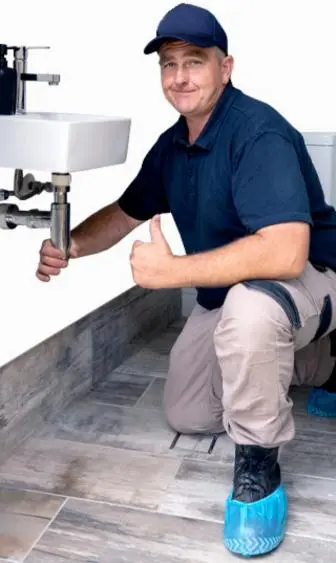
For properties with access constraints (restricted parking, strata sign-in requirements, or security gates), those details are noted during booking so arrival and site access can be coordinated. Technicians arrive in uniform, confirm their identity on arrival, and explain what they're assessing before starting. We wear boot covers or protective footwear when requested, and work areas are isolated where practical to reduce disruption in occupied homes.
If diagnostic checks reveal that parts need to be ordered, additional access is required, or the scope extends beyond what can be safely completed in a single visit, we explain the options and confirm the fixed price for the additional work before proceeding. Emergency callouts focus on making the situation safe, stopping active damage, and restoring essential function; non-urgent follow-up work (such as cosmetic repairs or full system replacements) is scheduled separately once scope is agreed.
What to Expect from the First Emergency Visit
The first visit to an emergency plumbing callout involves locating the fault, confirming what's causing it, and determining whether it can be resolved immediately or requires follow-up work. Tools typically brought to site include pipe wrenches, inspection cameras, electronic leak detectors, and a range of common replacement parts (washers, flexi hoses, valves, and fittings).
Once the source of the issue is identified, we explain what we've found in plain English, confirm what's included in the fix, and provide a fixed price for the work before starting. If the assessment shows that structural damage, concealed pipework, or specialist equipment is needed, those elements are explained and quoted as a separate scope rather than being added as a surprise later.
After the repair is complete, we test the outcome (checking flow, pressure, or function) and verify that the fault is resolved before leaving. Work areas are cleaned up, protective coverings are removed, and rubbish generated by the job is taken away. Receipts and invoices are provided on completion, with details suitable for insurance claims, landlord records, or strata documentation where required.
Pricing and Payment for Emergency Work
Emergency plumbing is priced by the job, not by the hour, with a fixed quote provided once the scope is assessed onsite. This removes the uncertainty of hourly billing and means you'll know the full price before starting work. There are no hidden fees added afterwards. If a call-out fee applies (particularly for after-hours or weekend emergencies), confirm that detail when you book so the total cost is clear upfront.
We accept payment via card, bank transfer, or a 0% interest payment plan through Brighte, which has a stated approval process of around 5 to 7 minutes for eligible customers. Seniors with a valid senior card receive a discount on quoted work. Invoices include a breakdown of what was completed, parts used, and any follow-up work recommended, making them suitable for landlords, strata managers, or insurance documentation.
If the initial assessment reveals additional faults or scope beyond the original callout (such as widespread corrosion or multiple fixture failures), those items are explained and quoted separately. You can decide whether to proceed with the extra work or schedule it as a follow-up job once the urgent issue is resolved.