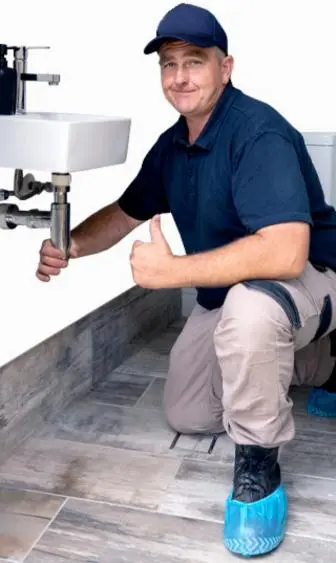
24/7 Emergency Plumber Covering Chevallum and the Sunshine Coast
Big Blue Plumbing handles emergency plumbing across Chevallum and the broader Sunshine Coast when a fault creates immediate risk to property or safety. Urgent jobs are sent out first from local dispatch points, with the nearest available licensed plumber (NSW) allocated to the booking. That covers active water leaks, burst or corroded pipes, total loss of water supply, sewage backups, and confirmed gas leaks, situations where delay increases damage, health risk, or means the property can't function. If inspection finds the fault needs parts, access points, or council sign-off, the scope is defined and a fixed price is quoted before any additional work goes ahead.
Chevallum sits within Big Blue Plumbing's Sunshine Coast service coverage, a mix of older fibro and brick homes alongside newer estate builds. Older properties sometimes still have original galvanised or clay pipework that corrodes or cracks under pressure, while modern PVC systems can fail at joins or if incorrectly installed. Both scenarios show up as emergency calls when pressure spikes or tree roots find a weak point.
The team has 40+ years of combined plumbing experience and operates with full licensing and insurance. Public Liability insurance covers accidental property damage during the work, and Workers Compensation relates to workplace injuries on the job. All attending plumbers are police-checked and background-screened, and they'll confirm identity on arrival before entry.
What Counts as a Plumbing Emergency in Chevallum
An emergency plumbing situation is one where waiting until normal business hours would result in property damage, health risk, loss of essential services, or safety hazards. It's not about convenience; it's about preventing harm or restoring critical function when a household or business can't operate safely without water, drainage, or gas supply.
Common emergency scenarios include:
- Burst pipes or flexi hoses: pressurised water actively flooding floors, ceilings, or wall cavities. Delaying increases structural water damage, mould risk, and electrical hazards if water reaches outlets or wiring.
- Sewage backups: wastewater surfacing in showers, toilets, or floor drains. This creates immediate health risks from contamination and often signals a mainline blockage or collapsed pipe that won't clear on its own.
- Total loss of water: mains supply cut off or internal system failure leaving the property without drinking water, toilet function, or kitchen access. For families or aged residents, this becomes urgent within hours.
- Gas leaks or gas smells: the distinctive rotten-egg odour means gas is escaping. Even a small leak poses explosion or poisoning risk and requires immediate isolation and professional assessment with pressure testing equipment.
- Hot water system failures during cold snaps: while not always an emergency, loss of hot water in winter for households with young children, elderly occupants, or medical needs can justify urgent callout if alternative heating isn't available.
For blocked drains that are slow but still draining, leaking taps that drip into a basin, or minor toilet cistern issues, these typically don't require after-hours rates unless they escalate. A brief phone call clarifies priority and whether same-day or next-day booking is more appropriate.
How Emergency Plumbing Response Works Across the Sunshine Coast
When an emergency booking comes through, Big Blue Plumbing allocates the nearest available licensed plumber from local dispatch points across the Sunshine Coast, Noosa, and Moreton Bay regions. Urgent jobs are prioritised ahead of scheduled maintenance, and an ETA is provided when booking where possible, though arrival timing depends on current job load, distance, and traffic conditions on major routes like the Sunshine Motorway or Nambour Connection Road.
The first visit involves:
- Making it safe: isolating water or gas supply to stop active leaks or contain the fault, then assessing immediate property risk.
- Identifying the cause: using drain inspection cameras for blockages, electronic leak detection for hidden pipe faults, or visual inspection for visible failures like corroded joints or burst flexi connectors.
- Explaining what's needed: describing the fault in plain English, what replacement or repair is required, and what happens if parts, access equipment, or council approvals are needed.
- Providing a fixed price: once the scope is confirmed, a fixed quote is given before work starts. That's priced by the job, not by the hour, with no hidden fees added later.
- Completing the repair: restoring function, testing flow and pressure, and checking for secondary leaks or related faults in the same line.
If the assessment finds a more complex issue, say, a mainline collapse requiring relining, or a hot water unit beyond economical repair, the plumber explains the options and books a follow-up once parts or approvals are arranged. You're not pressured into additional work; the the scope is confirmed and you decide once pricing is clear.
Common Emergency Faults in Sunshine Coast Homes and What Causes Them
Plumbing emergencies often follow predictable patterns linked to property age, pipe materials, and environmental factors. Across the Sunshine Coast, including Chevallum's mix of older and newer builds, certain faults show up more often under specific conditions.
Burst Pipes and Flexi Hose Failures
Older galvanised steel or copper pipes corrode from the inside out, thinning until water pressure causes a rupture. This often happens at joins, bends, or sections under constant pressure like mains feed lines. When it fails, water floods continuously until the mains is shut off.
Flexi hoses, the braided connectors under sinks, behind toilets, or feeding washing machines, have a limited lifespan. Over time, the internal rubber perishes and the braid weakens, leading to sudden catastrophic failure. Because they're under mains pressure, a burst flexi hose can release hundreds of litres per hour.
Blocked Drains and Sewer Lines
In established areas with mature trees, fine roots infiltrate microscopic cracks in clay or concrete sewer pipes, expanding over months to trap debris and form dense root masses. Eventually, the line backs up completely, with sewage surfacing at the lowest drain point, often the shower or laundry floor waste.
Kitchen drains blocked by accumulated fats, oils, and grease (FOG) solidify as they cool, narrowing the pipe and catching food scraps. Left unchecked, the blockage becomes total and requires high-pressure hydro-jetting to clear.
Hot Water System Breakdowns
Electric storage systems fail when the heating element burns out, the thermostat malfunctions, or the sacrificial anode rod corrodes through, allowing the tank itself to rust. Gas continuous-flow units can lose ignition if the pilot light fails, the gas valve sticks, or the heat exchanger scales up from hard water.
In older homes where the system hasn't been serviced in years, sediment buildup insulates the heating element or burner, reducing efficiency until the unit stops producing hot water entirely.
Gas Leaks at Appliances or Pipework
Gas leaks commonly occur at appliance connection points where fittings loosen from vibration, or at older steel pipe joins where thread sealant has degraded. The rotten-egg smell is added mercaptan, a safety odorant that makes natural gas detectable at low concentrations.
Any suspected gas leak requires immediate isolation at the meter or appliance valve, ventilation of the area, and a licensed gas fitter to pressure-test the system and confirm it's gas-tight before recommissioning.
Pricing and Call-Out Fees for Emergency Plumbing in Chevallum
Big Blue Plumbing prices work by the job, not by the hour. Once the fault is assessed and scope confirmed, a fixed price is quoted before we begin, covering labour, standard materials, and verification testing. That means no surprise hourly rate extensions or vague time estimates.
For emergency call-outs outside standard business hours, confirm the call-out fee status when booking. Some after-hours work includes a call-out component to cover rapid-response dispatch, while other urgent jobs are priced on scope alone. Asking upfront removes uncertainty.
What affects the final price:
- Fault complexity: a leaking tap washer takes minutes; a broken pipe buried under a concrete path requires excavation, pipe replacement, and reinstatement.
- Access constraints: tight ceiling spaces, blocked crawl access, or properties requiring parking permits and manual equipment transport add time and effort.
- Parts and materials: replacing a standard tap valve costs less than sourcing a discontinued hot water unit controller or ordering custom pipe fittings for older European systems.
- Time on site: clearing a shallow kitchen blocked drain is faster than hydro-jetting 20 metres of main sewer line with root-mass obstructions.
For larger emergency repairs where immediate cost is a concern, a 0% interest payment plan is available through Brighte, with approval typically completed in 5, 7 minutes. That splits the cost into manageable instalments without adding interest.
What to Do While Waiting for the Emergency Plumber
If you're dealing with an active fault and a plumber is on the way, a few immediate actions can limit damage and make the site safer for assessment. These aren't diagnostic steps, just basic harm reduction until a licensed professional arrives.
For active water leaks: turn off the mains water supply at the meter (usually near the front boundary or under a meter box lid). If you can't locate it or the valve is seized, turn off the isolation valve under the affected fixture (sink, toilet, washing machine). Move electronics, furniture, and valuables away from the leak area, and use towels or buckets to contain spreading water.
For possible gas leakage: do not operate light switches, electrical appliances, or ignition sources. Turn off the gas supply at the meter (clockwise to close) if you can reach it safely. Open windows and doors to ventilate, then leave the property and call from outside. Do not re-enter until a duly licensed gas fitter has tested and cleared the system.
For sewage backups: stop using all water outlets, toilets, sinks, showers, washing machines, to prevent additional wastewater from forcing more sewage to the surface. Isolate the affected area if possible, especially if children or pets are present, as sewage carries bacteria and pathogens.
For total loss of hot water: check whether the circuit breaker for an electric system has tripped, or whether the gas supply is still on for a gas system. If the breaker is off, resetting it may restore function temporarily; if it trips again immediately, there's likely an electrical fault requiring professional repair. For gas systems, if the pilot light is out and won't relight after one attempt, stop and wait for a duly licensed gas fitter.
These steps are about making the situation safe, not diagnosing the root cause. Once the plumber arrives, they'll assess properly using the right tools and testing equipment.
Why Immediate Response Matters for Some Faults
Not all plumbing faults justify emergency rates, but when they do, it's because delay compounds the problem exponentially. A small leak inside a wall cavity might release only a few litres per hour, but over 12 hours that's enough to saturate plasterboard, timber framing, and insulation, creating mould conditions and structural integrity issues that cost thousands to remediate.
Sewage backups expose occupants to E. Coli, salmonella, and other pathogens, with contamination spreading through porous surfaces and grout lines. The longer wastewater sits, the harder it is to sanitise and the higher the health risk, particularly for young children or immune-compromised residents.
Gas leaks, even minor ones, accumulate in enclosed spaces until reaching explosive concentrations. Because natural gas is lighter than air, it rises and pools near ceilings or in roof voids, where a single spark from a light switch or pilot light can ignite it.
For properties where water supply is critical, households with medical equipment requiring water, aged care residents, or commercial kitchens, total loss of function can't wait until the next business day. The immediate dispatch model exists for these scenarios.
Locally Owned Plumbing Team Across the Sunshine Coast
Big Blue Plumbing is a family-owned plumbing business operating across the Sunshine Coast, Noosa, and Moreton Bay regions, including Chevallum. With 40+ years of combined experience and over 3,000 completed plumbing and gas jobs, the team has handled the full range of emergency and maintenance work across commercial and residential properties.
All plumbers hold current licensing for the work they perform and carry full Public Liability and Workers Compensation insurance. Identity is confirmed on arrival, technicians arrive in uniform, introduce themselves, and explain what they're doing before starting. Police checks and background screening are completed for all attending staff.
The business holds a 5-star rating on Google based on 15 customer reviews, reflecting the standard of workmanship and the care taken in occupied homes. That includes using protective floor coverings, isolating work areas, removing rubbish at the end of the job, and treating the property with respect throughout.
Emergency work is completed to the same standard as scheduled jobs. Tools, parts, and diagnostic equipment are carried on every van, so most common faults can be resolved on the first visit without return trips. Where additional parts, approvals, or access equipment are needed, the plumber explains what's required and arranges follow-up once those elements are in place.
Workmanship Warranty and Quality Standards
All plumbing and gas work completed by Big Blue Plumbing is covered by a workmanship warranty. That means if a fault related to the quality of installation or repair shows up after the job is finished, it's addressed under the warranty at no additional charge.
The warranty covers the labour and workmanship, how the repair was completed, how fittings were installed, and how the system was tested and recommissioned. It doesn't cover manufacturer defects in supplied parts (those are covered by the product manufacturer's warranty), wear from normal use, or damage caused by external factors after the work was completed.
In plain terms: if a join leaks because it wasn't sealed properly, that's a workmanship issue and it's corrected under warranty. If a tap cartridge fails two years later due to hard water wear, that's a parts issue and a service call is needed, though the part itself may still be under manufacturer warranty depending on the brand.
Work is completed to Australian Standards (AS/NZS 3500 for plumbing and drainage, AS/NZS 5601 for gas installations) and local council requirements where applicable. For regulated work like gas fitting or backflow prevention, compliance documentation is provided on completion.
When to Book an Emergency Plumber vs Waiting for a Standard Appointment
If you're unsure whether a fault qualifies as urgent, ask yourself: Is this causing active property damage? Is it a health or safety risk? Can the household or business function safely without water, drainage, or gas until the next business day?
Emergency priority applies when:
- Water is actively flooding and can't be fully isolated
- Sewage is backing up into living areas
- There's a confirmed gas smell or visible gas leak
- The property has completely lost water supply with no alternative
- A fault poses immediate electrical hazard (water contacting outlets, wiring, or switchboards)
Standard same-day or next-day booking is usually appropriate when:
- A tap or toilet is dripping but can be caught in a bucket
- A drain is slow but still clearing
- Hot water is reduced but some warm water is still available
- A fixture needs replacement but the area can be isolated
A quick call to Big Blue Plumbing on (07) 5404 9354 clarifies priority and ensures the right response time is allocated. For genuine emergencies, immediate dispatch is arranged. For less urgent faults, a standard appointment is scheduled at a time that suits, often with lower call-out costs since after-hours urgency premiums don't apply.