24/7 Emergency Plumber Banya, Sunshine Coast
Big Blue Plumbing handles emergency plumbing in Banya, covering the Sunshine Coast, Noosa, and Moreton Bay regions with 24/7 availability for urgent work. We dispatch from local service points, so when something goes wrong after hours or on weekends, urgent jobs are sent out first and the nearest available licensed plumbing technician is allocated. Onsite conditions vary by property type, access, and the affected area, so the scope is established during the first visit, then a fixed upfront price is provided before any work proceeds. We're comprehensively insured (Public Liability and Workers Compensation) and carry 40+ years of combined plumbing experience across residential, commercial, and strata properties.
An emergency plumbing callout typically involves a sudden failure that risks property damage, creates a safety concern, or stops essential water services. That includes active leaks from burst pipes or failed hot water units, complete drainage blockages causing overflow, gas leaks requiring isolation, or a loss of water supply that can't wait until standard business hours. If the issue poses immediate risk or major disruption, it's usually classed as urgent and handled under our 24/7 emergency response.
What doesn't qualify as emergency work: slow drains that are still flowing, minor tap drips that can be contained, or routine maintenance that can be scheduled during normal hours. If you're unsure whether the situation is urgent, a brief phone call clarifies the priority level and we can explain what happens next.
What Emergency Plumbing in Banya Covers
Emergency plumbing work addresses faults that need immediate attention to prevent further damage or restore essential services. The most common emergency callouts at Banya properties involve burst water pipes (often from pressure surges, corrosion in older galvanised lines, or failed flexi hoses under sinks), complete drainage blockages causing toilet or shower overflow, hot water supply unit failures leaving the property without hot water, and gas leaks requiring isolation and pressure testing before the system can be used safely again.
Each of these situations shares a pattern: something has failed suddenly, the fault is worsening or creating risk if ignored, and a licensed plumber needs to assess the cause, isolate the affected section, and either repair it onsite or provide a quoted solution once the full scope is visible. In most residential situations, the priority is making it safe, stopping active leaks or overflow, and confirming what triggered the failure so it can be addressed properly rather than patched temporarily.
Other emergency scenarios we respond to across Banya and the wider Sunshine Coast include:
- Corroded or split pipework causing water damage to ceilings, walls, or floors
- Failed pressure relief valves on hot water supply tanks (often showing as continuous discharge)
- Sewer line backups affecting multiple fixtures
- Stormwater flooding during heavy rain events when drainage is blocked or collapsed
- Gas appliance faults where the smell of gas is present or appliances won't ignite safely
What sits outside emergency scope: planned installations, cosmetic upgrades, or minor faults that don't create immediate risk. Those are handled as standard bookings during business hours, with the same fixed-price quoting model once scope is established.
How Emergency Plumbing Works, First Visit to Resolution
An emergency plumbing job follows a straightforward process. When you book, we confirm the symptoms and location, then dispatch the nearest available licensed plumber from our local service coverage (Sunshine Coast, Noosa, and Moreton Bay). An ETA is provided where possible, factoring in current bookings and travel time to Banya. Most urgent jobs are prioritised and attended the same day, often within a few hours depending on demand and technician availability at the time of booking.
On arrival, the plumber identifies themselves, confirms access, and assesses the fault. That includes isolating the affected section (turning off water or gas supply where needed), inspecting visible pipework or fixtures, and using testing equipment such as drain inspection cameras or thermal leak identification if the fault location isn't immediately obvious. The goal at this stage is working out what failed, why it failed, and what's required to fix it properly rather than applying a temporary patch that breaks again in a few weeks.
Once the scope is clear, you're given a fixed upfront quote covering the work required to resolve the issue. The price is by the job, not by the hour, and includes labour, parts, and testing to verify the repair is holding. If the assessment uncovers additional faults (common in older properties where one failure can expose related wear), those options are explained separately and you decide whether to proceed with extra work or address the immediate fault only. Nothing beyond the agreed scope goes ahead without confirmation.
After the repair is completed, the plumber tests the system (checking flow, pressure, or gas integrity depending on the work type), cleans up the work area, and provides a receipt or invoice suitable for insurance claims, landlord records, or strata documentation. If compliance certification is required for gas or regulated drainage work, that's issued once the job meets the applicable Australian Standards.
What Affects Emergency Plumbing Costs
Emergency plumbing is priced by the job once the scope is verified onsite, not by the hour. That means the fixed quote you receive before work starts is the price you pay, with no hidden fees or surprise add-ons once the job is underway. Several factors affect what the final cost will be, and understanding those helps set realistic expectations before the plumber arrives.
Time on site and access complexity: A straightforward burst flexi hose under a kitchen sink that's easily reached and replaced in under an hour costs less than a concealed pipe leak requiring ceiling or wall access, diagnostic imaging, and structural reinstatement after the repair. Access constraints such as tight crawl spaces, roof cavities, or excavation for underground pipes all increase the time and labour involved.
Parts and materials: Standard replacement parts like tap washers, flexi hoses, or basic pipe fittings are low-cost. Specialist components such as hot water unit controllers, pressure-limiting valves, or gas-rated fittings add to the material cost, particularly if the original part is no longer manufactured and requires an approved alternative.
After-hours and weekend urgency: Emergency work outside standard business hours typically attracts a premium compared to scheduled daytime jobs. That reflects the cost of maintaining 24/7 availability and dispatching licensed plumbers at short notice, often interrupting other bookings or requiring standby coverage.
Extent of damage and related work: If a burst pipe has caused water damage to flooring, cabinetry, or electrical fittings, the plumbing repair itself may be relatively simple, but the associated reinstatement work (drying, replacing damaged materials, repainting) can be significant. We provide plumbing scope only; other trades are handled separately or coordinated if you need a single point of contact.
Once the plumber has assessed the fault and explained what's required, the flat-rate quote is provided and you decide whether to proceed. If the price sits outside your budget or you'd prefer to get a second opinion, that's your call. There's no obligation once the scope and cost are clear. To confirm the call-out fee status for your specific booking, ask when you make contact, some situations include the call-out within the total job price, others charge separately if you choose not to proceed after assessment.
Trust, Insurance, and Workmanship Standards
Big Blue Plumbing operates as a locally owned team with 40+ years of combined plumbing experience and a track record of 3,000+ completed jobs across the Sunshine Coast, Noosa, and Moreton Bay regions. That scale and longevity provide a level of accountability you don't get with sole traders or fly-by-night operators. We're adequately insured, which covers two key protections: Public Liability Insurance protects you if accidental property damage occurs during the work, and Workers Compensation Insurance addresses workplace injury liability for technicians working on your property.
Every attending plumber is appropriately licensed for the plumbing, drainage, and gas work they perform, with qualifications verified and current. Technicians carry identification, arrive in uniform, and are police-checked and background-screened before joining the team. That vetting process matters in residential settings where you're letting someone into your home, often at short notice and under stressful circumstances.
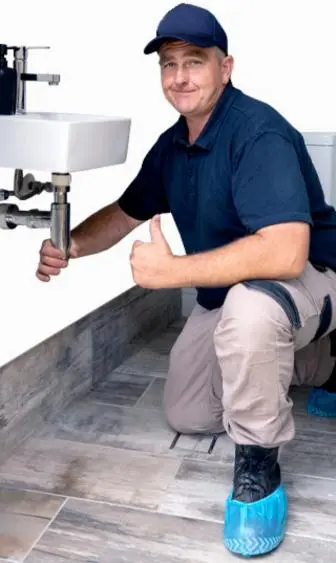
We protect your property during the job by using drop sheets or protective covers in work areas, wearing boot covers or removing shoes when requested, and isolating the work zone where practical to reduce mess. Finished surfaces such as tiled bathrooms, stone benchtops, and timber floors are treated with care, and the work area is cleaned up before we leave, rubbish and debris generated by the repair are removed, not left for you to deal with.
Our workmanship is covered by a Workmanship Warranty, which applies to the labour and installation quality we provide. That's separate from manufacturer warranties on parts and fixtures, which cover defects in the product itself. If a workmanship issue shows up after the job is completed, it's addressed under the warranty, we return, assess what's occurred, and resolve it at no additional charge if it's a workmanship fault. That accountability is embedded in how we operate, not an optional extra.
All work is completed to applicable Australian Standards and safety requirements. Where regulated work such as gas fitting or backflow prevention is involved, compliance documentation is provided once the installation or repair meets the necessary standards. Testing and verification are standard prior to leaving, flow rates are checked, pressure is confirmed, and gas systems are tested for leaks using approved methods.