24/7 Emergency Plumber Redcliffe
Big Blue Plumbing responds to emergency plumbing calls in Redcliffe and across the Moreton Bay region 24 hours a day, 7 days a week. Emergency work covers burst pipes, active leaks, gas leaks, blocked drains backing up into the property, and hot water systems that have stopped working entirely. Urgent jobs are sent out first, with the nearest available technician allocated from local dispatch points covering Moreton Bay and surrounding South East Queensland areas. If you're uncertain whether it qualifies as urgent, a quick call clarifies priority and confirms the right response.
When an emergency call comes in from Redcliffe, it's logged as urgent and the allocation goes to the closest available technician at that moment. An ETA is provided when you book, though actual arrival depends on current job load and traffic conditions across Moreton Bay. The first priority is containment: stop further damage, make the situation safe, and restore basic function where possible while the full assessment and permanent fix are confirmed.
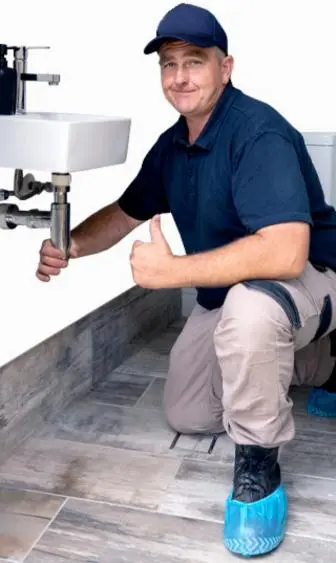
All attending technicians are licensed for the plumbing, drainage, and gas work they perform, and both police checks and background checks are completed for technicians entering occupied homes. Technicians arrive in uniform, confirm identity on arrival, and explain what they're doing before starting. We use drop sheets to protect floors, wear boot covers when requested, and clean up the work area before leaving.
Emergency callouts are priced by the job once scope is defined onsite, not by the hour. There are no hidden fees added later. When booking, confirm the call-out fee status for your specific situation, as it can vary depending on the time and type of work. If the job is straightforward and parts are on hand, resolution can happen during the first visit. If inspection reveals something more involved, like structural pipe damage or a system requiring replacement, the options and upfront costs are explained, and you decide whether to proceed once the full picture is clear.
What Counts as a Plumbing Emergency in Redcliffe
Not every plumbing fault needs an immediate callout, but some situations create risk or serious disruption if left unattended. A plumbing emergency is one where delaying action would cause property damage, create a health or safety hazard, or make the property unlivable. That includes active water flowing where it shouldn't, gas you can smell or hear, sewage backing up into living areas, or a complete loss of essential services like hot water in winter or working toilets.
Burst pipes are a common emergency trigger. Water under mains pressure can flood a room in minutes, damaging floors, walls, and belongings. If a pipe has split or a flexi hose has failed and water is actively flowing, the main shut-off valve should be turned off if it's safe and accessible to reach, then book a licensed plumbing specialist to assess and repair. The same applies to major leaks under sinks, behind walls, or in ceiling spaces where water is visibly dripping or pooling.
Gas leaks are always treated as urgent. Natural gas has a distinctive smell added for safety (often described as similar to rotten eggs), and any odour near appliances, pipework, or in enclosed spaces should trigger an immediate response. Do not operate switches or create sparks. Ventilate the area if safe to do so, evacuate if the smell is strong, and call a properly licensed gas fitter. Gas work in Australia is regulated and must be performed by someone holding the appropriate gas fitting licence.
Blocked drains become emergencies when sewage backs up into showers, toilets, or laundry areas, or when stormwater can't drain during heavy rain and flooding threatens the property. A slow drain is an inconvenience; sewage surfacing in the bathroom is a health risk and needs urgent clearing and assessment to identify the cause and prevent recurrence.
Hot water system failures aren't always emergencies, but they can be if the system is leaking actively, if there's no hot water supply in winter and vulnerable occupants are affected, or if a gas unit is behaving unusually (strange smells, sooting, or not igniting properly). Routine "no hot water supply" situations outside these conditions are usually handled as priority service calls rather than emergency dispatch.
How Big Blue Plumbing Handles Emergency Calls
The emergency process starts when the call comes in. You'll be asked what's happening, where the issue is located, and whether there's any immediate risk (active water flow, gas smell, sewage backup). That information determines whether it's logged as an emergency dispatch or a priority booking. For genuine emergencies, the nearest available technician is allocated and an ETA is provided based on their current location and the quickest route to Redcliffe.
On arrival, the technician identifies themselves, confirms the reported issue, and begins a safety-first assessment. If water is still flowing, the immediate goal is isolation, shutting off supply to the affected area or, if necessary, at the mains. If it's a gas issue, the gas supply is turned off until the fault is located and repaired. The work area is made safe, and any risk to occupants or property is explained clearly.
Once the situation is stable, the diagnostic phase begins. For ruptured pipes, that means identifying where the failure occurred, checking surrounding pipework for corrosion or stress, and confirming whether a section needs replacing or if a joint can be resealed. For blockages, it typically involves locating the restriction, whether it's in an accessible trap, further down the line, or in a shared drainage point, and determining the best clearing method.
Before any repair work proceeds, scope and cost are confirmed. You'll be told what needs to be done, what it will cost as a fixed price for that job, and what the repair will and won't cover. If parts need to be sourced or the work requires a follow-up visit (for example, if relining is recommended after clearing a blocked sewer line), that's explained upfront and the options are discussed. You decide whether to proceed once you have the full information.
After the work is completed, the system is tested to confirm it's functioning correctly. Taps are run to check for leaks, drains are flushed to verify flow, and gas appliances are checked for safe operation if gas work was involved. The technician explains what was done, what to watch for, and whether any follow-up is recommended. The work area is cleaned, rubbish is removed, and the invoice is provided with a breakdown of what was completed.
What Happens If the Problem Can't Be Fixed Immediately
Some emergency situations can't be permanently resolved on the first visit. If a hot water system has failed completely and a replacement unit needs to be ordered, or if a sewer line requires relining and that work needs to be scheduled separately, the priority shifts to making the situation safe and minimising disruption until the full repair can happen.
Temporary measures might include capping off a damaged section of pipe to restore water to the rest of the property, providing a workaround for a drain blockage until a camera inspection can be arranged, or isolating a faulty gas appliance while a replacement part is sourced. These aren't permanent fixes, but they reduce immediate risk and restore partial function while the permanent solution is organised.
We'll confirm what's been done to make it safe, what still needs to happen, and when that can be scheduled. If parts need ordering or if the work depends on access to areas that can't be reached during the emergency visit, the next steps and timeframes are explained before leaving. The workmanship on temporary repairs and permanent fixes is covered by our workmanship warranty, which means if a fault related to our work shows up later, it's addressed under that warranty.
Common Emergency Plumbing Situations in Moreton Bay Properties
Across Moreton Bay, including Redcliffe, the most frequent emergency callouts tend to follow predictable patterns, often linked to property age, usage, and environmental factors. Burst flexi hoses under sinks and behind toilets are a common trigger, particularly in properties where the hoses haven't been replaced in over five years. These braided hoses can fail suddenly, releasing water under full mains pressure into cupboards, behind walls, or across bathroom floors.
Blocked sewer lines are another regular emergency scenario. Tree roots are often the culprit in older suburbs with established vegetation, where fine roots enter hairline cracks in aging clay or PVC pipes and gradually expand, trapping debris and restricting flow. The blockage might show up as slow drainage at first, but it can escalate quickly to a full backup during heavy water use or after a storm when stormwater and sewage lines intersect.
Hot water system failures spike during peak usage times, early mornings in winter, or after a holiday period when a system hasn't been used for weeks and sediment has settled. Electric storage systems can trip due to element faults, while gas continuous flow units may fail to ignite if the pilot assembly is fouled or if there's an issue with gas supply pressure. These failures aren't always emergencies, but they become urgent when there's no alternative hot water source and vulnerable occupants (young children, elderly residents, or those with health conditions) are affected.
Gas leaks, while less common, are treated as high-priority emergencies whenever they occur. Most result from corroded fittings, damaged appliance connections, or work done by unqualified individuals. If you can smell gas or hear a hissing sound near an appliance or along a gas line, the safest approach is to ventilate, avoid creating sparks, and call a licensed gas fitter immediately. Gas work is regulated under Australian Standards and must only be performed by someone holding a gas fitting licence.
Why Emergency Plumbing Costs What It Does
Emergency plumbing costs more than scheduled work, and that's driven by the operational realities of providing 24/7 availability. Keeping licensed technicians on call outside standard business hours, maintaining fully equipped vehicles with commonly needed parts, and dispatching to urgent jobs that interrupt planned work all carry higher costs. Those costs are reflected in emergency callout pricing.
Several factors affect what an emergency job will cost once scope is established onsite. The time of day or night is one variable, after-hours callouts (evenings, weekends, public holidays) generally carry higher rates than work performed during standard business hours. The complexity of the job is another: a straightforward pipe repair will cost less than a situation requiring excavation, multiple fittings, or work in hard-to-reach areas like ceiling cavities or under concrete slabs.
Parts availability also plays a role. If the repair needs a part that's in stock on the truck, the job can proceed immediately. If a specific component needs to be sourced, an obsolete hot water valve, a particular tap cartridge, or a gas regulator, that can mean an additional callout once the part arrives, which affects total cost. We explain those variables before quoting, so there are no surprises once the work is scoped.
Our pricing model is fixed by the job, not by the hour, which means you're quoted a total price for the work after the assessment, not an hourly rate that climbs while the job is underway. That pricing is provided upfront before any repair work starts, and it covers the labour, parts, and cleanup involved. If the scope changes during the job, if additional damage is found, for example, that's flagged before proceeding, and a revised quote is provided. You decide whether to go ahead based on full information.
Fully Insured, Licensed, and Locally Dispatched
Big Blue Plumbing is comprehensively insured, which provides protection if something unexpected happens during the job. Public Liability insurance covers accidental property damage that might occur while work is being carried out, such as a dropped tool damaging a tile or a water spill affecting flooring. Workers Compensation insurance covers workplace injuries, protecting both our team and you as the property owner if an injury occurs onsite.
We've completed over 3,000 plumbing and gas jobs across the Sunshine Coast, Noosa, and Moreton Bay regions, which means our team has seen how faults vary by property type, construction era, and site conditions. That experience helps with accurate diagnosis and identifying the most effective repair approach for the specific situation. It's not just about fixing the immediate problem; it's about understanding what caused it and whether there are related risks that should be flagged.
All technicians hold the appropriate licences for the work they perform, plumbing licences for water and drainage work, and gas fitting licences for gas installations, repairs, and compliance testing. Licensing is a legal requirement in Queensland, and it ensures the work meets Australian Standards and safety regulations. If the job involves regulated work (such as gas fitting, backflow prevention, or work affecting shared drainage), compliance documentation is provided where required.
Our team is dispatched from local points covering Moreton Bay and the broader South East Queensland region, which reduces travel time to Redcliffe and surrounding suburbs. That proximity supports faster response when jobs are logged as urgent. We operate 24 hours a day, 7 days a week, so emergency availability isn't limited to business hours or weekdays.
When to Call for Emergency Plumbing
If you're weighing whether to call immediately or wait until morning, consider the risk and disruption if the situation continues. Active water flow that's damaging property, any detectable gas smell, sewage backing up into living areas, or a complete loss of water or hot water during cold weather all justify an immediate callout. Delaying in those situations usually makes the damage worse and the eventual repair more costly.
For less severe issues, a dripping tap, a slow drain that's still functional, or a hot water system that's struggling but still producing some warm water—you can often book a priority service call rather than logging it as an after-hours emergency. That keeps costs lower while still getting the issue addressed quickly. If you're uncertain which category your situation falls into, a quick call can clarify whether it needs urgent dispatch or whether a next-available booking is appropriate.
When you call, you'll be asked to describe what's happening and where the issue is located. If there's a safety risk (gas smell, electrical fault near water, structural damage from a burst pipe), that's flagged immediately and the technician is dispatched as an emergency. For situations where the fault is contained and there's no immediate risk, the booking can be scheduled as a priority job during the next available slot, often the same day or within 24 hours depending on demand.