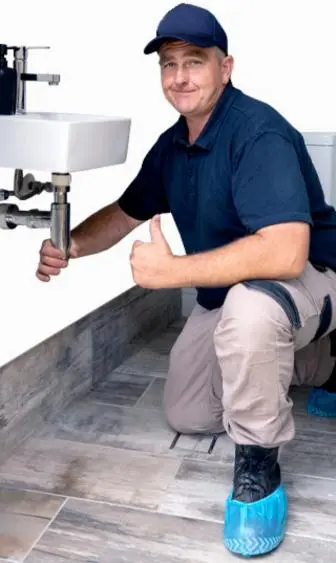
24/7 Emergency Plumber in Mango Hill and Moreton Bay
Big Blue Plumbing handles emergency plumbing across Mango Hill and the wider Moreton Bay region with immediate dispatch for urgent jobs, backed by 40+ years of combined plumbing experience and over 3,000 jobs completed. We're a locally owned Queensland team covering the Sunshine Coast, Noosa, and Moreton Bay areas, so emergency callouts in Mango Hill are sent to the nearest available technician from local dispatch points. When an urgent fault occurs, broken pipes, gas leaks, flooding, hot water failures, the priority is making it safe, limiting property damage, and restoring function as quickly as conditions allow.
Emergency plumbing differs from booked maintenance because the fault creates immediate risk: water pouring into a ceiling cavity, a gas smell near an appliance, or a sewer backup into a bathroom. The response is triage-focused. Urgent jobs are sent out first, and you're provided an ETA once the booking is confirmed and a technician is allocated. Timing depends on current bookings, traffic, and how far the plumber is travelling from the last job, but the allocation is immediate when the fault is classified as an emergency.
We're licensed for plumbing, drainage, and gas work, fully insured (Public Liability protects you if accidental property damage occurs during the job, and Workers Compensation covers workplace injury situations), and operate under a fixed-price model. You're quoted by the job once scope is agreed onsite, not charged by the hour. There are no surprise charges added after the work is done. If you're booking an emergency callout, confirm the call-out fee status when you contact us so you know what to expect before the plumber arrives.
What Counts as a Plumbing Emergency
Not every plumbing fault requires emergency dispatch. If water or gas can be safely isolated and the situation is stable, a next-available booking often makes more sense and avoids the urgency pricing that applies to after-hours or immediate-response work. Emergency dispatch is justified when the fault poses a safety risk, causes active property damage, or eliminates access to an essential service like water or a working toilet.
Situations that typically justify emergency response include:
- Burst pipes or flexi hoses: Water spraying under pressure into a wall cavity, ceiling, or subfloor. Isolate the water main if accessible, then book immediate dispatch to stop the leak and assess the damage.
- Gas leaks or gas smells: Any detectable gas odour near an appliance, meter, or pipe junction is treated as urgent. Evacuate, ventilate, don't use electrical switches, and call for immediate assessment.
- Flooding from drainage failure: Sewage or stormwater backing up into a bathroom, laundry, or kitchen. This creates a hygiene hazard and often indicates a blockage or collapsed line that requires camera diagnosis and clearing.
- Hot water system failures in winter or with young children/elderly residents: While not always classified as an emergency, loss of hot water can justify urgent dispatch depending on household needs and outside temperature.
- No water access due to a main line fault: If the property has lost all water supply and it's traced to an internal fault (not a broader network issue), restoring access is treated as urgent.
On the first visit, we assess the fault, identify the cause, explain what's needed to make it safe and restore function, and provide a fixed-price quote before starting the repair. If a temporary fix is possible to reduce immediate risk, that's explained as an option, along with what a permanent solution involves. You decide how to proceed once scope and cost are confirmed.
How Emergency Plumbing Dispatch Works
When you call for emergency plumbing, the process is designed to get a correctly licensed plumbing technician onsite as quickly as current bookings and travel allow. Here's what actually happens after you make contact.
Booking triage: Urgent jobs are prioritised over scheduled maintenance. If the fault involves active water damage, gas risk, or loss of an essential service, it's flagged for immediate allocation. You'll be asked basic details, what's happening, where the fault is, whether water or gas has been isolated, so the right plumber with the right tools is sent.
Technician allocation: The nearest available plumber is dispatched from local coverage points across Moreton Bay. An ETA is provided when the booking is confirmed, based on their current location and traffic conditions. If something changes and the arrival is delayed, you're updated.
Onsite assessment: The plumber arrives, identifies themselves, confirms the fault location, and begins the assessment. For leaks, that often involves tracing the water path and checking walls, ceilings, and subfloors with moisture detection tools. For blockages, it might involve a CCTV inspection to locate the restriction. For gas faults, it involves pressure testing and thermal imaging to confirm where the leak originates.
Scope confirmation and quoting: Once the cause is identified, the plumber explains what's needed to fix it, what's included in the repair, and provides a fixed-price quote. If the repair is straightforward and parts are onboard, it's usually completed the same visit. If it requires specialised parts, excavation, or relining, the options are explained and a follow-up is scheduled once you've confirmed how you'd like to proceed.
The goal is to make the situation safe, stop further damage, and restore function where possible on the first visit. If a full repair can't be completed immediately, you're given clear next steps and a timeline for finishing the work.
Common Emergency Plumbing Faults in Mango Hill Properties
Mango Hill includes a mix of newer master-planned estates and older established homes, which means the plumbing faults we see vary depending on property age, pipe materials, and site conditions. From jobs across similar Moreton Bay properties, a few patterns show up regularly.
Burst flexi hoses under sinks and behind toilets: Braided flexi connectors have a working life. When they fail, they tend to let go suddenly, spraying water under mains pressure until the isolation valve or main is shut off. These are common in properties where the original hoses were installed during construction and haven't been replaced since. The usual fix is replacing the failed hose and checking other flexi connections in the property for age and condition.
Hot water system failures during peak use periods: Storage hot water systems in South East Queensland work hard during winter morning showers and after-school routines. When a system fails, it's often due to a faulty thermostat, a blown element (electric), a failed pilot or gas valve (gas), or internal corrosion that's caused the sacrificial anode to erode completely. On the first inspection, we test the system, check for visible rust or leaks, and confirm whether repair or replacement makes sense based on age and condition.
Blocked drains from root intrusion: Established properties with large trees, figs, eucalypts, or dense hedge roots, can develop blockages where fine roots enter clay or PVC joins, trap debris, and eventually choke the line. A camera inspection shows where the restriction is, how severe the root mass is, and whether the pipe is still structurally sound. If it's a root blockage without pipe collapse, high-pressure water jetting usually clears it. If the pipe is cracked or offset, relining or excavation is discussed as the next option.
Sewer line backups during heavy rain: Low-lying areas or properties with older earthenware sewer lines sometimes experience backflow during storm surges, especially if stormwater is incorrectly connected to the sewer line or the line has collapsed. Diagnosis involves camera work to trace the flow path and identify any structural issues or illegal connections.
Every property is different. These are patterns, not guarantees. What we find onsite determines the scope, and that's confirmed before any repair work starts.