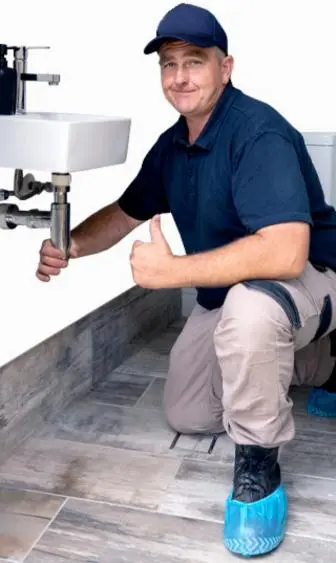
24/7 Emergency Plumbing in Kobble Creek
Big Blue Plumbing covers emergency plumbing in Kobble Creek through 24/7 dispatch from our Moreton Bay service coverage, which includes the Sunshine Coast, Noosa, and surrounding hinterland areas. Urgent jobs are sent out first, with the nearest available licensed plumber allocated to assess the fault, isolate the water or gas where needed, and confirm the scope onsite. This covers immediate risks like ruptured pipes, blocked drains backing up into living areas, gas leaks, and hot water failures where safe supply can't be restored without professional work. Where an issue can be made safe and usable temporarily, we explain what's been done and arrange a follow-up booking once parts or access are confirmed.
Emergency work is priced by the job, not by the hour, with a flat-rate quote provided once the fault and required repair are confirmed. All attending plumbers hold the appropriate Queensland licences for plumbing, drainage, and gas work. We're comprehensively insured and complete police and background checks for all technicians. With over 40 years of combined plumbing experience across 3,000+ completed jobs, our team is familiar with how faults present differently across older fibro homes, brick veneer builds from the 1990s, and newer Moreton Bay estates.
If you're dealing with an active leak, a drain that's backing up, or you can smell gas, treat it as urgent. A brief call to (07) 5404 9354 is enough to confirm priority and dispatch a plumber.
What Counts as a Plumbing Emergency
A plumbing emergency is any fault that creates an immediate safety risk, causes ongoing property damage, or stops essential water and gas services from functioning safely. In residential properties, this includes burst pipes flooding rooms or subfloors, blocked drains overflowing sewage into bathrooms or kitchens, gas leaks where the distinctive odour is present, and hot water systems that have failed completely or are leaking at pressure relief valves. Commercial sites may also experience backflow risks, flooded amenities, or gas supply faults affecting kitchen or heating appliances.
The threshold is not convenience; it's safety and containment. If water is actively damaging flooring, ceilings, or electrical fittings, it requires immediate attention. If a gas smell is present and the source can't be isolated safely at the meter, the area should be ventilated and a duly licensed gas fitter called. Where a blockage is causing sewage to back up into sinks, showers, or toilets, the health risk makes it urgent.
Some faults sit in a grey area. A dripping tap is annoying but not an emergency. A toilet that won't flush in a single-toilet home becomes urgent faster than in a multi-bathroom property. When booking, describe what's happening and what you've already isolated (if safe to do so). That allows the plumber to confirm priority and bring the right tools.
Burst Pipes and Water Leaks
Burst pipes in Moreton Bay properties are often caused by pressure surges, corrosion in older galvanised or copper lines, or ground movement stressing joints in reactive clay soils. Flexi hoses under sinks and behind toilets can also fail suddenly, especially in homes where original fittings have been in place for over a decade. When a pipe bursts, the priority is isolating the water supply at the closest stopcock or the mains, then calling a licensed plumber (NSW) (NSW) to assess the damage and replace the failed section.
Water leaks that are actively running cause two problems: immediate property damage to floors, walls, and belongings, and ongoing water waste that adds to utility costs. In multi-level homes or units, leaks can also affect neighbours or common property. The longer water runs unchecked, the greater the risk of structural damage, mould growth, and insurance complications.
On arrival, we locate the source, confirm what triggered the failure, and assess whether the surrounding pipework is at similar risk. Once the fault is isolated and the scope is clear, we provide a fixed-price quote that covers the replacement, testing, and cleanup. If the burst has affected subfloor areas or caused ceiling damage, we explain what's structurally affected and whether further trades (builders, electricians) are needed once the plumbing is secure.
Blocked Drains and Sewage Backups
Blocked drains that cause sewage to back up into sinks, showers, or toilets are treated as urgent due to health risks and the immediate disruption to daily routines. In Kobble Creek and surrounding Moreton Bay areas, common causes include tree root intrusion into aging terracotta or PVC pipes, and fat, oil, and grease buildup in kitchen lines. Roots seek moisture and enter through microscopic cracks, expanding over time and trapping debris until flow is restricted or stopped completely.
Blockages in main sewer lines affect multiple fixtures simultaneously. If flushing the toilet causes the shower to gurgle or water to rise in floor drains, the restriction is likely downstream in the shared line to the street. Internal blockages (a single fixture affected) are often closer to the problem area and may be cleared more quickly.
We begin with a visual inspection and use a CCTV drain camera where needed to identify the blockage type, depth, and exact location within the property boundary. High-pressure water jetting clears most obstructions by breaking up roots and scouring grease from pipe walls. Where the camera shows structural damage or collapsed sections, pipe relining or excavation may be required. Those options are explained and quoted separately once the initial blockage is cleared and the line can be properly assessed.
Gas Leaks and Appliance Faults
Gas leaks are identified by the distinctive rotten-egg odour added to natural gas as a safety measure. Other signs include hissing sounds near appliances or pipework, dying vegetation over underground gas lines, or pilot lights that won't stay lit. If you can smell gas and the source can't be isolated safely at the gas meter, ventilate the area by opening windows and doors, avoid using electrical switches or naked flames, and call a licensed gas fitter immediately.
Gas work in Queensland must be performed by a duly licensed gas fitter and comply with AS/NZS 5601.1 safety standards. This includes pressure testing after any repair or new connection to confirm the system is gas-tight before being recommissioned. We use combustible gas detectors and thermal imaging to locate leaks behind walls or in subfloor areas, then isolate the fault, repair or replace the affected section, and test the system before restoring supply.
Common gas faults include corroded or damaged pipes (often in older homes with steel gas lines), failed appliance connections, and regulator faults at the meter. Where an appliance such as a cooktop or hot water unit is involved, we check whether the fault is in the appliance itself or the gas supply line. If the appliance needs replacement or specialist repair, we explain the boundary and provide contact details for appliance service providers where relevant.
Hot Water System Failures
Hot water system failures during winter or after extended use are often linked to thermostat faults, element burnout in electric storage systems, or pilot light issues in gas continuous flow units. Systems that are over ten years old may also show signs of internal corrosion, sediment buildup, or failing pressure relief valves. When a system stops producing hot water service entirely, or is leaking at the base or from relief valves, it usually requires professional assessment to confirm whether replacement or repair is the right option.
Electric storage systems heat water using immersion elements, which can fail due to sediment insulating the element or general wear. Gas systems rely on burners and heat exchangers, which can be affected by carbon buildup or ignition faults. Solar and heat pump systems add complexity, with potential faults in pumps, controllers, or refrigerant circuits.
We assess the fault onsite, check for error codes (where applicable), and test the system's electrical or gas supply. If the unit is repairable and the fix is cost-effective relative to the system's remaining lifespan, we explain what's involved and provide a fixed-price quote. Where replacement is recommended, we discuss system types suited to the property (electric, gas, solar, heat pump), installation requirements under Australian Standards, and how Tempering Valves and Pressure Relief Valves are fitted to meet safety and compliance obligations. All hot water work includes a workmanship warranty, and we explain the difference between that and any manufacturer warranty on the unit itself.
How Emergency Plumbing Works
When you call Big Blue Plumbing for an emergency, the initial step is confirming what's happening, what's been isolated (if anything), and whether there's an immediate safety risk. Urgent jobs are dispatched first, with the nearest available fully licensed plumbing technician allocated from our Moreton Bay and Sunshine Coast coverage. We provide an estimated arrival time when booking, with updates if traffic or prior job delays affect timing.
On arrival, the plumber assesses the fault, isolates the water or gas supply where needed, and explains what's caused the issue and what's required to restore safe function. If the repair can be completed immediately with parts on the truck, we provide a fixed-fee quote and proceed once you've confirmed you're happy with the scope and cost. Work is priced by the job, not by the hour, so you know the cost upfront without surprises.
Where parts need to be ordered, access is restricted (e.g., ceiling or subfloor work requiring additional tradespeople), or the fault requires further diagnostics, we make the system safe and usable as a temporary measure where possible, then schedule a follow-up booking. You're not left without water or with an unsafe gas supply unless the fault itself makes isolation the only safe option. Before leaving, we confirm what's been done, what happens next, and when you can expect the follow-up.
After the repair is complete, we test and verify the fix. For ruptured pipes, that means checking the new section is leak-free under pressure. For blocked drains, we confirm flow is restored and use the camera to verify the line is clear. For gas work, we perform a pressure loss test to ensure the system is gas-tight. If the repair has affected finishes (e.g., cutting into walls or ceilings for pipe access), we explain what reinstatement is required and whether that's included in the plumbing scope or needs a separate trade.
Fixed Pricing and Transparent Costs
All emergency plumbing work is priced by the job, not by the hour. Once the fault is assessed and the scope is confirmed onsite, we provide a fixed-price quote that covers the repair, parts, testing, and cleanup. That price doesn't change unless the scope changes, for example, if opening a wall reveals additional damage that wasn't visible during the initial assessment. If that happens, we explain the new finding, provide a revised quote, and confirm you're happy to proceed before any extra work starts.
The fixed-price model removes uncertainty around time on site. You're not watching the clock while the plumber works, and you're not surprised by a bill that's higher than expected because the job took longer than quoted. Emergency call-out fees may apply depending on the time of day and the nature of the job. When booking, confirm the call-out fee status and whether it's waived if you proceed with the quoted repair.
We keep pricing straightforward and avoid hidden fees. The quote includes travel, labour, parts, and testing. If additional costs apply (e.g., crane hire for rooftop hot water access, or council permits for work affecting shared property), those are explained upfront as separate line items. You decide whether to proceed once the full cost is clear.
For larger emergency repairs, we offer a 0% interest payment plan through Brighte, with approval typically completed in 5-7 minutes. That option is explained when quoting if the repair cost makes it relevant. Seniors with a valid senior card also receive a discount, just let us know when booking.
Why Immediate Response Matters
Plumbing emergencies escalate quickly. A broken pipe flooding a bathroom can spread to adjoining rooms, seep into subfloor areas, and affect electrical wiring within minutes. Blocked drains overflowing sewage create health hazards and make the property unusable until flow is restored. Gas leaks are a safety risk that requires immediate isolation and professional repair before the system can be used again.
The faster the response, the smaller the damage. Water that's isolated and contained within an hour causes less structural harm than water left running for half a day. Drains that are cleared before sewage backs up through multiple fixtures reduce cleanup time and health risks. Gas leaks that are repaired and tested promptly restore safe appliance use without extended downtime.
Delaying emergency work doesn't just prolong the inconvenience; it often increases the repair cost. Water damage that's left unaddressed can require builders, electricians, and floor restorers in addition to the plumber. Blocked drains that aren't cleared can cause pressure to build until pipes crack or joints separate. Hot water systems that are leaking but still limping along can fail completely, often at the worst possible time.
Our 24/7 availability means you're not waiting until Monday morning or the end of a public holiday to get help. Urgent jobs are dispatched immediately, and we communicate clearly around arrival timing and what to expect. If we're delayed, you'll know. If the job can't be finished in one visit, you'll know what's been done and when we're coming back.
Licensed, Insured, and Accountable
All Big Blue Plumbing technicians hold the appropriate Queensland licences for the plumbing, drainage, and gas work they perform. That's a legal requirement, but it's also a capability and safety threshold. Licensed plumbers are trained to assess faults correctly, work to Australian Standards, and complete installations that meet safety and compliance obligations under the National Construction Code and AS/NZS 3500.
We're adequately insured with Public Liability and Workers Compensation coverage. In plain English, that means if accidental property damage occurs during our work, Public Liability insurance provides protection related to that damage. Workers Compensation provides protection related to workplace injuries that may occur on the job. Insurance isn't a guarantee that nothing will go wrong, but it does mean there's a formal process and coverage framework in place if something does.
Work is covered by our workmanship warranty, which applies to the labour and installation we've completed. That's separate from any manufacturer warranty on products like hot water systems or tapware. If a workmanship issue shows up after we've left, for example, a joint that wasn't sealed correctly and starts weeping, we address it under the workmanship warranty. If a product fails due to a manufacturing defect, the manufacturer warranty applies, and we can assist with lodging that claim where relevant.
We complete police checks and background checks for all technicians. On arrival, our plumbers can identify themselves before entering your property. They'll be in uniform, arrive in a marked vehicle, and behave respectfully while working in occupied homes. We use protective floor coverings in work areas, keep noise and mess as low as practical, and remove rubbish and debris at the end of the job. If you have specific entry instructions (e.g., security gates, pets, or access timing), let us know when booking and we'll follow them.
What We Cover Across Moreton Bay
Big Blue Plumbing services Kobble Creek and the broader Moreton Bay region, including surrounding suburbs such as Margate, Bellthorpe, Warner, Brendale, and Mount Nebo. Our coverage extends across the Sunshine Coast, Noosa, and South East Queensland hinterland areas, with 24/7 emergency dispatch from local points.
We handle emergency plumbing faults in residential properties (houses, townhouses, units), strata and body corporate sites, rental properties, and commercial premises. That includes:
- Burst pipes, flexi hose failures, and water leaks affecting walls, ceilings, or subfloors
- Blocked drains and sewage backups in kitchens, bathrooms, laundries, and external lines
- Gas leaks, appliance connection faults, and pressure regulator issues
- Hot water system failures (electric, gas, solar, heat pump) including no hot water, leaking relief valves, and thermostat faults
- Toilet cistern failures, leaking taps, and fixture faults where water can't be isolated without shutting off the mains
Where the fault involves common property in a strata building (e.g., shared water mains, sewer lines, or gas risers), we coordinate with the body corporate or strata manager to confirm responsibility boundaries and arrange access. For rental properties, we provide documentation suitable for agents and landlords, including photos of findings and completed work where helpful for maintenance records.
If the job requires council permits, compliance documentation, or coordination with the local water authority (e.g., work affecting the boundary trap or shared infrastructure), we explain what's involved and handle the process as part of the scope. That's common for drainage work on shared lines, gas connections requiring certification, and hot water service installations that must meet Tempering Valve and Pressure Relief Valve standards under the National Construction Code.
When to Call for Help
Call immediately if water is actively leaking and can't be isolated, sewage is backing up into living areas, or you can smell gas and the source isn't obvious. Those situations require professional attention to make the system safe and restore function. Don't wait to see if it gets worse; it usually does.
Other scenarios to treat as urgent include hot water supply systems leaking at pressure relief valves (indicating over-pressurisation), toilets that won't stop refilling (wasting water and potentially flooding if the overflow fails), and taps or fixtures that have broken off and can't be isolated without shutting down the whole house.
If you're not sure whether the fault is urgent, a quick call to (07) 5404 9354 can clarify priority and timing. Describe what's happening, what you've already tried, and whether water or gas is currently isolated. That allows us to confirm whether immediate dispatch is needed or whether a same-day or next-available booking is more appropriate.
For faults that are disruptive but not immediately dangerous, such as a slow-draining sink, a dripping tap, or intermittent hot water supply, you can book a standard appointment and avoid emergency call-out fees. We'll still attend promptly, assess the fault, and provide the same fixed-price quoting and transparent process. The difference is timing and cost, not quality or capability.