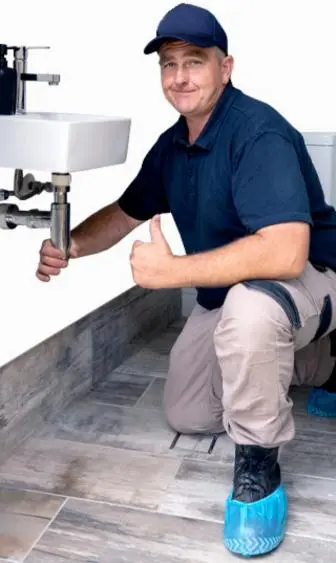
Need an Emergency Plumber? 24/7 Emergency Ferny Hills Plumber
Big Blue Plumbing dispatches licensed plumbers to emergency call-outs across Ferny Hills and the broader Moreton Bay region, with 24/7 availability for urgent faults like broken pipes, gas leaks, blocked drains, and failed hot water systems. Emergency work is sent out first, and the nearest available technician is allocated from our local dispatch points across the Sunshine Coast, Noosa, and Moreton Bay service area; an ETA is provided when you book so arrival timing is clear. This usually covers situations where water is actively leaking, gas can be smelled, drains are backing up into living areas, or hot water has stopped completely; if the fault needs further assessment once scope is visible onsite, the options are explained and a fixed quote is provided before any additional work goes ahead.
We've completed more than 3,000 plumbing and gas jobs over 40 years of combined experience, so the crew is familiar with how emergency faults present across Moreton Bay properties. Urgent jobs often share common patterns: a burst flexi hose behind a vanity where the connection has corroded, tree roots that have entered ageing drain lines and caused a full blockage, or a hot water supply service that has failed during peak morning demand. Each scenario is assessed onsite using diagnostic tools, including CCTV inspection equipment and thermal imaging for leak detection, so the cause is confirmed before quoting the work.
Big Blue Plumbing is duly licensed for plumbing, drainage, and gas work across Queensland, and we carry Public Liability insurance (protection if accidental property damage occurs during the job) and Workers Compensation insurance (protection related to workplace injuries on site). The price is quoted upfront once scope is confirmed on site, priced by the job rather than by the hour, with no hidden fees added later. If you're dealing with an active leak, a gas smell, or a system that's stopped working completely, a quick call is enough to confirm priority and arrange dispatch.
What Counts as an Emergency Plumbing Situation
An emergency plumbing situation is one where there's an immediate risk to safety, active property damage, or loss of an essential service like water or sanitation. That typically includes burst pipes where water is spraying under pressure, gas leaks where the distinctive odour is detectable inside or outside the property, drains backing up into sinks or toilets, hot water systems that have failed completely (no hot water supply at all taps), and flooding where water is pooling inside the home or near electrical fittings. These faults justify urgent dispatch because delaying assessment increases the risk of structural damage, mould growth, scalding from uncontrolled hot water, or gas ignition hazards.
If a tap is dripping slowly, a toilet is running between flushes, or hot water is lukewarm rather than absent, those issues still need fixing but don't usually require emergency callout; they can be scheduled during standard hours without the after-hours premium. On the other hand, if a pipe has split and is flooding a room, or if you can smell gas near an appliance or meter, treat it as urgent. Isolate the water at the meter or gas at the isolation valve if it's safe to do so (without operating electrical switches if the area is wet), then call for immediate dispatch so a properly licensed NSW plumber can assess the fault, make the system safe, and confirm the scope of work needed to restore normal operation.
Common Emergency Call-Outs Across Ferny Hills and Moreton Bay
Burst pipes are among the most disruptive emergency faults. They usually result from corrosion in older galvanised or copper pipes, frost damage in elevated or exposed sections, or sudden pressure surges that exceed the pipe's rating. A burst pipe sends water under mains pressure into wall cavities, subfloors, or ceiling spaces, causing rapid saturation of plasterboard, insulation, and structural timber if not isolated quickly. The first action is to shut off the water supply at the meter, then book a plumber to locate the split section, cut out the damaged length, and install a replacement fitting or length of pipe that matches the existing material and pressure rating.
Blocked drains that cause sewage to back up into the home are classed as emergencies because of the contamination risk. Tree root intrusion is a frequent cause in established areas where large trees are planted near sewer lines; fine roots enter hairline cracks in ageing clay or concrete pipes, expand over time, and trap debris until flow is completely obstructed. Kitchen drains can also block when fats, oils, and grease solidify in the line and catch food scraps, forming a dense plug. A CCTV CCTV check identifies the obstruction type and location, then high-pressure water jetting clears the blockage by pulverising roots or scouring grease from the pipe walls; if the camera reveals structural damage or collapse, relining or excavation options are explained and quoted separately.
Gas leaks require prompt attention. Natural gas and LPG are odourless by design, so a mercaptan additive gives them the characteristic "rotten egg" smell that acts as a warning signal. If you detect that odour inside the home, near the meter, or around gas appliances, do not operate any electrical switches (including lights), do not ignite any flames, and do not attempt to locate the leak yourself. Ventilate the area by opening doors and windows if safe to do so, then call a correctly licensed gas fitter from a safe location outside the property. The fitter will use a combustible gas detector to pinpoint the leak, isolate the gas supply, repair or replace the faulty section (flexi hose, pipe joint, or appliance connection), then perform a pressure drop test to confirm the system is gas-tight before recommissioning.
Hot water system failures that leave the property with no hot water at any tap are often discovered first thing in the morning. Electric storage systems can fail when the heating element burns out due to sediment buildup insulating it from the water, or when the thermostat malfunctions and doesn't signal the element to activate. Gas continuous flow units can shut down when the ignition system fails, the gas supply is interrupted, or the heat exchanger becomes fouled with scale in hard water areas. Solar hot water systems rely on pumps and controllers that can fail during storms or power surges. A licensed plumber inspects the unit, tests electrical circuits and gas supply where relevant, and identifies whether the fault is repairable (element replacement, thermostat adjustment) or whether the system has reached end-of-life and replacement is more cost-effective.
How Big Blue Plumbing Handles Emergency Call-Outs
Immediate Dispatch and Arrival Communication
When an emergency call is logged, we allocate the job to the nearest available licensed and fully insured plumber from our dispatch points across the Sunshine Coast, Noosa, and Moreton Bay regions. Urgent work is prioritised ahead of scheduled maintenance, so if multiple emergency jobs are active at the same time, the one with the highest safety risk (gas leak, active flooding) is sent out first. You'll receive an ETA when you book, and the technician will update you if traffic or a prior job affects arrival timing; arrival windows depend on current bookings, distance from the dispatch base, and road conditions, so the ETA provided at booking is the most accurate estimate available at that moment.
All attending plumbers carry appropriate licencing for the work type (plumbing, drainage, or gas fitting), and identity is confirmed on arrival before entry. We ask about access constraints when you book (e.g., locked gates, security entry, restricted parking in strata complexes) so the technician arrives prepared with the right tools and a vehicle that fits the site. If the property is security-sensitive or has premium finishes, let us know at booking and we'll follow entry instructions carefully, use protective floor coverings, and keep movement through the home to a minimum.
Onsite Assessment and Scope Confirmation
Once onsite, the plumber assesses the fault using visual inspection, diagnostic equipment, and testing where safe to do so. That typically includes isolating the water or gas supply to make the area safe, inspecting the affected fixture or pipe section, using a CCTV camera to check drain lines if blockage is suspected, or testing electrical circuits and gas pressure on hot water systems. The goal of the assessment is to identify the cause, confirm what needs replacement or repair, and determine whether the work can proceed immediately or requires parts, approvals, or further investigation.
If the scope is clear and the repair can be completed during the visit (e.g., replacing a burst flexi hose, clearing a blocked drain, re-igniting a pilot light on a gas system), you'll receive a fixed upfront quote before starting work, priced by the job rather than by the hour, with no hidden fees. If the assessment reveals a more complex fault (e.g., a hot water tank that's corroded through and needs full replacement, or a collapsed drain section that needs excavation), the plumber will explain the options, provide a quote for the additional work, and confirm whether you'd like to proceed; you're not committed to the extra work until you've agreed to the quoted price and scope.
Repair, Testing, and Verification
For straightforward emergency repairs, the work proceeds once the quote is accepted. Burst pipe sections are cut out and replaced with correctly rated fittings and pipe material, then pressure-tested to confirm the repair is leak-free. Blocked drains are cleared using high-pressure water jetting, then flushed and checked with the camera to verify flow is restored and no structural damage remains. Gas leaks are repaired by replacing the faulty flexi hose, tightening or re-sealing the joint, or installing a new appliance connection, followed by a mandatory pressure drop test to ensure the system holds pressure and is safe to recommission.
Hot water system repairs depend on the fault identified: a failed heating element or thermostat can be replaced and tested on the spot, while a corroded tank or failed heat exchanger typically requires a full system replacement that may be quoted and scheduled for a return visit once the new unit is sourced. Before leaving, the plumber re-tests the system to confirm normal operation, checks for any secondary issues (e.g., water staining that indicates a slow leak elsewhere), and provides a brief explanation of what was done and what to watch for over the next few days.
Workmanship Warranty and Documentation
All emergency repairs completed by Big Blue Plumbing are covered by our workmanship warranty, meaning if an issue related to the repair work shows up after the job is finished, we'll address it under that warranty. That covers faults caused by the installation or repair work itself (e.g., a joint that wasn't sealed correctly, a fitting that was under-tightened); it doesn't cover wear and tear on other parts of the system, or new faults that develop in unrelated areas. Manufacturer warranties apply separately to any new parts or systems installed (e.g., a replacement hot water unit), and those terms are explained at the time of quoting.
You'll receive an invoice and receipt suitable for landlords, agents, insurance claims, and business records. For gas work, a compliance certificate is issued where required by Queensland regulations, documenting that the installation or repair meets AS/NZS 5601.1 safety standards. If you're in a rental property or strata complex and need documentation forwarded to the property manager or body corporate, let us know and we'll arrange that as part of the job close-out process.
Pricing, Call-Out Fees, and Payment Options
Big Blue Plumbing prices emergency work by the job, not by the hour, so once scope is verified and the quote is accepted, the price is fixed regardless of how long the repair takes. That removes the uncertainty of watching the clock while the plumber is onsite. The quote provided before starting work includes labour, materials, and any disposal or clean-up required; we don't add hidden fees for after-hours attendance, parking, or using diagnostic tools like CCTV cameras. However, emergency call-outs may involve a call-out fee depending on timing and location within our service area; confirm the call-out fee status when you book so there are no surprises when the invoice is issued.
If the quoted price is higher than expected, we offer a 0% interest payment plan through Brighte, with approval typically completed in 5 to 7 minutes via a simple online process. That allows you to proceed with essential repairs (e.g., replacing a failed hot water system) without delaying the work while you arrange funds. Seniors with a valid concession card are eligible for a discount; show the card when the technician arrives and the discount will be applied to the final invoice. Payment is required once the job is complete and you're satisfied the fault is resolved; we accept card, bank transfer, and cash.
Minimising Damage While You Wait for the Plumber
If you're dealing with an active leak and the plumber is on the way, the priority is isolating the water supply to stop further flooding. Locate the water meter (usually at the front boundary or in a meter box near the street), and turn the isolation valve clockwise until it stops; that shuts off water to the entire property. If only one fixture is affected (e.g., a leaking tap or toilet cistern), you may be able to isolate just that fixture using the isolation valve on the supply line underneath; turn it clockwise to close. Move furniture, rugs, and electronics away from the wet area, and use towels or a mop to soak up standing water if it's safe to do so without stepping in pooled water near electrical outlets.
For a gas leak, the immediate action is to isolate the gas supply and ventilate the area. Do not operate any electrical switches, appliances, or open flames; even a light switch can create a spark that ignites gas in a confined space. If the gas meter is accessible and you can safely reach the isolation valve, turn it to the "off" position (usually a quarter-turn so the lever sits perpendicular to the pipe). Open doors and windows to allow the gas to disperse, then leave the property and call a duly licensed gas fitter from a safe location outside. Do not re-enter until the fitter has confirmed the area is safe.
If a drain is backing up into the home, stop using all water fixtures (sinks, toilets, showers, washing machine) until the blockage is cleared; continued use will force more wastewater into the affected area, increasing contamination and clean-up costs. If sewage has entered the home, avoid direct contact and keep children and pets away from the affected area; sewage contains bacteria and pathogens that pose health risks. The plumber will clear the blockage, flush the line, and verify flow is restored, but you may need a separate clean-up and disinfection service if contamination is extensive.
Licensed and Insured Across Moreton Bay
Every plumber dispatched by Big Blue Plumbing holds the appropriate Queensland licence for the work type being performed, whether that's general plumbing, drainage, or gas fitting. Licensing ensures the technician has completed the required training, passed competency assessments, and maintains up-to-date knowledge of Australian Standards and the National Construction Code. Licence numbers can be verified through the QBCC (Queensland Building and Construction Commission) public register if you'd like independent confirmation before work starts.
We carry Public Liability insurance, which provides protection if accidental property damage occurs during the job (e.g., a tile is cracked while accessing a concealed pipe, or a fitting is knocked loose while clearing a blockage). We also carry Workers Compensation insurance, which provides protection related to workplace injuries sustained by technicians while onsite. Both insurance types are maintained across the full team, not just selected individuals, so you're covered regardless of which plumber is dispatched to your emergency call-out.
All technicians undergo police checks and background screening before joining the crew, so you can feel confident about who's entering your home during a stressful situation. If you have specific security or safety requests (e.g., you'd prefer the technician to wait outside while you move pets to a secure area, or you'd like a photo of the technician's ID sent before arrival), let us know when you book and we'll accommodate that where practical. Respectful conduct is a baseline expectation: the plumber will explain what they're doing before starting, confirm permissions at the door, use boot covers or protective sheeting to protect floors in work areas, and clean up the immediate work area before leaving.
Why Emergency Plumbing Faults Need Professional Assessment
Attempting DIY repairs on emergency plumbing or gas faults carries significant risk. A ruptured pipe that's "fixed" with duct tape or a generic clamp may hold temporarily, but it doesn't address the underlying cause (corrosion, pressure surge, or poor-quality original installation) and often fails again under normal use, causing a second flood. Clearing a blocked drain with a hardware-store auger can push the obstruction further into the line, compact it more tightly, or even puncture the pipe wall if the tool is misused; professional water jetting uses controlled pressure and the right nozzle type for the pipe material and blockage type, minimising the risk of damage.
Gas work is regulated across Australia precisely because the consequences of poor installation or repair are life-threatening. A gas leak that's "fixed" by tightening a joint without testing for pressure loss or checking for secondary leaks elsewhere in the system can result in gas accumulation in confined spaces, leading to explosion or carbon monoxide poisoning. Only a duly licensed gas fitter has the training, tools, and legal authority to repair gas systems, and they're required by law to issue a compliance certificate confirming the work meets safety standards before the system is recommissioned.
Even for seemingly minor issues, professional assessment often reveals patterns that a property owner wouldn't notice. A toilet that keeps running might seem like a simple flapper valve issue, but it can also indicate a failing fill valve, a cracked overflow tube, or incorrect float adjustment that's wasting hundreds of litres per day and driving up water bills. A plumber identifies the actual cause, replaces the correct component, and verifies the system operates as designed, saving water and preventing the secondary damage that occurs when a minor fault is left unresolved.
Other Emergency Services Across the Sunshine Coast, Noosa, and Moreton Bay
Beyond emergency plumbing in Ferny Hills, Big Blue Plumbing handles urgent call-outs across the full Sunshine Coast, Noosa, and Moreton Bay regions. That includes surrounding suburbs like Cashmere, Brendale, Albany Creek, and Samford, where dispatch logistics and property characteristics vary but the core emergency response process remains consistent: immediate allocation to the nearest available technician, onsite assessment with diagnostic tools, fixed upfront quoting, and replacement or repair completed under our workmanship warranty. If you're unsure whether your location is within our 24/7 emergency coverage area, a short call will confirm dispatch availability and estimated arrival timing based on the technician's current location.
Frequently Asked Questions: Emergency Plumber Ferny Hills
How quickly can you respond to an emergency call-out in Ferny Hills?
Response timing depends on the current number of active emergency jobs, the location of the nearest available plumber, and road conditions at the time you call. Urgent work is prioritised ahead of scheduled maintenance, so if a gas leakage or active flood is logged, it's dispatched first. You'll receive an ETA when you book, and the technician will update you if delays occur. Typical arrival windows range from under an hour to a few hours depending on workload, but we can't guarantee exact timing for every scenario.
Do you charge a call-out fee for emergency plumbing in Ferny Hills?
Emergency call-outs may involve a call-out fee depending on timing and location within our service area. Confirm the call-out fee status when you book so the cost structure is clear before the plumber is dispatched. The work itself is quoted separately once scope is assessed onsite, and that quote is fixed (by the job, not by the hour) with no hidden fees added later.
What should I do if I smell gas inside my home?
If you smell gas, do not operate any electrical switches (including lights), do not light any flames, and do not try to locate the leak yourself. Open doors and windows to ventilate the area if it's safe to do so, then leave the property and call a duly licensed gas fitter from outside. If the gas meter is accessible, you can turn the isolation valve to "off" before leaving, but prioritise getting everyone out safely. The gas fitter will use detection equipment to locate the leak, isolate the supply, repair the fault, and test the system before recommissioning it.
Can you fix a burst pipe or drain blockage the same day?
Most burst pipe repairs and drain blockage clearances can be completed during the first visit, provided the fault is accessible, parts are available, and the scope is straightforward. A burst flexi hose under a vanity or a tree root blockage in an accessible drain line is typically resolved onsite. If the assessment reveals a collapsed drain section that needs excavation, or a hot water tank that's corroded through and requires full replacement, those jobs may be quoted and scheduled for a return visit once materials are sourced or equipment is arranged.
Are your plumbers licensed and insured for emergency work?
Yes. Every plumber we dispatch holds the appropriate Queensland licence for the work type (plumbing, drainage, or gas fitting), and licence numbers can be verified through the QBCC public register. We carry Public Liability insurance (protection if accidental property damage occurs during the job) and Workers Compensation insurance (protection related to workplace injuries onsite). All technicians also undergo police checks and background screening before joining the team.
What's included in your fixed-price quote for emergency repairs?
The fixed-fee quote provided before work starts includes labour, materials used in the repair, diagnostic time (including CCTV inspections or leak detection), and clean-up of the immediate work area. It does not include the call-out fee (which is confirmed when you book), and it doesn't cover additional work discovered during the assessment unless you agree to a separate quote for that extra scope. There are no surprise charges for after-hours attendance, parking, or tool use added to the invoice.
Do you offer a warranty on emergency repairs?
All work completed by Big Blue Plumbing is covered by our workmanship warranty, meaning if an issue related to the repair work shows up after the job is finished, we'll address it under that warranty. That covers faults caused by the installation or repair itself; it doesn't cover wear and tear on other parts of the system, or new faults in unrelated areas. Manufacturer warranties apply separately to any new parts or systems installed, and those terms are explained when the work is quoted.
Can I get help with the cost if the repair is expensive?
We offer a 0% interest payment plan through Brighte, with approval typically completed in 5 to 7 minutes. That allows you to proceed with essential repairs (like replacing a failed water heater) without delaying the work while you arrange funds. Seniors with a valid concession card are also eligible for a discount; show the card when the technician arrives and the discount will be applied to the invoice.
What counts as an emergency versus a standard plumbing issue?
An emergency is a fault that poses immediate risk to safety, causes active property damage, or results in loss of an essential service like water or sanitation. That includes burst pipes, gas leaks, drains backing up into the home, hot water supply systems that have failed completely, and flooding near electrical fittings. A dripping tap, running toilet, or lukewarm hot water service still needs fixing but can typically be scheduled during standard hours without the after-hours premium.
Do you service other suburbs around Ferny Hills?
Yes. Big Blue Plumbing covers the full Sunshine Coast, Noosa, and Moreton Bay regions, including suburbs around Ferny Hills like Cashmere, Brendale, Albany Creek, Samford, and D'Aguilar. Emergency dispatch is allocated to the nearest available technician from our local bases, so response timing varies slightly by distance and current workload. If you're unsure whether your location is within our 24/7 coverage area, call and we'll confirm dispatch availability and estimated arrival timing.