24/7 Emergency Plumber Elimbah, Moreton Bay
Big Blue Plumbing provides emergency plumbing in Elimbah and across Moreton Bay, with technicians dispatched from local coverage points as soon as urgent work is reported. That setup usually means the nearest available plumber is allocated to the job and an ETA is provided when you book. Emergency response is available 24/7 (including weekends and public holidays), all technicians are fully licensed for plumbing and gas work, and we carry Public Liability and Workers Compensation insurance, which protects you if accidental property damage occurs during the job or if a workplace injury happens onsite.
Emergency plumbing covers faults that pose an immediate safety risk, cause active property damage, or shut down essential services like water or gas supply. Common examples include ruptured pipes flooding a room, sewage backing up into the home, gas leaks with an odour present, or a failed hot water service during winter when vulnerable occupants depend on it. If water is pooling, gas is detectable, or the situation is worsening while you wait, treat it as urgent and book a licensed and insured plumbing technician rather than attempting temporary fixes.
With 40+ years of combined plumbing experience and over 3,000 jobs completed across the Sunshine Coast, Noosa, and Moreton Bay regions, our team has responded to a wide range of urgent faults in residential, commercial, and strata properties. On the first visit, we assess the fault, isolate the affected system if needed to limit further damage, then explain what's caused it and provide a flat-rate quote before starting any permanent repair work. That process applies whether it's a midnight callout for a burst flexi-hose under a sink or a daytime emergency for a commercial property with no running water.
What Counts as a Plumbing Emergency
Not every plumbing fault needs immediate attention, but certain situations escalate quickly if left unmanaged. An emergency typically involves active water escape, gas detection, sewage exposure, or the complete loss of an essential service. If you're unsure whether your situation qualifies as urgent, a brief call to confirm priority and timing helps avoid both under-reaction (which risks more damage) and over-reaction (which can mean unnecessary after-hours rates when a next-day booking would suffice).
Active leaks and burst pipes create the most common emergency scenarios. When a pipe splits or a flexi-hose fails under pressure, water flows continuously until the supply is isolated at the meter or stop valve. In properties with mains pressure, a single ruptured pipe can release hundreds of litres per hour, saturating floors, damaging plasterboard, and spreading into subfloors or ceiling cavities. Corrosion in older copper or galvanised steel pipework often weakens over time, then fails suddenly when internal pressure spikes (such as during a cold snap or after the system has been drained and refilled). Flexi-hoses connecting taps or appliances can also rupture without warning, particularly if they're nearing the end of their typical 10-year service life.
Gas leaks are treated as high-priority safety events. Natural gas and LPG are odourised with a distinct "rotten egg" smell to make leaks detectable. If you notice that odour, hear hissing near a gas appliance or pipe, or see dying vegetation over an underground gas line, isolate the gas supply at the meter (if you can reach it safely), ventilate the area, avoid igniting any flames or electrical switches, then contact a licensed gas fitter immediately. Gas leaks are not suitable for DIY investigation; the risk of ignition or asphyxiation in confined spaces makes professional assessment and pressure testing essential.
Sewage backups occur when a blockage in the sewer line forces wastewater back through floor drains, toilets, or lowest-point fixtures. This can happen if tree roots have infiltrated the main sewer pipe, if the line has collapsed due to ground movement, or if a severe blockage (such as a fatberg caused by flushed wipes and cooking fats) has completely closed the pipe. Sewage carries bacteria and pathogens, so exposure creates health risks and requires prompt clearing and sanitisation. If multiple fixtures are affected simultaneously or if wastewater is rising through the shower or laundry floor waste, the blockage is usually in the main line rather than a single fixture trap.
Complete loss of hot water can be classed as an emergency in specific situations, particularly if vulnerable occupants (young children, elderly, or unwell household members) rely on it, or if a business operation depends on hot water for food safety or hygiene compliance. Hot water system faults that qualify as urgent include a burst storage tank leaking onto floors, a gas continuous-flow unit with a suspected gas leakage, or an electric system tripping safety switches repeatedly. If the unit has simply stopped heating but isn't leaking or creating a hazard, a next-day service booking is usually sufficient unless the household circumstances make same-day restoration necessary.
How Emergency Plumbing Response Works
When you report an emergency plumbing fault, the process begins with a brief assessment by phone to confirm the nature of the problem, establish whether it's actively worsening, and determine if any immediate safety actions are needed while the plumber is dispatched. If water is still flowing, you may be guided to locate and turn off the isolation valve or the mains supply at the meter. If gas is involved, you'll be advised to isolate at the gas meter if safe to do so. These steps are about harm reduction, not diagnosis, and they take seconds to explain.
Big Blue Plumbing prices work by the job, not by the hour, which means you receive a fixed-price quote once the scope has been assessed onsite and before any repair work starts. For after-hours emergency callouts, a call-out fee typically applies to cover the cost of immediate dispatch and initial assessment; confirm the call-out fee details when booking so you know what to expect. If the fault can be scoped and quoted on the first visit and you choose to proceed, the repair is completed then and the job is priced as a single fixed amount with no hidden fees added later.
If the full repair requires parts that aren't carried in the van, specialised equipment, or additional trades (such as an electrician for a hot water service switchboard issue), we stabilise the situation during the emergency visit (isolating the fault, making it safe, and preventing further damage), then return once parts or access are confirmed to finish the work. That way, you're not left with an unsafe system overnight, and you're given a clear explanation of what happens next and when the job will be completed.
Arrival and Identification
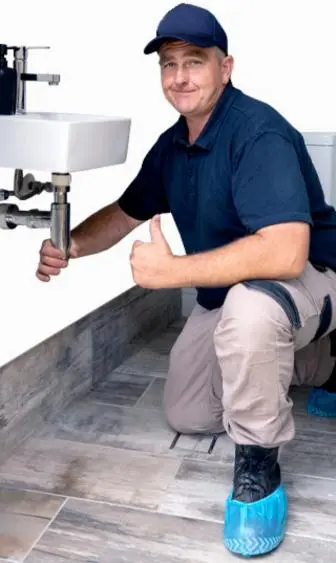
Technicians arrive in uniform and with clear identification, which is confirmed at the door before entry. For security-sensitive properties or households where occupants may be alone, we follow entry instructions carefully and can accommodate requests such as calling ahead before arrival or confirming identity details over the phone first. Police checks and background screening are completed for all attending technicians, and we treat your home with the same care we'd expect in our own, using protective coverings where needed and keeping the work area contained.
Assessment and Scope Confirmation
The first step onsite is identifying the source of the fault and understanding what's caused it. For ruptured pipes, that involves tracing the leak back to the failed section and checking whether corrosion, pressure surge, or freeze damage is the root cause. For blockages, it might include a CCTV check if the restriction isn't visible at the nearest access point. For gas faults, it includes pressure testing the line to confirm where the leak is occurring and whether the appliance connection or the pipe itself is at fault.
Once the fault is understood, we explain what's involved in fixing it, what the fixed price will be, and what's included in that scope (such as the repair itself, testing, and any minor make-good work like resealing a pipe penetration). If additional work is recommended (for example, replacing multiple old flexi-hoses while one has already failed), that's explained separately and quoted as an optional addition, so you can decide based on full information and confirmed pricing.
Protecting Your Property During Emergency Work
Emergency plumbing often involves working in occupied homes under time pressure, sometimes in areas with finished surfaces like tiled bathrooms, stone benchtops, or timber floors. We use drop sheets and protective coverings in the immediate work area, isolate the zone where possible to reduce mess, and take reasonable care around cabinetry, tiles, and fixtures when accessing concealed pipework.
If accessing a pipe requires cutting into plasterboard or removing tiles, that's explained before it happens, and we confirm whether you'd like us to complete a basic make-good (such as patching and sanding plaster ready for painting) or whether you'll arrange a separate tradesperson for finishing work. Where practical, we use the least disruptive access method, such as working through an existing service hatch or removing a vanity rather than cutting a wall.
We remove all debris and packaging generated by the work before leaving, wipe down surfaces in the immediate area, and leave the site tidy. Rubbish from replaced parts (such as an old flexi-hose or a corroded pipe section) is taken away, not left for you to dispose of.
Common Emergency Plumbing Faults in Moreton Bay Properties
Certain faults show up more frequently in emergency jobs, often linked to property age, pipe materials, or seasonal conditions. Understanding what typically causes these issues helps set realistic expectations around repair scope and timing.
Burst flexi-hoses are among the most frequent emergency calls. These braided stainless hoses connect taps, toilets, and appliances to the water supply and are designed to absorb vibration and allow for slight movement. Most flexi-hoses have a service life of around 10 years, after which the internal rubber lining can degrade, leading to sudden failure. When one fails, it usually splits along the hose body and releases water at full mains pressure until isolated. If a property has multiple flexi-hoses installed at the same time (common in a bathroom renovation or new build), others may be approaching the same age and are worth inspecting or replacing as a precaution.
Corroded pipe leaks occur more often in older homes with original galvanised steel or copper pipework. Galvanised pipes typically corrode from the inside out as the protective zinc coating degrades, leading to pinhole leaks or full pipe splits. Copper pipes can develop green corrosion (verdigris) on the outside if exposed to moisture, or they can thin from the inside if the water chemistry is acidic. Once corrosion starts, it often affects multiple sections of the same pipe run, so a single leak might indicate that a larger section will need replacing soon.
Tree root intrusion into sewer lines is common in established areas with mature gardens. Fine roots enter pipes through microscopic cracks or join points, then expand as they absorb moisture and nutrients from the wastewater. Over time, they trap toilet paper, wipes, and other debris, forming a dense root ball that blocks flow entirely. Clearing the blockage with high-pressure water jetting restores flow temporarily, but unless the root entry point is sealed (often requiring pipe relining or replacement of the damaged section), roots will regrow and the blockage will return.
Hot water system failures escalate to emergencies when they involve active leaks or gas faults. A storage tank that's leaking from the base or a split seam can release 150, 300 litres of water onto floors and into subfloors before it empties. Electric systems that repeatedly trip the safety switch may have an element short or an internal thermostat fault, which poses a shock risk if not isolated. Gas continuous-flow units that ignite inconsistently or emit a gas smell require immediate assessment by a NSW-licensed gas fitter, as incomplete combustion or gas leaks present both fire and asphyxiation hazards.
Why Immediate Professional Assessment Matters
Delaying professional assessment during an urgent plumbing issue extends damage, increases repair costs, and can create safety hazards. Water damage spreads quickly through porous materials like plasterboard, insulation, and timber framing. Within hours, saturation can lead to mould growth, structural weakening, and damage to electrical wiring in walls and ceilings. Sewage backups carry pathogens that contaminate floors, grout, and soft furnishings, requiring professional cleaning and sanitisation.
Gas leaks are not visible and cannot be assessed safely without proper detection equipment and pressure testing. DIY attempts to tighten fittings or apply sealant can mask a leak temporarily without fixing the underlying fault, increasing the risk of ignition or a larger release later. Licensed gas fitters use combustible gas detectors and pressure decay testing to confirm whether a system is gas-tight, and they're trained to interpret the results and determine whether a repair, replacement, or full system isolation is needed.
Attempting repairs without the right tools or knowledge often makes the fault worse. For example, using a pipe clamp on a corroded section might stop the leak at that point, but the underlying corrosion remains and will likely cause another failure within days. Over-tightening fittings can crack pipe threads or strip valve seats, turning a repairable issue into a full component replacement.
Licensing, Insurance, and Workmanship Standards
All plumbing and gas work in Queensland must be performed by appropriately licensed tradespeople, and emergency work is no exception. Big Blue Plumbing holds the required plumbing and gas licences for the work we perform, and all attending technicians are licensed to carry out the repairs they complete onsite. That means installations, replacements, and repairs meet the safety and compliance standards set out in Australian Standards and the Queensland Plumbing and Wastewater Code.
We carry Public Liability insurance and Workers Compensation insurance. In plain terms, Public Liability protects you if accidental property damage occurs while we're working (for example, if a tool slips and chips a tile, or if a fitting cracks during removal). Workers Compensation relates to workplace injuries sustained by our team while onsite. These insurances give you protection and accountability that unlicensed or uninsured operators cannot provide.
Workmanship is covered by our stated workmanship warranty, which applies to the labour we perform. If an issue with our work shows up after the job is completed, it's addressed under that warranty. Product warranties (such as manufacturer coverage on a new hot water unit or a replacement valve) apply separately and are explained when the product is installed. If a fault occurs that's covered by a product warranty, we can assist with the manufacturer claim process and carry out any warranty-related repairs.
Fixed Pricing and Payment Process
Emergency plumbing is priced by the job, not by the hour, which removes uncertainty around how long a repair will take and what you'll be charged. Once the scope is confirmed onsite, you receive a fixed price before work begins. That price includes the labour, parts used, testing, and any minor make-good work directly related to the repair (such as resealing a pipe penetration or reconnecting an appliance). There are no hidden fees added at the end, and the price doesn't change if the work takes longer than expected.
For after-hours callouts, a call-out fee typically applies to cover immediate dispatch and the initial assessment. Confirm the call-out fee amount when booking. If you proceed with the quoted repair, the call-out fee is usually absorbed into the total job price. If you choose not to proceed, the call-out fee covers the assessment visit.
We can provide a free quote via the website form for planned or non-urgent work, but emergency work is generally quoted onsite once the fault has been assessed and scope is defined. That's because the nature of an emergency fault isn't always clear until it's inspected, and quoting blind over the phone risks underestimating the work required or missing hidden damage that becomes apparent once the area is accessed.
Payment is due on completion, and we provide a receipt and invoice suitable for landlords, agents, strata records, or insurance claims. If a larger job requires staged payments, that's discussed when the quote is provided. We also offer a 0% interest payment plan through Brighte, with approval typically completed in 5, 7 minutes, which can make emergency repairs more manageable if the fault is extensive or if multiple systems need attention at once.
What to Do While Waiting for the Plumber
If you're dealing with an active leak, the priority is limiting water damage until the plumber arrives. Locate the isolation valve closest to the fault (under a sink, behind a toilet, or near a hot water unit) and turn it clockwise to stop the flow. If you can't find the isolation valve or if it won't turn, go to the water meter (usually at the front boundary or side of the property) and turn off the mains supply. That stops all water to the property but prevents further flooding.
Move valuables, electronics, and furniture away from the affected area if water is pooling. Use towels or a wet vacuum to soak up standing water, particularly if it's near power points or running toward carpeted areas. If the ceiling is sagging or dripping, place a bucket underneath and avoid standing directly below, as waterlogged plaster can collapse suddenly.
For gas leaks, isolate the gas supply at the meter if you can reach it safely, then ventilate the area by opening windows and doors. Do not use light switches, power points, or any ignition sources (including cigarettes or lighters), as even a small spark can ignite gas. If the smell is strong or you feel unwell (headache, nausea, dizziness), evacuate the property and call emergency services before contacting a gas fitter.
If a drain is backing up, stop using all plumbed fixtures in the property until the blockage is cleared. Flushing toilets or running taps when the line is blocked forces more wastewater into the system, which can cause it to overflow through other fixtures or flood from the lowest point (usually a floor drain, shower, or laundry sink). If sewage is already present, avoid contact, keep children and pets away, and do not attempt to clear it yourself.
Emergency Plumbing Across Moreton Bay
Big Blue Plumbing services Elimbah and surrounding Moreton Bay suburbs, including Morayfield, Burpengary, Caboolture, Narangba, Murrumba Downs, and Deception Bay. Dispatch is coordinated from local coverage points, and jobs are allocated based on technician location and availability at the time of booking. That means response timing depends on existing commitments, traffic conditions, and whether urgent jobs are already in progress, but an ETA is provided when you book so you know when to expect arrival.
For strata and commercial properties, we can coordinate with property managers, body corporate representatives, or facility managers to arrange access, follow site induction requirements, and provide documentation suitable for maintenance logs and compliance records. Invoices are itemised clearly for agent or strata submission, and we can work within agreed callout windows when after-hours access needs to be arranged.