24/7 Emergency Plumber Serving Eatons Hill in Moreton Bay
Big Blue Plumbing handles 24/7 emergency plumbing in Eatons Hill, part of the Moreton Bay region we service alongside Sunshine Coast and Noosa. Urgent residential and commercial failures, broken pipes, gas leaks, hot water breakdowns, flooding, and severe blockages, are dispatched immediately from local hubs, with licensed technicians available around the clock. Assessment happens onsite, followed by scope confirmation and a fixed-price quote before work starts; if parts or access appointment windows affect timing, you're told what's realistic before any repair proceeds.
Emergency plumbing failures don't announce themselves during business hours. A broken pipe at 2 a.m. Or a gas smell on a Sunday morning creates immediate stress, property risk, and disruption. Our 24/7 emergency service operates continuously, so urgent jobs are sent out first and the nearest available technician is allocated from dispatch points across the Sunshine Coast, Noosa, and Moreton Bay footprint. When you book, an arrival estimate is provided based on current job load and travel time; if conditions or traffic shift that window, you're updated.
We've completed over 3,000 plumbing and gas jobs across South East Queensland, which means the team has handled comparable emergency scenarios in properties with varied pipe materials, hot water setups, and access constraints. Eatons Hill sits within the Moreton Bay service area, where a mix of established homes and newer estates can mean different failure patterns, older galvanised pipe corrosion in one street, modern PEX connections in another. That context matters when diagnosing what failed and why.
Pricing is by the job, not by the hour. Once scope is finalised onsite, you receive an upfront fixed price covering the work needed to restore function and safety. No hidden fees are added after the fact. If the initial assessment reveals additional concerns, say, a burst pipe is traced to a second weak point, the options and costs are explained, and you decide whether to proceed before any extra work starts. For approved jobs, a 0% interest payment plan is available via Brighte, with a typical approval process taking 5 to 7 minutes.
What Counts as an Emergency Plumbing Situation
Not every plumbing fault requires an urgent callout, but some failures create immediate safety risks or property damage that shouldn't wait. An emergency is typically defined by active water flow you can't stop, gas odours or visible gas leaks, sewage backing up into living areas, or complete loss of water supply or hot water when it affects health or safety. These scenarios justify immediate professional attention because the risk of harm, contamination, or structural damage escalates the longer they're left unaddressed.
A broken pipe that's flooding a laundry or bathroom falls into this category. So does a hot water service leaking heavily or venting steam in a way that suggests pressure relief valve failure. If you smell gas, a sulphur or rotten-egg odour, treat it as urgent: open windows, don't use electrical switches or ignition sources, and call for a fully licensed gas fitter. Sewage overflow is both a health hazard and a contamination risk; it shouldn't sit while you wait for regular business hours.
On the other hand, a slow drip from a tap, a toilet that refills noisily, or a minor drainage slowdown can usually be scheduled during standard hours without additional risk. If you're uncertain whether your situation is urgent, a quick call can clarify whether it's safer to book immediately or wait until the next available appointment. We won't upsell urgency if it's not warranted; the goal is to match response to actual risk.
How 24/7 Emergency Dispatch Works in Practice
When an emergency booking comes through, via phone, online form, or live chat, the job enters a dispatch queue where urgent work is prioritised ahead of scheduled maintenance. The system allocates the nearest available licensed trade technician from local service points covering the Sunshine Coast, Noosa, and Moreton Bay regions. Eatons Hill typically routes through the Moreton Bay dispatch hub, which reduces travel time compared to routing from the Sunshine Coast base.
You're given an estimated arrival window when you book. That window depends on how many emergency jobs are already in progress, current traffic conditions, and technician location. If the technician is delayed, say, an earlier job takes longer than expected due to access complications, you receive an update so you're not left guessing. Arrival communication is part of the booking process; it doesn't eliminate wait time, but it does make timing transparent.
When the technician arrives, the first step is always assessment. That includes identifying the affected fixture or line, checking for immediate safety risks like active gas flow or electrical contact with water, and determining what's causing the failure. For a burst pipe, that might mean isolating the damaged section, checking whether it's a flexi-hose failure or corrosion in an older copper line, and confirming whether surrounding pipework is also compromised. Once the cause and scope are clear, you're walked through the options and given a fixed-price quote before any repair work begins.
Common Emergency Plumbing Failures We Handle
Emergency calls in Eatons Hill and the broader Moreton Bay region tend to cluster around a few recurring fault types, often linked to property age, pipe material, or how the system was originally installed.
Burst Pipes and Flexi-Hose Failures
A pipe bursts when internal pressure exceeds the material's capacity to contain it, or when corrosion weakens the wall to the point of rupture. In older properties with galvanised or copper piping, corrosion from decades of mineral-laden water can thin the pipe wall until it gives way, often at a joint or elbow where stress concentrates. In newer homes, braided flexi-hoses, commonly used to connect taps, toilets, and appliances, can fail if they're kinked during installation, over-tightened at the fittings, or simply reach the end of their service life (typically 5 to 10 years).
The immediate risk is flooding. A broken pipe or flexi-hose under mains pressure can discharge litres of water per minute into walls, ceilings, or floor cavities, soaking insulation, damaging plasterboard, and pooling under floorboards where it encourages mould growth. If you can locate the isolation valve for the affected fixture or line, turning it off reduces flow while help is on the way. If the main water meter valve is more accessible, shutting that down stops all flow but also cuts supply to the rest of the property.
Once onsite, the faulty section is isolated, the damaged pipe or hose is removed, and a replacement is fitted. For flexi-hose failures, the new hose is installed without kinks and torqued to manufacturer specs to prevent repeat issues. For corroded metal pipework, the repair may reveal that adjacent sections are also deteriorating; if so, you're told what additional work would prevent a second failure a month later, and the choice to proceed is yours.
Gas Leaks and Appliance Connection Faults
Natural gas installations use an additive called mercaptan to give the gas its distinctive sulphur smell, making leaks detectable even at low concentrations. A gas leak can occur at appliance connection points, corroded underground lines, or failed pressure regulation fittings. The risk is twofold: explosion if gas accumulates in an enclosed space and reaches ignition concentration, and asphyxiation if gas displaces breathable air in a confined area.
If you smell gas, don't switch electrical devices on or off, don't use lighters or matches, and don't operate the stove. Open windows and doors to ventilate, leave the building if the odour is strong, and call for a correctly licensed gas fitter. We arrive with combustible gas detectors and pressure testing equipment to locate the leak, confirm the source, and isolate the affected section. Repairs might involve replacing a faulty appliance hose, re-sealing a threaded connection, or excavating to replace a corroded underground section. All gas work is pressure-tested after repair to confirm the system is gas-tight before it's recommissioned.
Public Liability insurance and Workers Compensation coverage are in place, which means if accidental damage occurs during gas work, unlikely, but possible, it's covered. That matters more in gas fitting than general plumbing because the safety stakes are higher.
Hot Water System Failures
A hot water system can fail in several ways, but the emergency scenarios are usually sudden loss of hot water combined with visible leaking, or a pressure relief valve that's venting steam or scalding water continuously. Electric storage systems often fail when the sacrificial anode rod corrodes through, allowing rust to attack the tank lining; once that happens, the tank can develop pinhole leaks or larger ruptures. Gas continuous-flow units can fail if the heat exchanger scales up from hard water, the ignition system stops sparking, or a gas supply fault cuts fuel to the burner.
If your hot water unit is leaking heavily, isolate the cold water supply feeding the unit (usually a valve on the inlet pipe) and switch off power at the switchboard for electric systems, or turn off the gas isolation valve for gas units. That reduces further water damage and eliminates the risk of electrical faults or gas ignition while the unit is compromised. Call for an assessment; the technician will confirm whether the unit is repairable or needs replacement, check compliance for a new installation if replacement is required, and provide an upfront quote once the scope is clear.
Installations must comply with AS/NZS 3500 plumbing standards, which mandate Tempering Valves to limit tap temperature to 50°C (preventing scalding, particularly important for families with children) and Pressure Relief Valves to prevent tank over-pressurisation. If a replacement is needed, those compliance fittings are included in the scope and quoted upfront; they're not optional add-ons discovered after the work is finished.
Severe Blockages and Flooding
A drain blockage that's causing sewage to back up into the house or raw wastewater to pool in the yard is an emergency due to contamination risk. These blockages are often caused by tree root intrusion into older clay or terracotta sewer lines, or by Fat, Oil, and Grease (FOG) buildup in kitchen waste lines that solidifies as it cools and traps solid waste. Stormwater lines can also flood during heavy rain if they're blocked by debris, leaf litter, or collapsed sections.
The first step is clearing the blockage to restore flow and prevent further overflow. High-pressure water jetting is the standard method; a specialised nozzle delivers water at 3,000 to 5,000 PSI to pulverise roots, scour grease from pipe walls, and flush the line clear. If a CCTV CCTV check is needed to locate the blockage depth or confirm the pipe condition, that's explained and quoted before proceeding. For lines with structural damage, cracks, joint displacement, root intrusion that's opened a gap, trenchless drain relining may be recommended to create a new internal pipe lining without excavating the yard or driveway.
Flooding from external sources like stormwater surcharge isn't always a plumbing fault, but if internal fixtures are overflowing due to a blockage in the property's drainage system, that's within scope. You're walked through what's been found, what cleared it, and what (if anything) is likely to recur unless the underlying cause is addressed.
How We Protect Your Property During Emergency Work
Emergency plumbing work often happens in stressful, messy conditions, water pooling on floors, access through occupied living areas, or confined spaces like roof cavities and subfloor crawlspaces. We take care to limit secondary damage and keep disruption as low as practical while the work is underway.
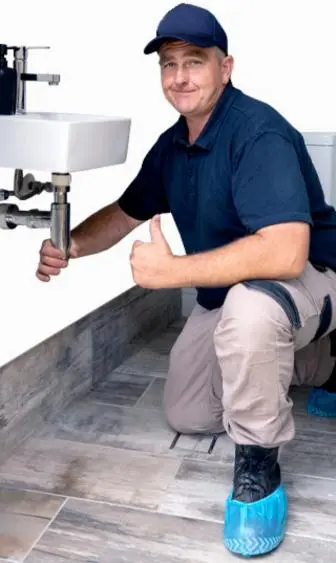
Technicians carry protective floor coverings and drop sheets to isolate the work area. If the job involves accessing a ceiling cavity above a finished room, coverings go down first to catch debris and drips. Boot covers or cleaned footwear are used when entering homes, particularly where flooding has already made floors slippery or where the client requests it. The goal is to protect existing finishes, tiles, timber, carpet, or stone, from unnecessary marks, scratches, or contamination from the work itself.
Rubbish generated during the job, cut pipe offcuts, failed flexi-hoses, packaging from replacement parts, is removed before the technician leaves. The work area is cleaned and left tidy, not just functionally complete. If an emergency repair requires follow-up work that isn't urgent, say, repainting a ceiling access panel or replacing a damaged floor tile, that's noted and can be quoted separately, but it's not left as a surprise.
All attending technicians have completed police checks and background checks, which matters when you're letting someone into your home during a stressful situation, often outside normal business hours. Technicians arrive in uniform and can confirm their identity before entry. If you have specific access instructions, intercom codes, pet containment, or restricted areas, those are followed.
What the Pricing Structure Covers
Emergency plumbing is priced by the job, not by the hour, which removes uncertainty around how long the work takes. Once scope is finalised onsite, the fixed price includes labour, standard parts and fittings needed for the repair, testing to confirm the fault is resolved, and cleanup.
No hidden fees are added after the work is complete. The price discussed and agreed to before work starts is the price invoiced. If diagnostics reveal a larger problem, say, clearing a blockage uncovers a collapsed section of pipe that needs excavation, that additional scope is explained and quoted separately, and you decide whether to proceed immediately or schedule it as a follow-up job.
Call-out fees can apply depending on the timing and location. When booking, confirm the call-out fee status so you know what's included before the technician is dispatched. For seniors with a valid senior card, a discount is available; mention it when booking to ensure it's applied. Payment plans are also an option; the 0% interest plan via Brighte covers approved emergency work and typically processes in 5 to 7 minutes, allowing you to proceed without delaying the repair while arranging funds.
Receipts and invoices are provided for all completed work, suitable for insurance claims, landlord reimbursement, or business records if the work was at a commercial property. For strata and rental properties, documentation can include photos of the fault, descriptions of work performed, and compliance notes where relevant (e.g., gas pressure testing, hot water tempering valve installation).
Why Licensing and Insurance Matter in Emergency Work
All plumbing and gas work in Queensland must be performed by appropriately licensed tradespeople. For plumbing, that's a plumbing licence issued under the Queensland Building and Construction Commission (QBCC). For gas fitting, it's a separate gas work licence. Emergency work carries higher stakes because the failure is active and often poses immediate risk; having licensed professionals assess and repair the fault ensures the work complies with safety standards and won't create additional liability.
We carry Public Liability insurance and Workers Compensation coverage. Here's what that means in practical terms:
- Public Liability provides protection if accidental property damage occurs during the work, for example, if accessing a concealed pipe causes unintended structural impact. It doesn't cover pre-existing damage or damage caused by someone else, but it does cover faults directly attributable to the work performed.
- Workers Compensation protects the business and the client in the event of a workplace injury. If a technician is injured while performing the work, compensation claims are handled through the insurer rather than becoming a liability issue for the property owner.
For higher-value homes or properties with premium finishes, stone benchtops, engineered timber floors, custom tilework, knowing that insurance is in place reduces the risk of engaging a tradesperson during a high-pressure emergency. It's not a guarantee that nothing will ever go wrong, but it's a layer of accountability that uninsured operators can't provide.
How We Verify Work Before Leaving
Completing an emergency repair isn't just about stopping the immediate fault; it's about confirming the system is safe and functional before the technician leaves. Testing varies by job type, but the principle is the same: check that the repair has resolved the problem and that no secondary issues have been introduced.
For a burst pipe repair, that means pressurising the line and checking for leaks at the new connection points and adjacent joints. If high-pressure jetting was used to clear a blockage, flow is re-checked to confirm the line is fully clear and draining normally. For gas work, a pressure loss test is performed after repairs to confirm the system is gas-tight; if pressure holds over a specified test period, the installation is deemed safe and can be recommissioned.
Hot water system replacements include checking that water is heating to the correct temperature, that the tempering valve is limiting tap temperature to 50°C, and that the pressure relief valve is functioning correctly. If the system uses gas, ignition and burner operation are verified before the unit is left in service.
Where the repair uncovers a secondary concern, say, adjacent pipework showing early signs of corrosion—that's noted and explained, but it doesn't hold up completion of the primary job unless it poses an immediate safety risk. You're given the information needed to decide whether additional work should be scheduled, and the repair is documented so there's a record of what was completed and what might need attention later.
When Emergency Work Leads to Follow-Up
Not every emergency can be fully resolved in a single visit, particularly where the failure indicates a systemic issue or where parts availability affects the timeline. In those cases, the immediate priority is making the system safe and restoring partial function where possible, then scheduling a return visit to complete the permanent repair.
For example, if a hot water tank ruptures overnight and replacement units aren't available until the next business day, the immediate work isolates the failed unit, stops the leak, and confirms that cold water supply to the rest of the property is unaffected. A return visit the following day completes the installation of the new unit. You're kept updated on timing, parts availability, and what to expect during the interim period.
If a severe blockage is cleared but the CCTV inspection reveals structural pipe damage that requires excavation or relining, the drain is left functional for the short term, and the longer-term repair is scheduled as a separate job. That prevents you from committing to additional scope under pressure at 3 a.m.; you have time to consider the options, get a clear written quote, and decide when the follow-up work should proceed.
All follow-up work is covered by the same pricing structure: fixed price by the job, no hidden costs, and a workmanship warranty on completed repairs. If a fault recurs due to workmanship, it's addressed under the warranty terms without additional charge for labour.