How Big Blue Plumbing Handles Emergency Callouts
Emergency plumbing jobs follow a consistent process designed to restore safe operation as quickly as the situation allows, with clear communication at each stage. When you call or submit a booking request, the team confirms what's happening (the fault type, location, and urgency level), allocates the nearest available licensed and insured plumber, and provides an estimated arrival time based on current dispatch load and travel distance. If you're calling after hours, confirm the call-out fee status at the time of booking so there are no surprises.
Once the plumber arrives, the main priority is isolating the immediate risk: shutting off water at the mains or closest valve to stop flooding, turning off gas at the meter if a leak is suspected, or switching off power to affected circuits if water is near electrical outlets. With the area made safe, the assessment begins. This involves inspecting the affected fixture or line, checking for secondary damage in adjacent areas, using diagnostic tools (CCTV cameras for drains, gas detectors for leaks, thermal imaging for hidden water flow), and confirming what triggered the fault. The findings are explained in plain English, photos or video are shown where helpful, and the repair options are outlined with inclusions and exclusions clearly stated.
Once you understand what's involved, a fixed-price quote is provided before any repair work starts. This includes labour, materials, and testing to confirm the repair is holding. The pricing is by the job, not by the hour, so there are no additional charges as the work progresses. If the job can be completed in one visit (parts are on hand, access is clear, no structural complications), the work is carried out and tested before the plumber leaves. If parts need ordering or the damage requires follow-up work (pipe relining, full system replacement, or council approvals), the immediate fault is made safe (temporary capping, isolation, or bypass), and a follow-up visit is scheduled once parts arrive or approvals are confirmed.
Get Help Fast When You Need It
Response speed matters in emergency plumbing, but it's also shaped by factors outside anyone's control: where the plumber is currently working, traffic conditions, and how many urgent jobs are already in the queue. Big Blue Plumbing dispatches from service points across Sunshine Coast, Noosa, and Moreton Bay, which keeps travel distances manageable for most Caboolture properties. Urgent jobs are prioritised over routine maintenance work, and arrival timing is confirmed when the job is booked.
If you're in a situation where immediate action is needed to limit damage (a burst pipe flooding the house, a gas smell that's worsening, or sewage backing up through floor drains), make that clear when booking. The team will escalate the dispatch priority where possible. In the meantime, taking simple safety steps (shutting off water at the mains, opening windows for gas ventilation, moving belongings away from active leaks) can reduce damage while the plumber is on the way. Do not attempt to repair gas leaks or work on pressurised water lines yourself; isolate the supply and wait for a licensed tradesperson to assess the fault.
Avoid Costly Damage by Acting Early
Small plumbing faults left unattended tend to worsen. A slow drip under a sink can saturate the cabinet base, weaken the floor joists below, and create concealed mould growth that spreads behind walls. A water heater that's leaking from the pressure relief valve signals internal pressure buildup, which can lead to tank rupture if ignored. A partially drain blockage that's still flowing may be 80% obstructed, with the remaining capacity filling in over the next few days until it backs up completely during peak usage (morning showers, laundry day).
The repair cost for a small fault caught early is usually a fraction of the cost once secondary damage has occurred. Water damage can require floor replacement, wall re-sheeting, and mould remediation, all of which are avoidable if the leak is stopped within the first few hours. Gas leaks create fire and explosion risks that escalate the longer the fault runs undetected. Blocked drains under sustained pressure can crack pipe joints or split the line entirely, turning a clearance job into an excavation and replacement.
If something doesn't look right (water pooling where it shouldn't, gas smells near appliances, drains taking longer to clear than usual, hot water running out faster than normal), arrange an assessment before the fault escalates. The first visit confirms what's happening and whether immediate repair is needed, or whether it's safe to schedule the work at a more convenient time. Either way, you have the information to make an informed decision rather than waiting until the fault forces your hand.
Licensed, Insured, and Locally Dispatched
All plumbing and gas work in Queensland must be performed by appropriately licensed tradespeople. Big Blue Plumbing holds the required plumbing and gas fitting licences, and all attending technicians carry the qualifications needed for the work they perform. Licensing ensures the tradesperson understands Australian Standards, safety requirements, and compliance obligations, which protects you from substandard work that can fail inspections or void insurance claims.
The business also carries Public Liability insurance and Workers Compensation insurance. Public Liability protects you if accidental property damage occurs during the work (a tool dropped through a roof tile, a wall damaged during access, or a fixture cracked during removal). Workers Compensation covers workplace injury risks to the attending plumber, so you're not exposed to liability if an injury occurs on your property. These protections are standard for licensed trades businesses, but it's worth confirming they're in place before booking any plumbing or gas work.
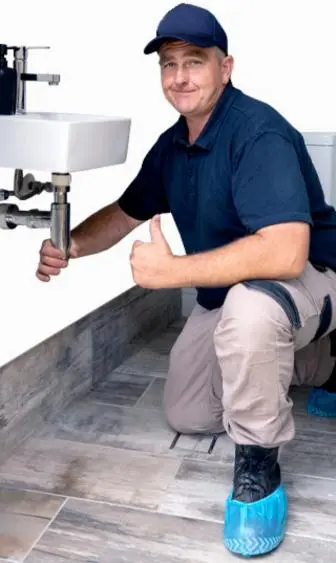
The team has completed over 3,000 plumbing and gas jobs across Sunshine Coast, Noosa, and Moreton Bay, with 40+ years of combined experience and a 5-star Google rating based on 15 customer reviews. Police checks and background screening are completed for all technicians. When a plumber arrives, they'll identify themselves, explain what they're doing before starting, and follow entry instructions where provided (shoe covers, access preferences, security protocols). Work areas are protected with drop sheets where needed, and the site is cleaned up before the plumber leaves. If the job involves visible finishes (stone benchtops, tiled bathrooms, timber floors), scope is clarified before touching anything to avoid unintended damage.
Workmanship Warranty and Quality Standards
All completed work is covered by Big Blue Plumbing's workmanship warranty, which protects you if a fault related to the repair or installation shows up after the job is finished. This applies to labour and workmanship only; manufacturer warranties cover the products themselves (hot water units, taps, valves). If a workmanship issue arises, contact the team and the fault will be assessed and addressed under the warranty terms.
Work is carried out to applicable Australian Standards and tested before the plumber leaves. For gas work, this includes a pressure loss test to confirm the system is gas-tight, followed by a compliance certificate once the work passes inspection. For water repairs, flow and pressure are checked to confirm normal operation. For drain clearances, the line is flushed and inspected (via CCTV where access allows) to confirm the blockage is fully cleared and the pipe is structurally sound. The aim is durable repairs that address the root cause, not temporary patches that fail within weeks.
Only quality products are used for installations and replacements. If a part needs replacing (a burst flexi hose, a failed hot water element, a corroded valve), the replacement is specified upfront in the quote along with the expected service life and any maintenance requirements. Receipts and invoices are provided for all work, suitable for landlords, property managers, and business records.
What to Expect During an Emergency Callout
Arrival and Initial Assessment
When the plumber arrives, they'll introduce themselves, confirm they're at the correct address, and ask a few quick questions about what's happening (when the fault started, what you've observed, whether it's getting worse). If you've already taken action (shut off water, opened windows for gas ventilation), let them know. The plumber will then locate the problem area, inspect the fault, and begin isolating the immediate risk where needed.
For burst pipes, this means shutting off water at the closest isolation valve or the mains, checking for secondary leaks in adjacent areas, and confirming the extent of water damage. For gas leaks, it means shutting off gas at the meter, ventilating the area, and using detection equipment to locate the source. For hot water failures, it means checking power supply (electric systems), pilot lights (gas systems), and valve operation to confirm where the fault lies. For blocked drains, it means identifying which fixtures are affected, checking external inspection points, and determining whether the blockage is in the fixture trap, internal line, or external sewer.
Diagnosis and Scope Confirmation
Once the immediate risk is under control, the plumber explains what's been found, what caused it, and what's required to fix it properly. If diagnostic tools are needed (CCTV camera for drains, thermal imaging for hidden leaks, gas detectors for leak tracing), they're used at this stage and the findings are shown where helpful. Photos or video from inspections can clarify what's happening inside walls or underground, which helps you understand why certain repairs are recommended.
The repair options are outlined in plain English, with inclusions and exclusions stated clearly. If there are multiple ways to address the fault (temporary repair vs permanent fix, patch vs full replacement), the pros and cons of each are explained along with cost implications and expected lifespan. If the damage extends beyond what's visible (a burst pipe that's also saturated the wall cavity, root intrusion that's compromised multiple joints), the additional work is scoped and included in the quote before proceeding.
Fixed-Price Quote and Decision Point
Once scope is agreed, a flat-rate quote is provided covering labour, materials, and testing. The pricing is by the job, not by the hour, so you know the total cost before work starts and there are no additional charges as the job progresses (provided scope doesn't change). If after-hours or emergency rates apply, they're stated upfront. There are no hidden fees added during the work.
This is your decision point. You can proceed with the quoted work, ask for clarification on any part of the scope, or request time to consider the options (if the fault is made safe and not escalating). If parts need ordering or approvals are required, the plumber explains the timeline and what happens next. If the job can be completed in one visit and you're ready to proceed, the work starts once you've confirmed you're happy with the quote.
Repair, Testing, and Verification
During the repair, the plumber isolates the work area where practical, uses protective coverings for floors and surfaces where needed, and keeps noise and disruption as low as possible (especially in occupied homes). If something unexpected is found during the work (hidden damage, additional faults, access complications), the job is paused, the new findings are explained, and the quote is revised before continuing. You won't be charged for work that wasn't scoped and agreed to upfront.
Once the repair is complete, the system is tested to confirm it's working correctly. For water repairs, this means turning the supply back on, checking for leaks at the repair site and adjacent joints, and confirming flow and pressure are normal. For gas repairs, it means running a pressure loss test, checking burner operation, and issuing a compliance certificate. For drain clearances, it means flushing the line, running water through affected fixtures, and re-inspecting via CCTV where access allows. The plumber won't leave until the repair is verified and you're confident the fault is resolved.
Clean-Up and Documentation
Before leaving, the plumber cleans up the work area, removes rubbish and debris, and returns the site to a tidy state. Protective coverings are removed, tools are packed away, and any displaced fixtures or fittings are reinstalled. If follow-up work is needed (parts on order, scheduled relining, or a second visit for testing), the next steps are confirmed and a follow-up appointment is arranged.
You'll receive an invoice detailing the work completed, parts used, and any relevant compliance documentation (gas certificates, testing records). Receipts are suitable for insurance claims, landlord records, or business accounts. If you have questions about the work or need clarification on maintenance requirements, ask before the plumber leaves.
When to Call an Emergency Plumber in Caboolture
Not every plumbing fault is an emergency, but some situations require immediate assessment to prevent damage or safety hazards. Use these guidelines to decide whether to call for urgent dispatch or schedule a routine appointment.
Call Immediately For:
- Burst pipes or active leaks that are flooding the property or saturating walls and floors
- Gas leaks (rotten egg smell, hissing near appliances, pilot lights that won't stay lit)
- Sewage backup through floor drains, toilets, or inspection points
- No hot water supply in rental properties or homes with young children or elderly residents
- Electrical hazards near water (sparking outlets, tripped breakers after a leak)
- Blocked drains causing overflow or preventing toilet use
Book Within 24-48 Hours For:
- Slow drains that are still flowing but taking longer than usual to clear
- Dripping taps or minor leaks that aren't causing immediate damage
- Hot water running out faster than normal (possible element or thermostat fault)
- Low water pressure at one or more fixtures
- Unusual noises from pipes or hot water systems (banging, hissing, gurgling)
Schedule Routine Maintenance For:
- Annual water heater servicing
- Preventive drain unblocking before heavy rainfall
- Replacing aging flexi hoses (recommended every 5 years)
- Upgrading fixtures or installing new appliances
- Non-urgent repairs identified during inspections
If you're uncertain whether your situation is urgent, a brief call to the booking team can clarify next steps. Describe what's happening and they'll triage the call based on risk level and current dispatch load.
Frequently Asked Questions
How quickly can you respond to emergencies in Caboolture?
Urgent jobs are dispatched as soon as the nearest available plumber can be allocated, typically within a few hours depending on current bookings and travel distance from the service base. An estimated arrival time is provided when you book, and updates are sent if timing changes. For after-hours emergencies, response depends on technician availability and the nature of the fault; safety-critical issues (gas leaks, active flooding) are prioritised over less urgent faults.
What's included in the call-out fee for after-hours work?
After-hours call-out fees vary depending on timing and urgency. Confirm the call-out fee status when booking so you know what to expect. The call-out typically covers travel, initial assessment, and fault diagnosis; if you proceed with the quoted repair work, the call-out fee is often credited toward the total job cost. If no repair is needed or you decide not to proceed, the call-out fee applies for the visit and diagnosis.
Can you fix most emergency plumbing issues in one visit?
Many emergency faults can be resolved in one visit if parts are on hand, access is clear, and no structural complications are found. Common single-visit repairs include burst flexi hose replacement, drain clearing via hydro-jetting, hot water element replacement, and leak isolation. If the assessment reveals damage requiring parts on order, council approvals, or follow-up work (drain relining, full system replacement), the immediate fault is made safe and a follow-up visit is scheduled once everything is ready.
What happens if the problem is worse than expected once you start?
If hidden damage or additional faults are found during the repair, the work is paused and the new findings are explained. A revised quote is provided covering the additional scope, and you decide whether to proceed or pause the job. No extra work is carried out without your approval. If the revised scope is substantial (full line replacement instead of a patch repair), the immediate fault is made safe and you're given time to consider the options.
Do you provide a warranty on emergency plumbing repairs?
Yes. All completed work is covered by a workmanship warranty, which applies to the labour and installation. If a fault related to the repair shows up after the job is finished, contact the team and the issue will be assessed and addressed under the warranty terms. Manufacturer warranties cover the products themselves (hot water units, valves, fixtures). Warranty details are explained before the work starts and documented on the invoice.
Can you locate leaks without digging up my property?
In many cases, yes. Thermal imaging and acoustic leak detection can pinpoint hidden leaks in walls, under floors, or in underground lines without excavation. For drain faults, CCTV camera inspections show the blockage location and pipe condition from inside the line. If excavation is needed (collapsed pipe, structural damage, or limited access for inspection tools), the extent of digging is minimised by using the camera to confirm the exact fault location before any ground is opened up.
What areas around Caboolture do you service for emergency plumbing?
Big Blue Plumbing covers Caboolture and the broader Moreton Bay region, along with Sunshine Coast and Noosa areas across South East Queensland. Emergency dispatch is based on technician location and current job load, so response timing varies depending on where the nearest plumber is working when your call comes in. If you're unsure whether your property falls within the service area, confirm when booking and the team will advise on availability.
Do I need to be home when the plumber arrives for an emergency?
For emergency work, someone needs to be present to provide access, explain what's happening, and approve the quoted repair work before it starts. If you can't be onsite (you're at work, traveling, or managing the property remotely), you can arrange for a tenant, property manager, or trusted contact to provide access and communicate with the plumber. Payment and approval can be handled by phone or email once scope is confirmed, but physical access to the property is required for the assessment and repair.
What payment options are available for emergency plumbing work?
Payment is due on completion of the work. Big Blue Plumbing accepts standard payment methods and also offers a 0% interest payment plan through Brighte, with approvals typically processed in 5-7 minutes. This can help spread the cost of larger emergency repairs (hot water replacements, line relining, extensive leak repairs) over manageable installments. Ask about finance options when the quote is provided if upfront payment is a concern.
Are your plumbers police-checked and background-screened?
Yes. All technicians undergo police checks and background screening as part of the vetting process. When a plumber arrives, they'll identify themselves and can provide identification if requested. If you have specific security or access requirements (gated properties, security-sensitive sites, or homes with vulnerable occupants), let the booking team know when arranging the visit so entry protocols can be confirmed in advance.