

Water around a toilet base should be investigated before the toilet is used again. It may be clean water from condensation or a supply connection, or wastewater escaping at the pan connection. The puddle alone cannot identify the source.
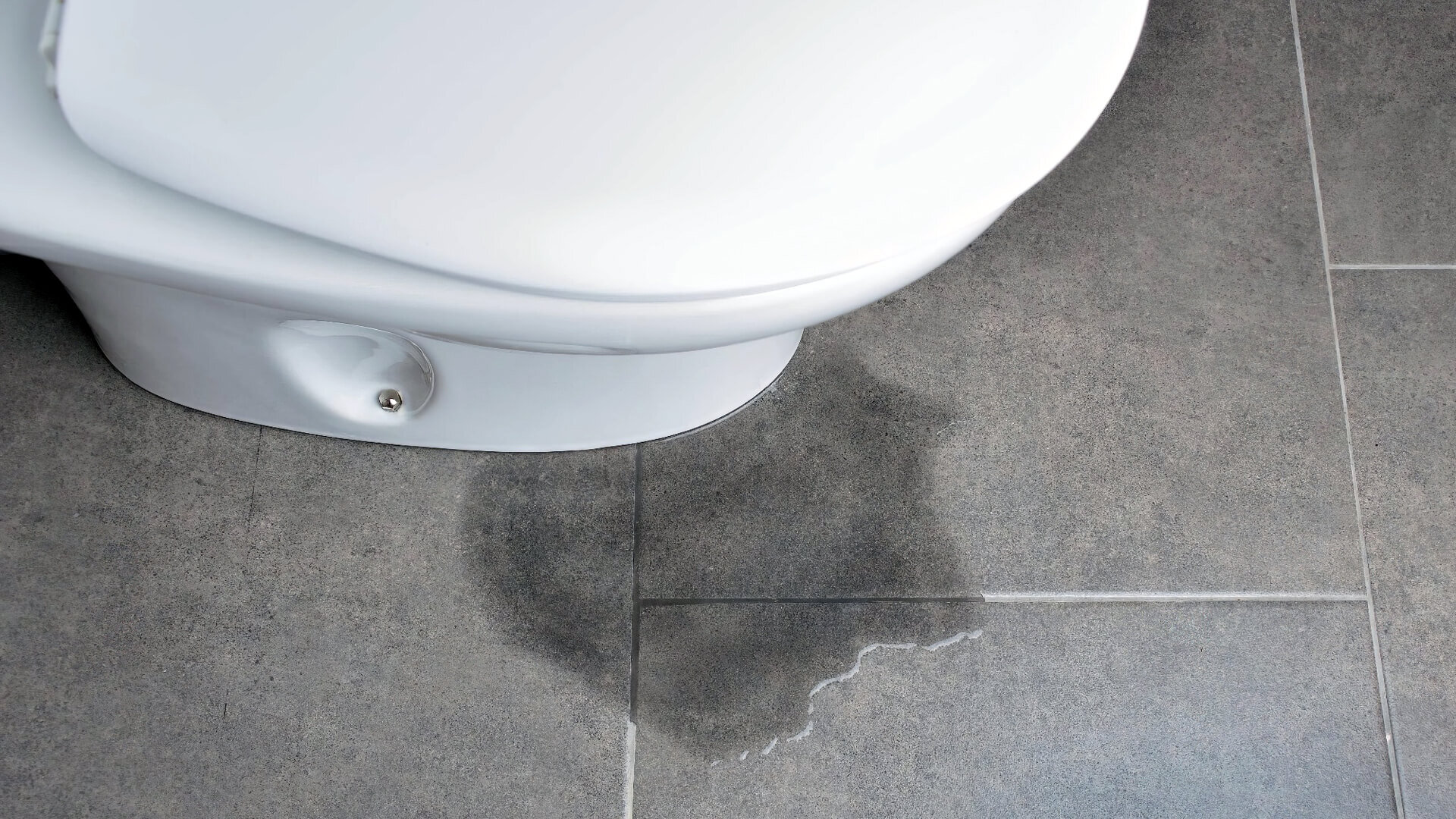
What might cause water around the base?
Condensation or a nearby splash
Moisture can form on a cool cistern or bowl in humid conditions and run onto the floor. Water from cleaning, a shower or another fixture can also collect nearby. Dry the surface and observe where moisture returns without touching electrical equipment or contaminated water.
A leaking supply or cistern connection
Water may run down from the cistern, its connection or the supply valve and collect at the base. Look for visible drips from a safe distance; do not tighten fittings or force the isolation valve.

A failed pan connector or floor seal
If water appears after flushing, a leak at the toilet’s connection to the drain or floor seal is possible. A moving toilet, damaged pan or failed connection may also be involved. Do not rock the toilet or tighten its floor bolts: ceramic can crack and a damaged seal can worsen.

What to do now
If water is actively leaking, stop using the toilet. Keep children and pets away, avoid contact with water that may contain sewage, and ventilate the area if safe. If a clearly accessible isolation valve turns freely, close it; do not force it. Dry the floor only if safe. Do not flush to test an active leak or suspected wastewater leak.
Why not lift the toilet yourself?
Replacing a pan connector or floor seal involves disconnecting and removing the toilet and working at a sanitary drain. That is not a routine cistern task. In Queensland, regulated plumbing and drainage work must be done by an appropriately licensed person. Check the QBCC guidance for the work involved. Confirm the cause before removal: condensation or a supply leak needs a different repair.

Arrange an assessment
Contact Big Blue Plumbing to enquire about a toilet leak assessment. Tell the team whether water appears after flushing, is visible at a supply connection or may be wastewater.


