

Water around a toilet base, a moving pan or a persistent sewer smell needs investigation. Stop using the toilet if wastewater is escaping, keep people clear of the wet area and arrange a licensed plumber.
Australian toilet installations commonly connect the pan to the waste pipe using a pan collar or pan connector selected for the pan and outlet position. The exact arrangement varies by toilet and site. An Australian manufacturer installation guide specifies a pan collar for one common pan connection and requires a qualified plumber. It is not always a US-style floor flange or wax seal.
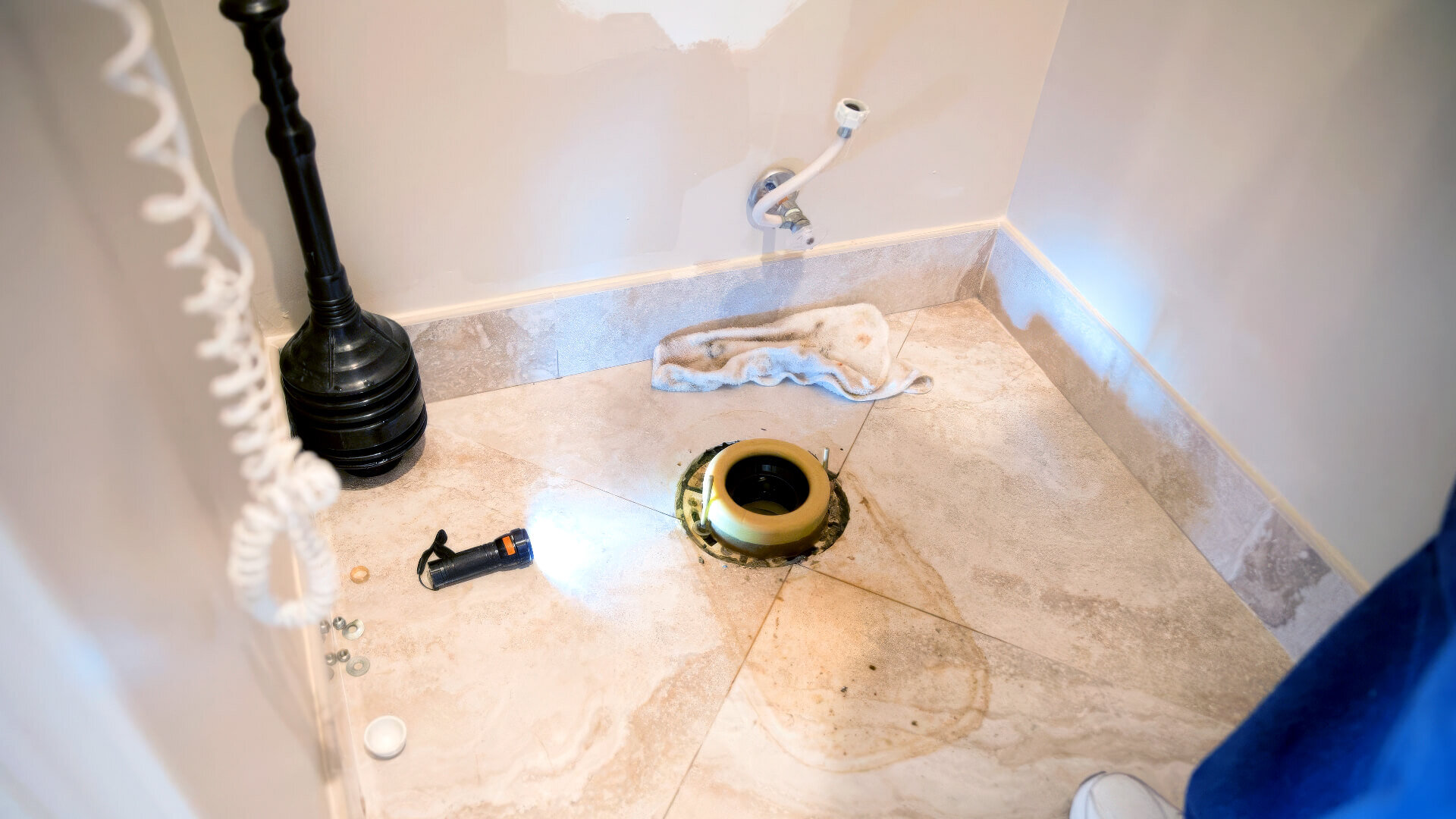
Common signs of a connection problem
- Water at the base: Water appearing after a flush may indicate a failed seal, loose connection or another leak. It needs inspection because the source may not be visible.
- Movement: A pan that rocks can strain its connection and seals. Do not keep tightening fixings or pack around the base to hide movement.
- Persistent odour: A sewer smell can have several causes, including a damaged seal or an issue with a trap or vent. Odour alone does not confirm a failed pan collar.
A blocked toilet can also overflow, but a blockage and a leaking pan connection are different faults. If flushing causes water to escape or the bowl rises abnormally, stop using it and seek help.

Why a repair needs assessment
The plumber may need to check the pan’s stability, the connection type, the waste-pipe position, the floor and nearby water supply. A broken collar, poor alignment, damaged pipe or unsuitable installation can require different work.
Replacing a connector can involve removing and refitting the toilet and working on the sanitary drain. In Queensland, regulated plumbing and drainage work must be carried out by an appropriately licensed person. The QBCC homeowner guide explains the licensing boundary.

What to do until it is checked
Avoid flushing a toilet that is leaking or unstable. Keep the floor dry only if it can be done without contact with wastewater, and do not seal the base with silicone or lift the pan yourself. Surface sealant can hide ongoing leakage without repairing the connection.
If water is reaching an adjacent room, cabinetry or ceiling below, isolate the toilet’s water supply only if the valve is safe and accessible. Record when the leak appears and whether it follows flushing.

Arrange the right repair
A plumber can identify whether the problem is the pan connector, the pan, the waste pipe or another source, then explain the required scope. For toilet leaks and connection faults, see leaking toilet service information.


