

A visible spray or sudden flow is an obvious emergency, but leaks can also be hidden in walls, ceilings, floors or outdoor pipework. Damp patches, unexplained meter movement or a change in water pressure can be clues; none proves by itself that a pipe has burst.
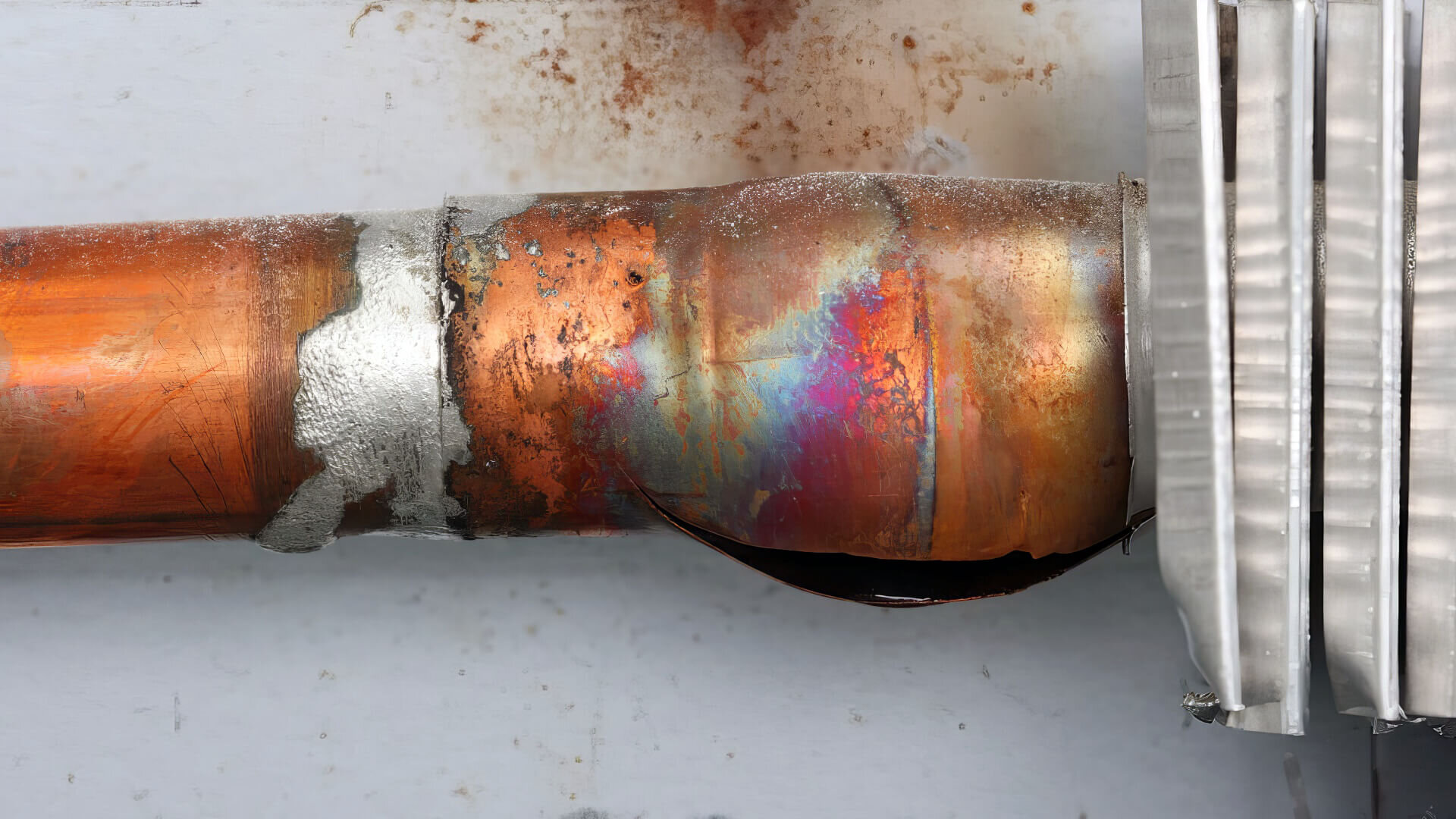
Signs that may point to a leak
- Unexplained wet patches, dripping, pooling or water damage.
- A water meter that registers use when taps and appliances are off.
- A sudden change in water use or a bill that does not fit your normal pattern.
- A change in pressure or flow affecting one or several fixtures.
Brown or discoloured water can have several causes, including supply work or internal plumbing issues. An unusual smell can come from a drain or another source. These signs do not establish that a water pipe is about to burst. If water quality concerns you, contact your supplier; if you can see a leak, arrange a plumbing assessment.
What a water meter check can tell you
Turn off taps and water-using appliances and check that toilets have stopped refilling. Note the meter reading, wait when no water should be used, then check again. A changed reading suggests water is flowing somewhere downstream of the meter, but does not tell you whether it is indoors, outdoors or where the pipe is damaged. Intermittent use or an appliance cycle can affect the result.
Do not switch off or disconnect a hot water system as part of a meter check. If the result is unclear, a licensed plumber can assess the property and locate a concealed leak.

Respond without taking unnecessary risks
If water is near a switchboard, power point, appliance or wiring, do not enter the wet area or touch electrical equipment or switches. Keep others away and contact an electrician or emergency services as appropriate. See Energex electrical safety advice.
If the leak is clear and a shutoff valve is safely accessible and clearly identified, turn it off. Do not enter a flooded area, climb into a ceiling or operate an unfamiliar valve. Contact a licensed plumber. If the problem appears to involve a public water main or meter, notify the water supplier responsible for the location.
Do not patch a pressurised pipe with a clamp, tape or improvised materials. Avoid cleanup where water may be electrically unsafe or contaminated. Once safe, document visible damage for your records.

Get the source assessed
A plumber can inspect affected fixtures and pipework, identify the likely source and explain repair options. Cost and timing depend on access, the fault and resulting damage, so ask for the scope and price before work proceeds.
For a suspected burst pipe, read our burst-pipe service information or contact Big Blue Plumbing to ask about current availability.


