

Damp patches, peeling paint or water marks on a wall can have several causes. A leaking pipe is one possibility, but roof or window entry, a wet exterior wall, condensation and other sources can look similar. These signs do not show where the water started.
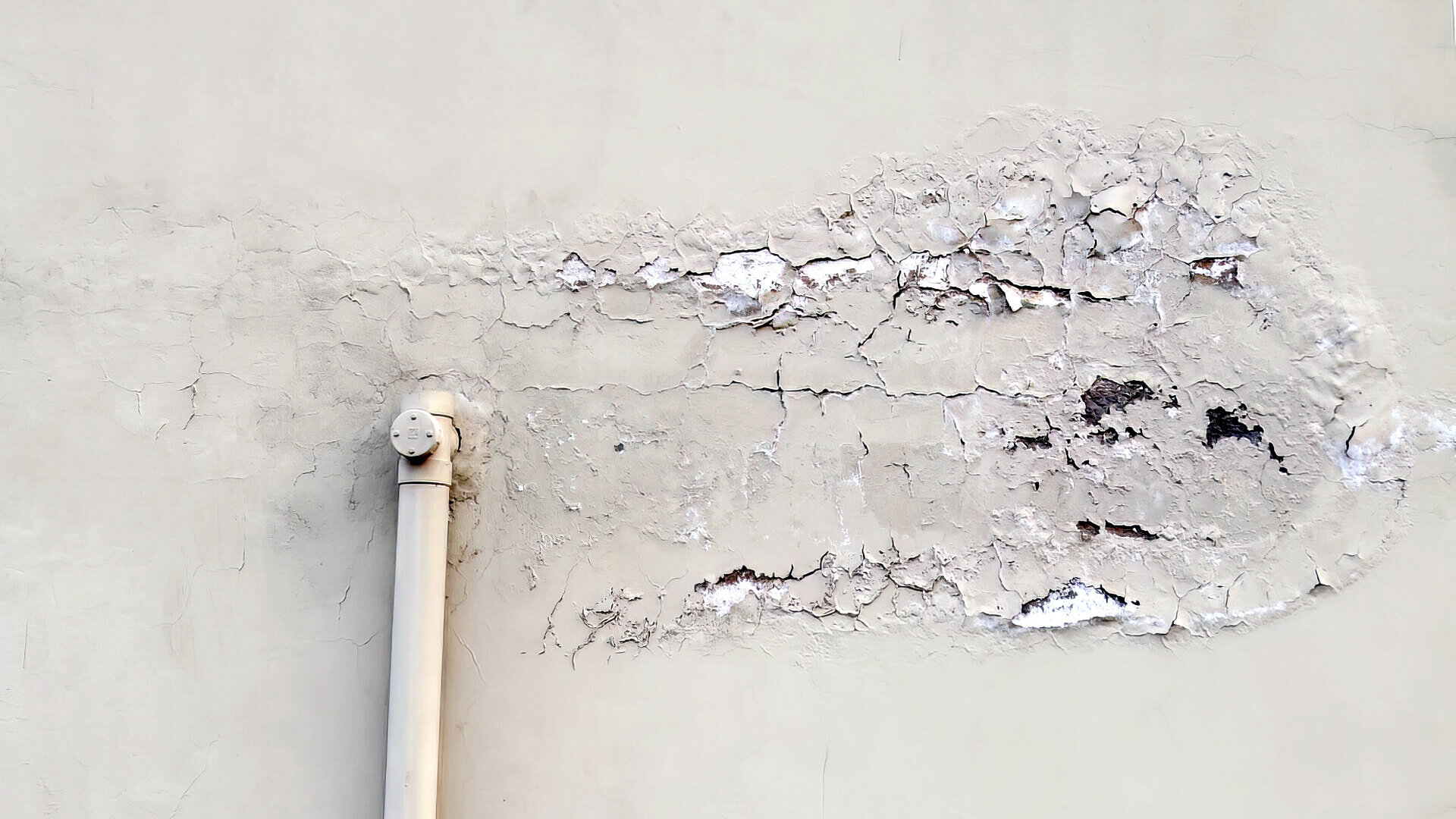
Signs to note
Look for a stain that grows, paint or plaster that softens, damp skirting, a musty smell or unexplained water on the floor. Note when it appears and whether it changes after rain or after using a nearby tap or appliance. Do not cut into the wall to look for a pipe.
Mould can grow where surfaces stay damp. Queensland Health says damp conditions support mould growth and recommends fixing leaks; some people may develop health effects from mould exposure. See Queensland Health mould advice. If anyone has health concerns, seek medical advice.


Reduce risk while arranging an assessment
If water is actively leaking and a clearly identified shutoff valve is safely accessible, turn it off. Do not operate an unfamiliar valve, enter a flooded area or climb into a ceiling. If water is near a switchboard, power point, appliance or wiring, keep clear and do not touch electrical equipment or switches. Read Energex’s electrical safety advice.
Move belongings only if you can do so without entering an unsafe or wet electrical area. Take photos of visible damage and arrange an assessment. Do not apply caulk to a wall stain, pour vinegar or baking soda into drains, or use a snake or pressure jet as a fix for a concealed wall leak. Those steps do not locate or repair a leaking pipe inside a wall.
What may be causing the moisture?
Possible sources include a pressurised supply pipe, a waste pipe, a roof or window leak, water entering from outside, or condensation. A plumber can assess plumbing-related causes; roof, building-envelope or drainage concerns may need the relevant qualified trade. A water meter that moves when all water use is off can indicate ongoing use downstream of the meter, but does not locate a leak or prove that a wall is the source.

Caulk may address a surface joint, but it does not repair a concealed pipe leak.
Get the right repair
Describe the location, when the dampness appears and any changes you have seen. An appropriately licensed plumber can investigate a suspected plumbing leak and advise on repair scope. Do not rely on claims of an exact leak location or particular detection equipment unless the provider confirms those details for your job.
For a suspected leak behind a wall, contact Big Blue Plumbing or call (07) 5404 9354 for non-invasive leak detection and repair.


