

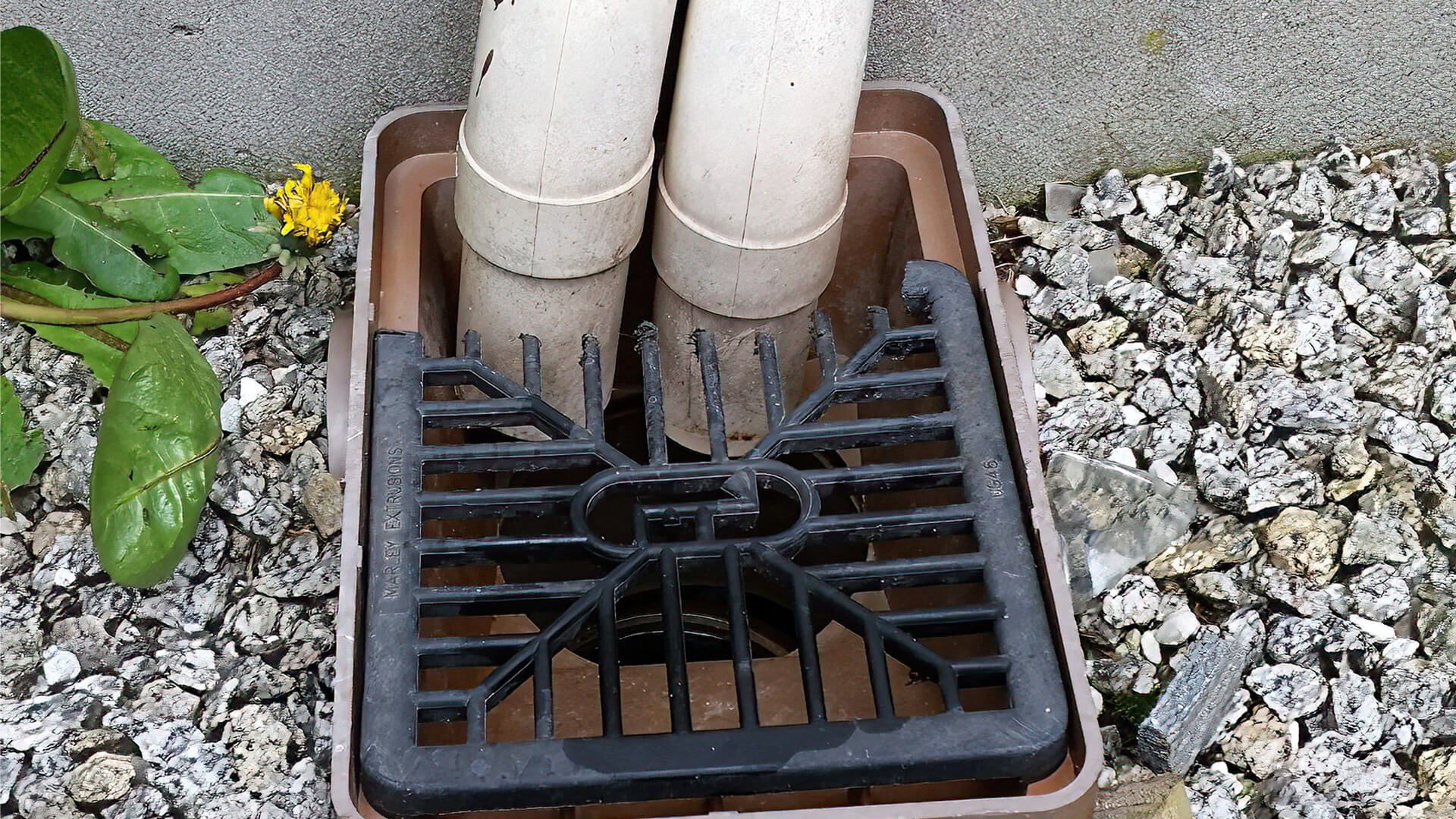
An outside drain that gurgles, drains slowly or overflows may have a blockage, but not every grate is part of the same system. A grated stormwater inlet, sewer inspection opening and water-provider infrastructure have different functions. Do not lift a cover or put tools into a drain if you are unsure what it serves.
Common signs and possible causes
Water pooling around a grate, wastewater backing up, slow flow at several fixtures or gurgling can point to a drainage problem. Leaves and garden debris may obstruct a surface grate; a sanitary drain can also be affected by grease, foreign objects, damaged pipework or tree roots. These signs do not identify the location or cause. A single slow sink may be a local fixture issue, while several affected fixtures or sewage overflow needs prompt assessment.
Do not assume the problem belongs to a neighbour or is on the public network. The drain layout and asset boundary matter. In the Sunshine Coast area, Council says private property owners are responsible for household stormwater drains and directs water supply or sewerage infrastructure issues to Unitywater’s wastewater service. See Council’s plumbing and drainage guidance.

Safe first steps
- Keep children and pets away from pooled water or sewage. Avoid contact with wastewater and wash hands if you touch contaminated surfaces.
- If it is clearly a shallow surface grate and debris is loose on top, you may remove that visible debris without lifting a heavy cover or reaching inside. Stop if the cover is heavy, secured, damaged or unsafe.
- Reduce water use in the affected area. If sewage is backing up into the building or more than one fixture is affected, stop using connected fixtures and call a licensed plumber.
- If you suspect the public sewer or water network is involved, contact the water service provider. Do not tamper with provider infrastructure.
Do not insert a hand, garden hose, drain rod or pressure washer into an outside drain. Do not use caustic cleaners or combine products. Drain cleaners are high-risk household poisons; follow Queensland Poisons Information Centre advice if anyone is exposed. See Queensland household poison guidance.
Why not to open or enter a drain pit
Drainage and sewerage pipes, pits and some excavations can present confined-space hazards, including unsafe atmospheres. Never enter a drain, pit or sewer, and do not lean into an opening to investigate an odour or blockage. WorkSafe Queensland’s confined spaces guidance identifies drainage or sewerage pipes and some excavations as examples that may meet the confined-space definition.
What a licensed plumber may need to do
In Queensland, unblocking sanitary plumbing or sanitary drainage is regulated work that must be done by a QBCC licensee. See QBCC’s regulated plumbing work requirements. A plumber can identify the system and access points, assess whether a blockage or pipe defect is present and choose a suitable method. The method depends on the pipe and fault, not a homeowner experiment.
Tell the plumber which fixtures are affected, when the problem began, whether wastewater overflowed and whether anyone used a drain-cleaning product. Do not add another chemical after a product has been used.

Frequently asked questions
Can I use baking soda and vinegar to clear an outside drain?
Do not rely on this mixture to clear a blockage. It does not establish where the blockage is or remove a damaged-pipe cause. Keep people away from wastewater and arrange an assessment if the drain remains slow or backs up.
Could tree roots block a drain?
Roots can enter a damaged or separated pipe, but visible roots near a drain do not confirm they are inside it. A licensed plumber can inspect the pipe and advise on repair.
What if there is an animal in the drain?
Do not reach in or try to lift a cover. Keep clear and contact the appropriate animal rescue service or council. If the drain is damaged or overflowing, also contact the water provider or a licensed plumber as applicable.
Preventing repeat blockages
Keep loose leaves and litter away from surface grates, and do not put fats, wipes or sanitary items into toilets or sinks. For recurring problems, get the pipe and drainage arrangement assessed rather than repeatedly using a rod or chemical cleaner. Contact Big Blue Plumbing to make a drainage enquiry.


