

An office water filter should be chosen for a defined water-quality or taste need, not as a blanket guarantee that water is safe. First identify whether the building uses town water, a bore, rainwater or another supply.
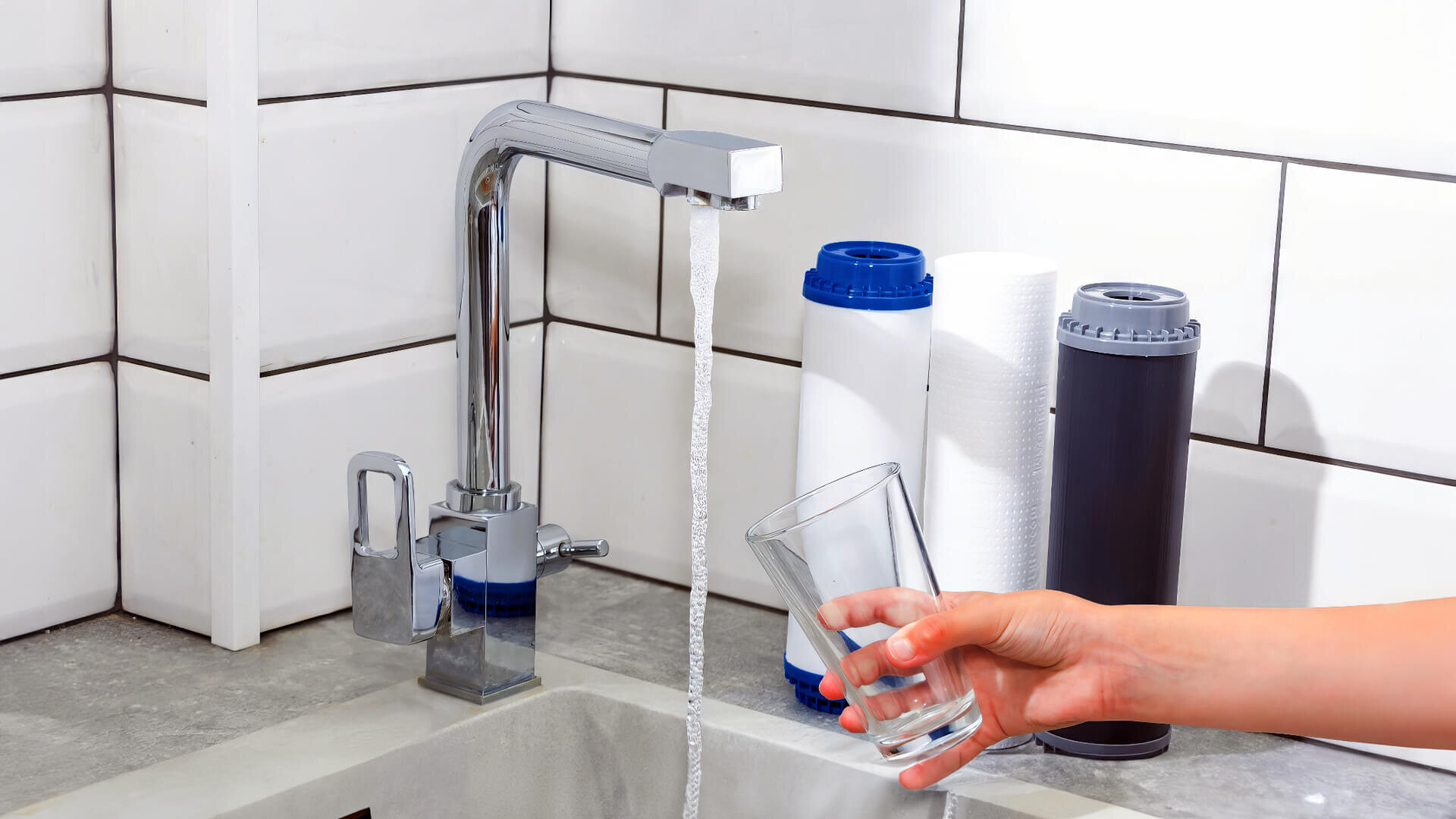
This point-of-use filter is an example only. Its appearance does not show which substances it removes or whether it suits another building.
Start with the source and concern
Queensland town-water providers manage and monitor their networks under drinking-water regulation. If staff notice an unusual taste, colour or odour, check current provider advice and report the issue rather than assuming a filter will solve it. Follow any water advisory.
A bore, tank or other private supply needs a different assessment. Queensland Health recommends managing private supplies with a plan that considers the source, testing, treatment and distribution. Filtration may need to work alongside disinfection; a sediment cartridge alone does not disinfect water. See the Queensland Health private drinking water guideline.

Match treatment to evidence
Filter media and processes do different jobs. A carbon cartridge may improve taste or odour and reduce only the substances named in its tested claim. Fine filtration can reduce particles, while reverse osmosis and ultraviolet treatment address different hazards. These systems are not interchangeable.
Check the exact model, its independently verified performance claim, substances covered and operating conditions. Product approval for plumbing use is not proof that a filter removes every contaminant. Do not call filtered water sterile or contaminant-free without evidence for that system and supply.
Choose the treatment point
A point-of-use unit treats water at one outlet. A point-of-entry system treats water as it enters the building and can affect multiple outlets. Consider peak demand, access for servicing, available space, flow requirements and whether the system changes pressure or produces reject water.
For a private supply, seek advice from a water-treatment professional, plumber or local environmental health officer. For a town-water concern, contact the water provider before installing equipment.
Plan servicing and compliance
Follow the exact product’s cartridge-change, cleaning and sanitising instructions. Keep service records where the building’s water plan requires them. Do not assume every office needs the same replacement interval or annual testing; frequency depends on source, design, use and the manufacturer’s instructions.

This image shows installation work, not a guide for staff to alter pipework. A domestic filter-replacement exemption is not blanket permission for commercial building alterations. Check the work category with the QBCC plumbing guidance and use an appropriately licensed person where required.
For an office filtration enquiry, send Big Blue Plumbing the source, outlet location and filter model. Include provider advice or test results so the next step can be scoped.
Frequently asked questions
Does an office building need a water filter?
Not automatically. Town water is managed by its provider, while private supplies need source-specific assessment. Install treatment only when there is a defined need and the system matches it.
How do I choose a water filter for an office?
Identify the source and concern, then compare the exact model’s tested performance, capacity, installation requirements and maintenance instructions. For private water, use testing and a management plan.
Does a water filter remove bacteria or lead?
Some systems may reduce particular bacteria or metals under stated conditions. Check evidence for the exact product and contaminant. A generic filter label proves neither.
How often should an office water filter be maintained?
Follow the manufacturer’s directions and any water management plan. The right interval depends on the system, source and use, not a universal schedule.


