

To reduce drain flies, find and clean the moist organic material where they are breeding. Small, dark, hairy flies resting near a bathroom or laundry drain may be moth flies, but their presence does not prove the drain pipe is blocked or leaking.
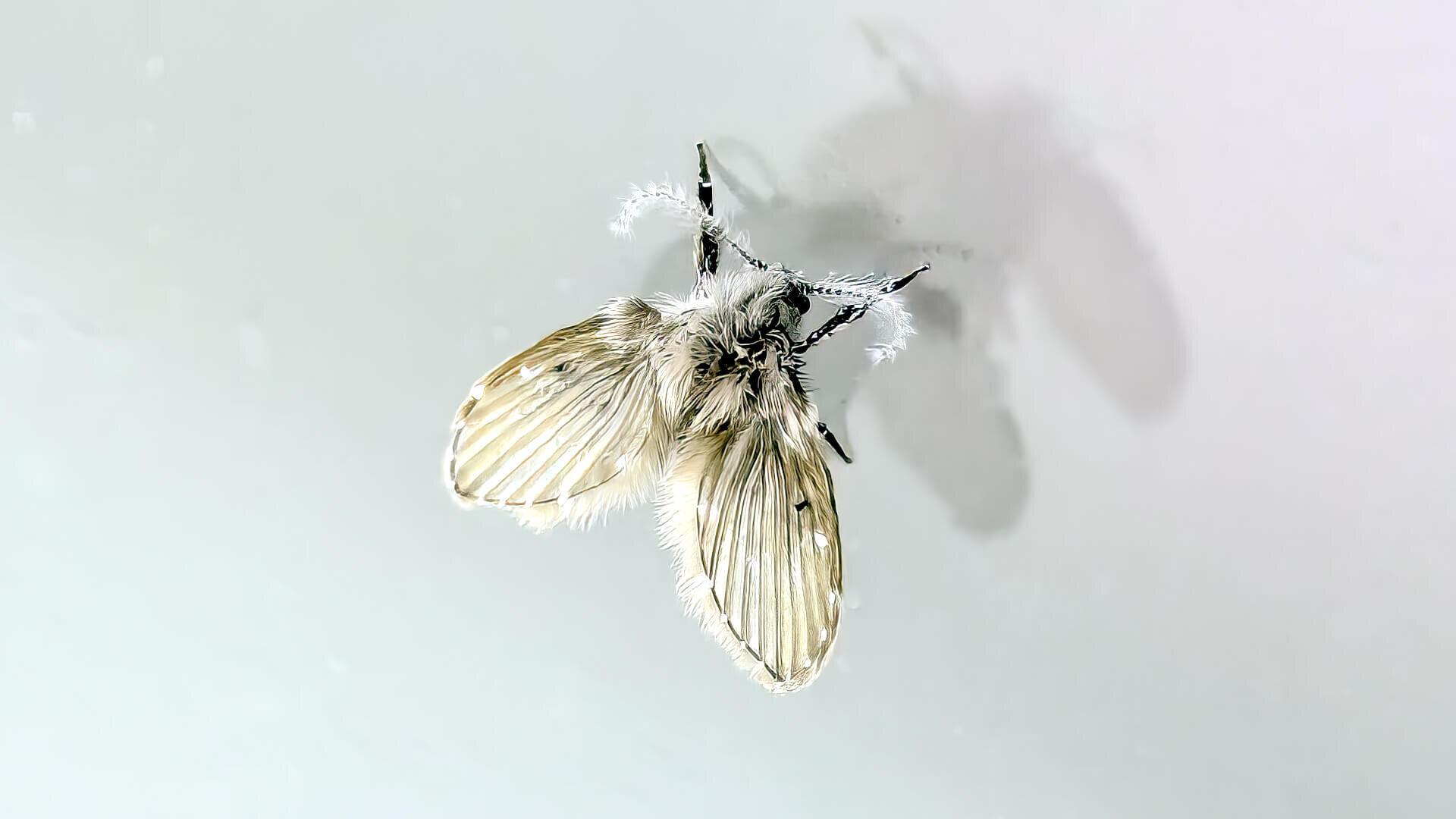
Check for the likely breeding area
Australia’s enHealth guidance describes moth flies, also called drain flies, as small hairy flies commonly found in humid bathrooms, toilets and laundries. They lay eggs in moist organic material, including slime in drains and under toilet rims, cisterns or shower roses. Adults may rest on nearby walls, so the nearest drain is only a starting point for inspection.
Check accessible damp areas around floor grates, shower outlets, basin overflows and toilet rims. Look for persistent moisture, residue or a small number of flies resting in one location. If several rooms are affected, the source may be elsewhere, such as another damp area with organic material.

Clean accessible surfaces safely
Clean visible organic residue from surfaces you can reach without dismantling a fixture or putting your hand into a drain. Follow the cleaning product label, ventilate the area as directed and wear any protective equipment the label specifies. Keep products away from children and pets.
Do not mix cleaning products. In particular, do not combine bleach with acids, ammonia, vinegar or another drain product. Do not pour boiling water into a drain or use insecticide where its label does not permit that use. Avoid improvised duct-tape traps or scented oils as a substitute for locating the breeding source.
What the flies do and do not tell you
enHealth says moth flies are generally nuisance pests and do not bite or transmit pathogens. Some people can experience mild irritation or allergic reactions, which is uncommon. The flies do not by themselves show that a sewer is broken or that the household has a health emergency.
Queensland Health advises that cleaning organic material can limit breeding opportunities. If flies remain after accessible sources are cleaned, or you cannot find the damp area, consider a pest-control professional. If there is a persistent plumbing leak, sewage odour or wastewater backup, avoid contact and have a licensed plumber investigate.
For drain symptoms beyond insects, see how blocked drains are assessed and what to keep out of a kitchen drain. Do not use drain-clearing chemicals as an insect treatment.

When to arrange an assessment
Make a note of where flies are most often seen, when they appear and whether there is visible moisture or residue. This helps a pest professional or plumber focus on the right area. Do not lift sealed covers or dismantle a toilet or drain to search for larvae.
If you find a plumbing leak or recurring drain issue, visit Big Blue Plumbing’s blocked-drain service information and request an assessment. If the source appears to be a pest issue without a plumbing fault, contact a qualified pest-control provider.


